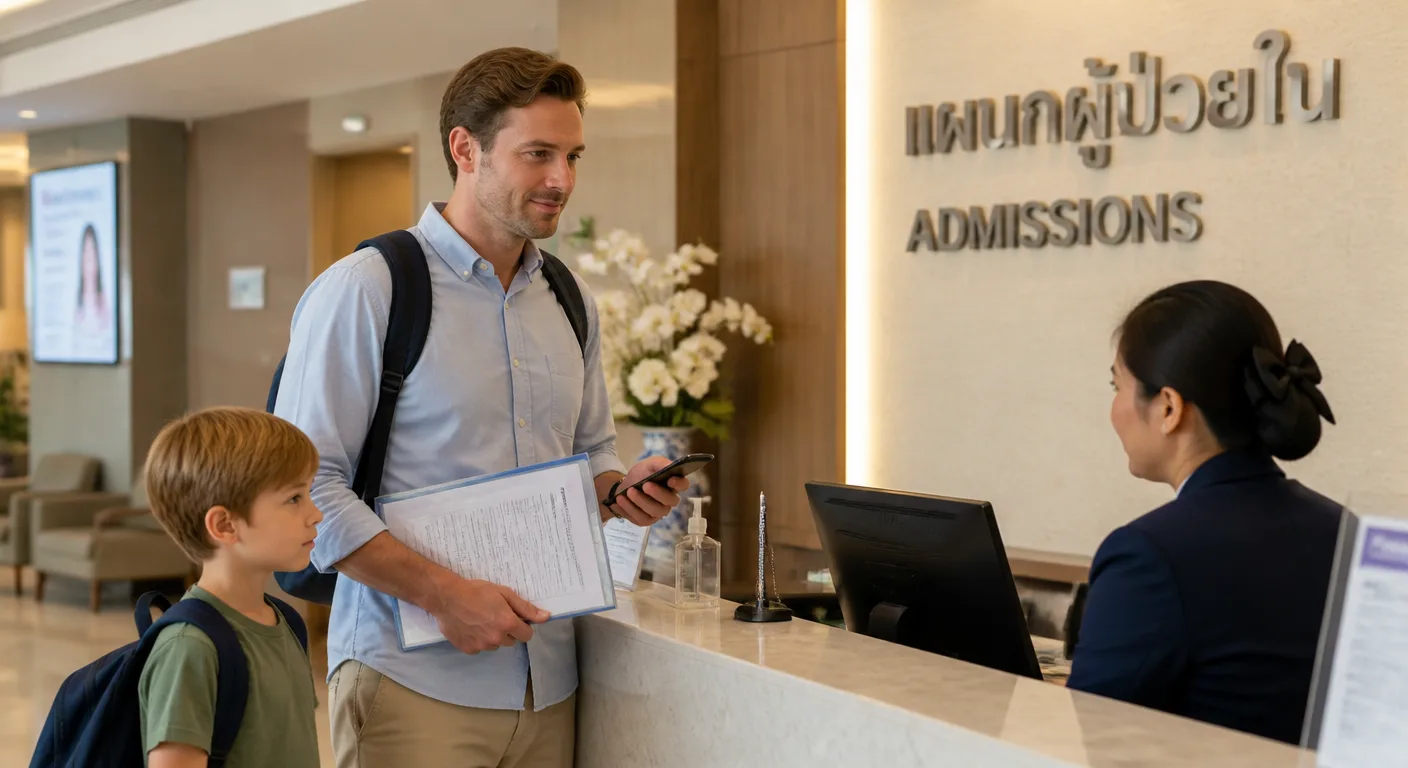
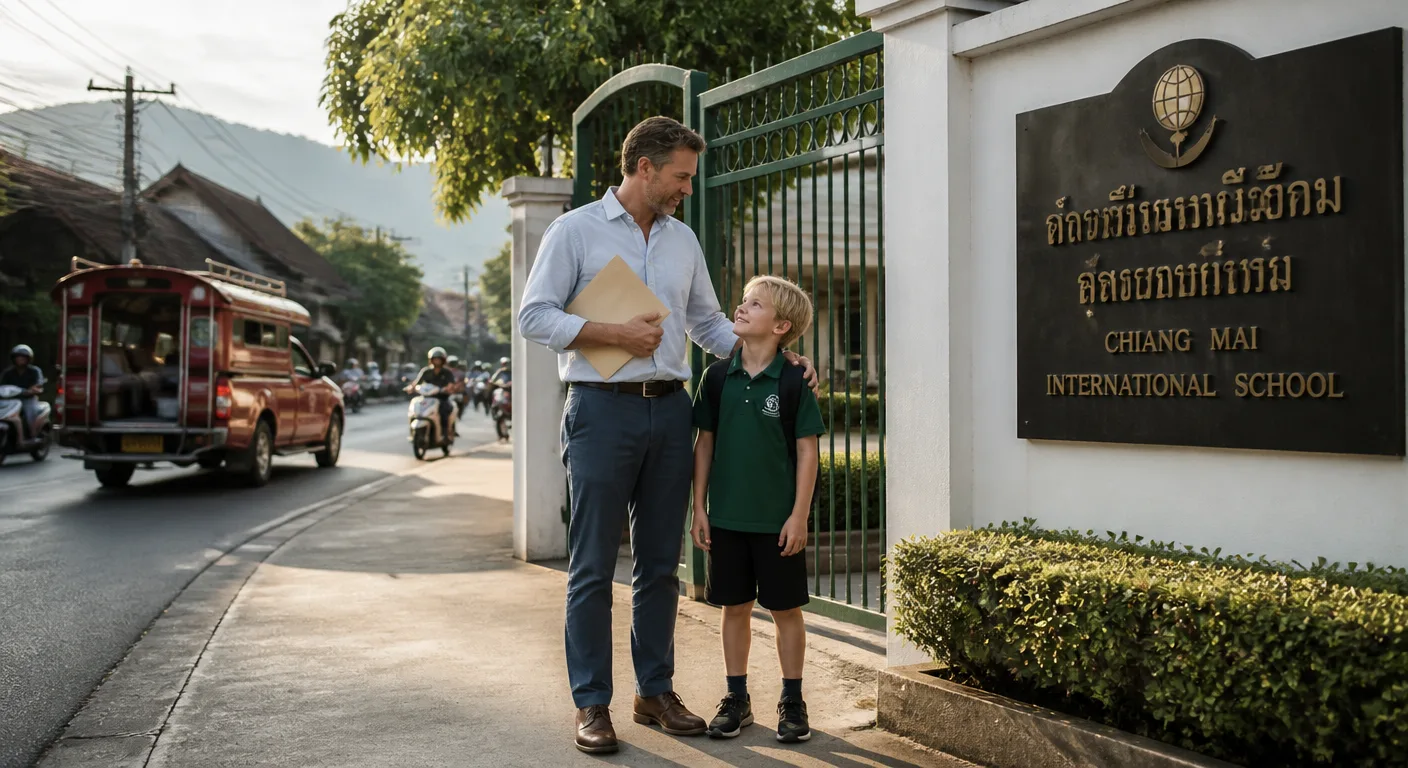
Healthcare in Thailand for Families: Private Hospitals and What It Really Costs
Drawing on four years of our own hospital invoices in Thailand, this guide breaks down what private pediatric visits, ER admissions, vaccines, and childbirth actually bill — and what happens at the registration desk before anyone gets treated.
 By Fabrizio Bestoso · · 19 min read

It was 2 a.m. and our daughter's fever had climbed past the point where either of us could pretend it would break on its own. We drove to the nearest private hospital, parked under its illuminated red "Emergency" sign, and carried her in still wrapped in the towel we'd used to sponge her down. Before a nurse laid a hand on her, the woman at the registration desk asked for a card to hold a deposit. That sequence — triage glance first, payment conversation immediately after — is the single thing almost nothing written about Thai healthcare prepares a foreign family for.
Everything in this guide comes from our own bill drawer: four resident years in Thailand, two school-age children, and every baht figure below tied to an invoice we actually paid or a claim we actually filed. Nothing here is pulled from a price list we never tested.
Before you get into the detail, here is what you actually have to decide as a foreign family without Thai social security:
- Which hospital — private or public — you'll use for routine visits versus genuine emergencies, decided before anyone is sick, not during
- What a normal outpatient visit really costs all-in, once physician fee, hospital fee and medicine are added together
- What deposit or guarantee letter a hospital will ask for before treating your child, and how long a refund actually takes
- How to vaccinate a foreign child on a schedule a Thai clinic will recognize, and what that costs per dose versus as a package
- Which documents — invoices, referral notes, discharge summaries — to keep for both your insurer and your children's school records
How healthcare in Thailand actually works for a foreign family
Thailand runs a two-track system — public hospitals funded by national insurance schemes for Thai citizens, and a private hospital sector that any foreign family can walk into, pay for directly, and be seen in the same day. The public track runs on National Health Security Office schemes designed for Thai nationals and registered social-security contributors; a foreign family on a long-stay visa without Thai social security sits outside that system by default. That leaves two practical options: pay a private hospital directly out of pocket, or claim on an international health insurance policy that the hospital either bills directly or reimburses you for afterward.
This is not a theoretical distinction. It shapes every decision in this guide, from which hospital you choose for a routine cough to what happens at the counter during a genuine emergency. The U.S. Embassy's guidance on medical emergencies in Thailand is blunt about the practical consequence: Americans in Thailand are expected to use local Thai hospitals, the Embassy and its consulates cannot pay medical bills or guarantee payment to a facility on a citizen's behalf, the emergency number is 191, and interpreter support that's reliable in Bangkok, Chiang Mai or Phuket thins out considerably once you're in a smaller town. We've found that last point holds regardless of nationality — it's a function of which hospitals staff bilingual front-desk teams, not of which embassy you'd call.
For a family that has chosen private hospitals as its default, understanding that the public system exists — and is not simply closed to foreigners — matters for two reasons: it's a legitimate lower-cost option for non-urgent care, and it's the network that stabilizes emergencies under rules we'll come back to later in this guide.
What a private hospital visit really costs in Thailand
The honest answer to how much it costs to see a doctor in Thailand is: it depends on the hospital tier, the city and exactly what's billed, and the only credible way to answer it is to show what we were actually charged rather than what a price list advertises. Medical pricing in Thailand varies hugely — a consultation at a neighborhood clinic in a provincial town and the same consultation at a flagship Bangkok hospital can differ by several multiples. The figures below are our own historical costs, checked against the invoices we kept, not a published rate card.
| What we went in for | Hospital tier and city | Total billed (THB) | What we paid out of pocket |
|---|---|---|---|
| Routine pediatric sick visit (consultation plus dispensed medicine) | Samitivej Chinatown Hospital, Bangkok (large private) | 2,120 THB (about USD 61) | 2,120 THB — paid in full, no claim filed |
| Pediatric well-child check (visit only) | Samitivej Chinatown Hospital, Bangkok | 800 THB (about USD 23) | 800 THB — paid in full |
| Adult GP visit | Private clinic, Bangkok | 1,000 THB (about USD 29) | 1,000 THB — paid in full |
| Specialist referral consultation | Bangkok Hospital Hua Hin (large private, provincial city) | 3,000 THB (about USD 87) | 3,000 THB — paid in full |
| Inpatient admission, 2 nights (high fever and asthma) | Bangkok Hospital Hua Hin | 17,000 THB (about USD 493) | 0 THB — billed to our insurer |
Across four years, our routine and minor out-of-pocket spending — the sick visits, the check-ups, the single doses paid in cash — added up to roughly 20,000 THB (about USD 580) total, not per year. The major event, a two-night admission, was fully covered by insurance rather than paid directly. That split is the pattern worth remembering: routine private care in Thailand is cheap enough to pay in cash, and it's the rare admission that insurance exists to absorb.
Maternity is the one corner of Thai private pricing where a genuine package price exists and holds up in practice, because delivery is predictable enough for hospitals to quote it in advance. Bangkok Hospital's published obstetric delivery packages list a normal delivery at 110,400 THB (about USD 3,200) and a caesarean at 151,800 THB (about USD 4,400) at its head office — a published package price, not a billed total we generated ourselves, and one we'd expect to move with staffing and inflation by the time you check it. These numbers sit inside the wider monthly budget of raising a family here; if you want the full picture of what a household actually spends across rent, school and everyday life, we've laid out what our whole month of family life in Thailand costs all-in separately.
Pro-tip: ask the cashier for an itemized invoice before you leave the counter, even for a small visit. It's the only way to see the physician fee, hospital fee and pharmacy charge as separate lines rather than one lump figure — and it's what your insurer will ask for if you ever submit the visit as a reimbursement claim later.
Pediatric care: well-child visits, vaccines and the sick-day call
Thailand's Ministry of Public Health runs its own vaccination schedule for Thai children, and it doesn't map cleanly onto the schedules most Western pediatricians use, which means a foreign family arriving mid-childhood usually needs a catch-up plan rather than a slot in the local rotation. Private hospitals have built a business around exactly that gap: age-based packages sold specifically to foreign children who need several doses reconciled against a schedule their home-country school or pediatrician will recognize.
| Vaccine or visit | Where we got it | Price per dose or visit (THB) | Notes |
|---|---|---|---|
| Well-child check | Samitivej Chinatown Hospital, Bangkok | 800 THB (about USD 23) | Visit only, no vaccines administered |
| Sick-day visit plus medicine | Samitivej Chinatown Hospital, Bangkok | 2,120 THB (about USD 61) | Consultation and dispensed medication combined |
| Influenza vaccine, single dose | Private clinic, Bangkok | 1,000 THB (about USD 29) | Billed as a single dose, not part of a package |
| Baby/toddler catch-up package (1 month–2 years) | MedPark Hospital, Bangkok | 16,600 THB (about USD 480) | Published package price checked in September 2026; no resident-pricing conditions attached |
Private vaccine clinics in Thailand sell age-based catch-up packages to foreign children, and the published package price we checked started at 16,600 THB (about USD 480) for a two-year schedule, with no residency or visa conditions attached to that price — it's the same rate quoted to a family passing through as to one settled here for years. Single doses bought outside a package, like the influenza shot we paid for at roughly 1,000 THB, cost more per shot than the equivalent dose inside a bundled schedule, which is the usual logic of any package price.

We treated the sick-day visit and the well-child check as routine cash expenses rather than insurance claims, because the amounts were small enough that filing paperwork would have cost more in time than the visit itself cost in baht. That calculation changes the moment a visit turns into an admission, which is where the next section picks up.
A short caveat belongs here: this guide describes what got billed and how the counter transaction worked, not what treatment a child needed. Clinical decisions belong to the treating physician, and coverage questions belong to your insurer — we're only the record-keepers of what those decisions cost afterward.
Emergency rooms: the deposit, the guarantee letter and the 2 a.m. bill
Do Thai private hospitals require payment upfront? For anything scheduled, yes, without exception in our experience. For a genuine emergency, the sequence is triage first — a nurse will assess and stabilize before anyone discusses money — and then, within minutes rather than hours, a staff member opens the payment conversation: a card deposit if you're paying yourself, or a phone call to your insurer to request a guarantee letter if you're not.
The night our daughter's fever escalated at Bangkok Hospital Hua Hin, that's exactly the order things happened in. She was seen immediately. The deposit conversation started as soon as the attending physician recommended admission rather than a same-night discharge, and it ran in parallel with a call to our insurer rather than delaying her care. That admission — two nights, for high fever and suspected asthma involvement — billed 17,000 THB (about USD 493) in total, and because our insurer approved a guarantee letter before we were discharged, we paid nothing directly. We've written up the fuller comparison of how our two insurers handled that call in how SafetyWing and Genki compared on our own claims history, because the difference between an insurer that answers that call in minutes and one that takes hours is the difference between walking out with your child and negotiating with a cashier while she's still on a drip.
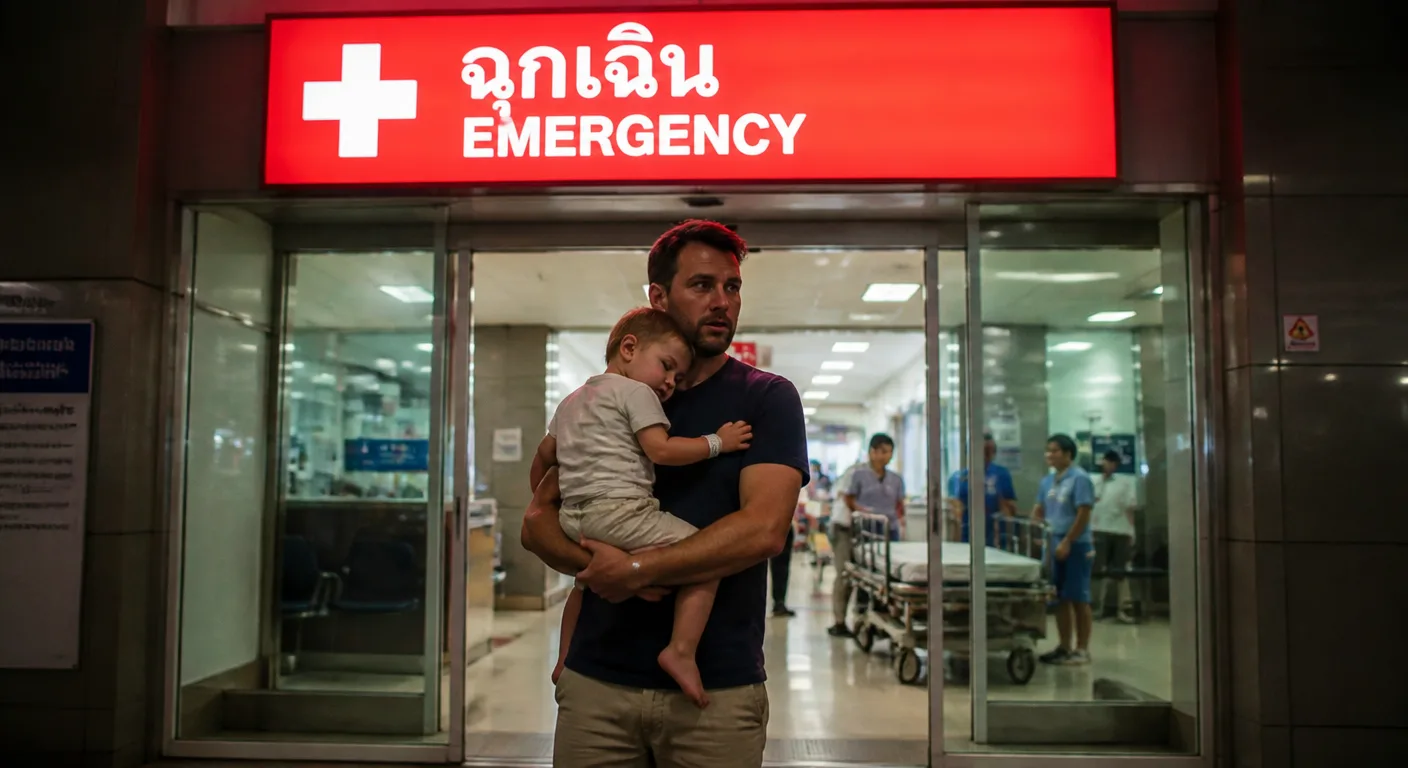
It's worth being precise about what Thailand's emergency rules actually guarantee, because we've seen this repeated inaccurately often enough to want to correct it here. Under the NHSO's Universal Coverage for Emergency Patients (UCEP) policy, a patient in a genuinely life-threatening condition is entitled to life-saving stabilization — up to 72 hours — without a hospital forcing an upfront deposit as a precondition for that stabilization. That is a real and useful protection. It is not, however, free care for foreigners: once stabilized, a foreign patient without Thai social-security coverage remains financially responsible for the full bill, and the deposit or guarantee-letter conversation simply resumes once the immediate danger has passed. UCEP prevents a hospital from delaying life-saving treatment over payment; it does not erase the invoice.
Hospitals publish this reality plainly if you look at their own admission policies rather than at secondhand summaries of them. Ratchaphruek Hospital's published admission payment policy in Chiang Mai offers patients a choice at admission between paying in full or leaving a 20% deposit, which is a fairly typical structure across mid-tier private hospitals we've dealt with. Third-party pricing guides quote private ER facility fees in the range of 2,000–5,000 THB (roughly USD 58–145) before any actual treatment is added, and it's worth remembering that a public hospital ER visit for the same complaint can run to a fraction of that private facility fee — the trade is speed and English-language service against a considerably higher bill.
Warning: if you're paying by credit card and expect a refund on any unused portion of a deposit, budget for it to take weeks rather than days. Card refunds move through the bank's own settlement cycle, not the hospital's, and we've waited a full billing cycle more than once to see money reappear.
Private versus public hospitals: where we actually went
We used both tracks over four years, for different reasons each time, and the trade-offs held up consistently enough to lay out plainly.
| Factor | Private hospital | Public or university hospital |
|---|---|---|
| Typical wait time | Short; same-day appointments common | Often long; half-day waits are not unusual |
| English at the counter | Reliable at large chains in major cities | Thin outside Bangkok, Chiang Mai and other big centers |
| Documentation | Itemized invoice, often with an English summary | Thai-language records, less itemized for a self-pay patient |
| Fee structure | Unbundled — room, nursing, hospital service and physician fee billed as separate lines | Usually bundled into a single visit or admission fee |
| Typical cost for the same complaint | Several times the public-track cost | A fraction of the private cost |
Bangkok Hospital Chiang Mai's own published room rates illustrate exactly how the private fee structure stacks up: its Presidential Suite lists at 30,000 THB per night, broken into a 20,000 THB room charge, a 3,800 THB nursing service fee, a 2,000 THB hospital service fee and 4,200 THB in meals. You can check the full breakdown on Bangkok Hospital Chiang Mai's published room rates page — we cite it here specifically because it's the clearest public illustration we've found of how a single night's charge is actually assembled from separate line items rather than one flat figure.
We chose private for anything involving our children, almost without exception, because the wait time and English-language documentation mattered more to us than the cost difference. We used public facilities twice for adult, non-urgent matters where the queue was tolerable and the lower cost was the deciding factor. Neither choice is universally correct; it's a trade a family makes deliberately, ideally before anyone is sick rather than in the moment.
Insurance, direct billing and the claim that went wrong
A guarantee letter is the mechanism that lets a hospital treat you without collecting a deposit first, and it only exists where your specific insurer has a standing relationship with that specific hospital. That relationship is the entire ballgame. An insurer that direct-bills Bangkok Hospital's network smoothly may have no arrangement at all with a smaller provincial hospital, in which case you pay first and file for reimbursement afterward regardless of what your policy covers on paper.
Our Hua Hin admission worked because our insurer at the time had a guarantee-letter relationship with that specific hospital chain; the call that authorized it took under an hour. A separate, smaller claim we filed the same year — for an out-of-network visit at a clinic our insurer had no billing relationship with — was initially denied on a documentation technicality and took several weeks of resubmission to resolve. That single denial is evidence about that plan, that clinic and that month; it isn't evidence that claims in Thailand generally get denied, and we're careful not to generalize from one bad experience the way some forum threads do. We've laid out the fuller, month-by-month version of that comparison in the insurance guide linked above, including the excess on each plan and what was billed versus what was actually reimbursed.
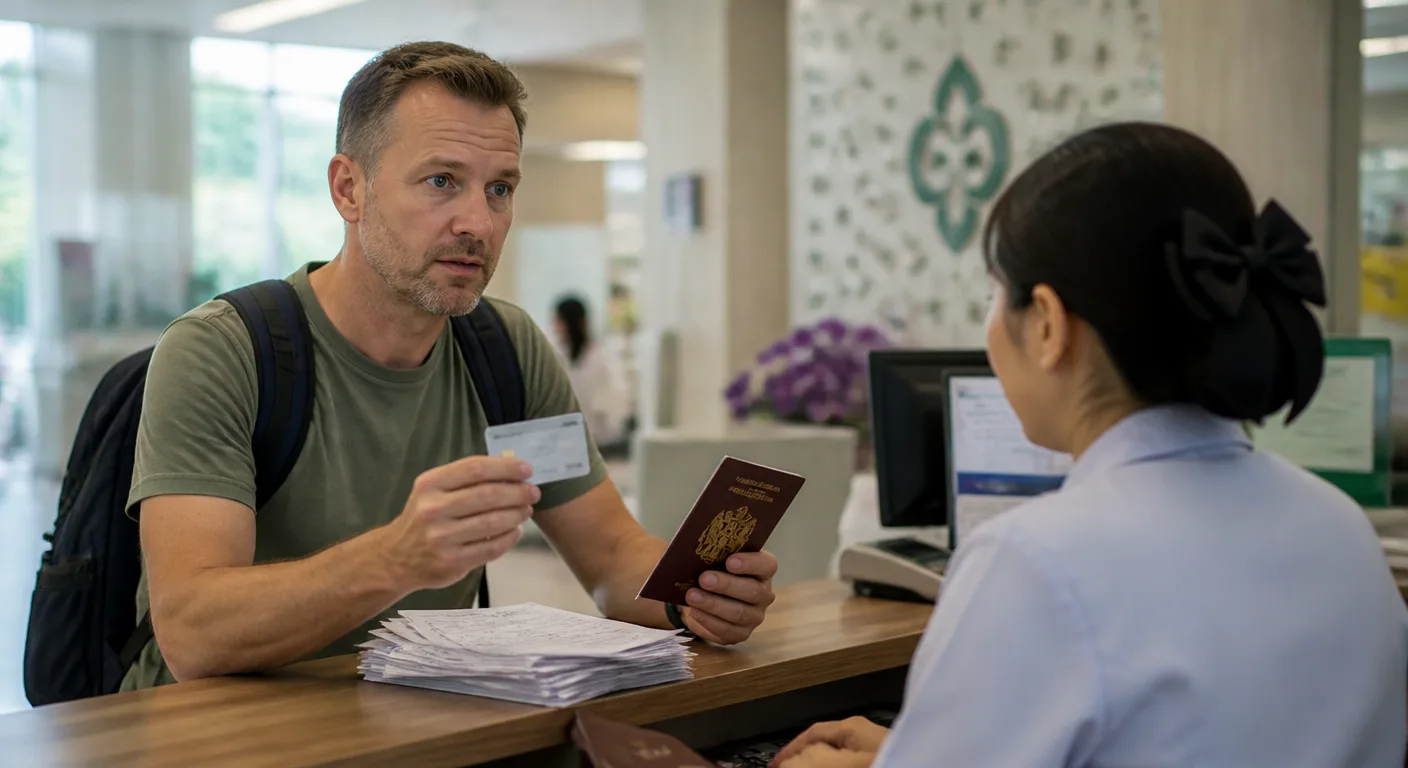
The practical cash-flow consequence for a family paying out of pocket and reimbursing later is straightforward but easy to underestimate: you need enough liquidity to cover the bill in full at the counter, then wait — sometimes weeks — for your insurer to process the claim and return the money. A guarantee letter avoids that entirely by putting the insurer's credit between you and the cashier from the start.
Reading a Thai hospital bill: the line items nobody explains
The first itemized invoice we received looked less like a doctor's bill and more like a hotel folio, and once we understood why, every subsequent bill made sense. A Thai private hospital bill is a stack of separate charges rather than one consultation fee: a physician fee for the doctor's time and judgment, a hospital fee covering the facility itself, a nursing charge for any hands-on care beyond the consultation, a pharmacy line for anything dispensed on-site, and a service charge that functions as the hospital's overhead margin on top of everything else.
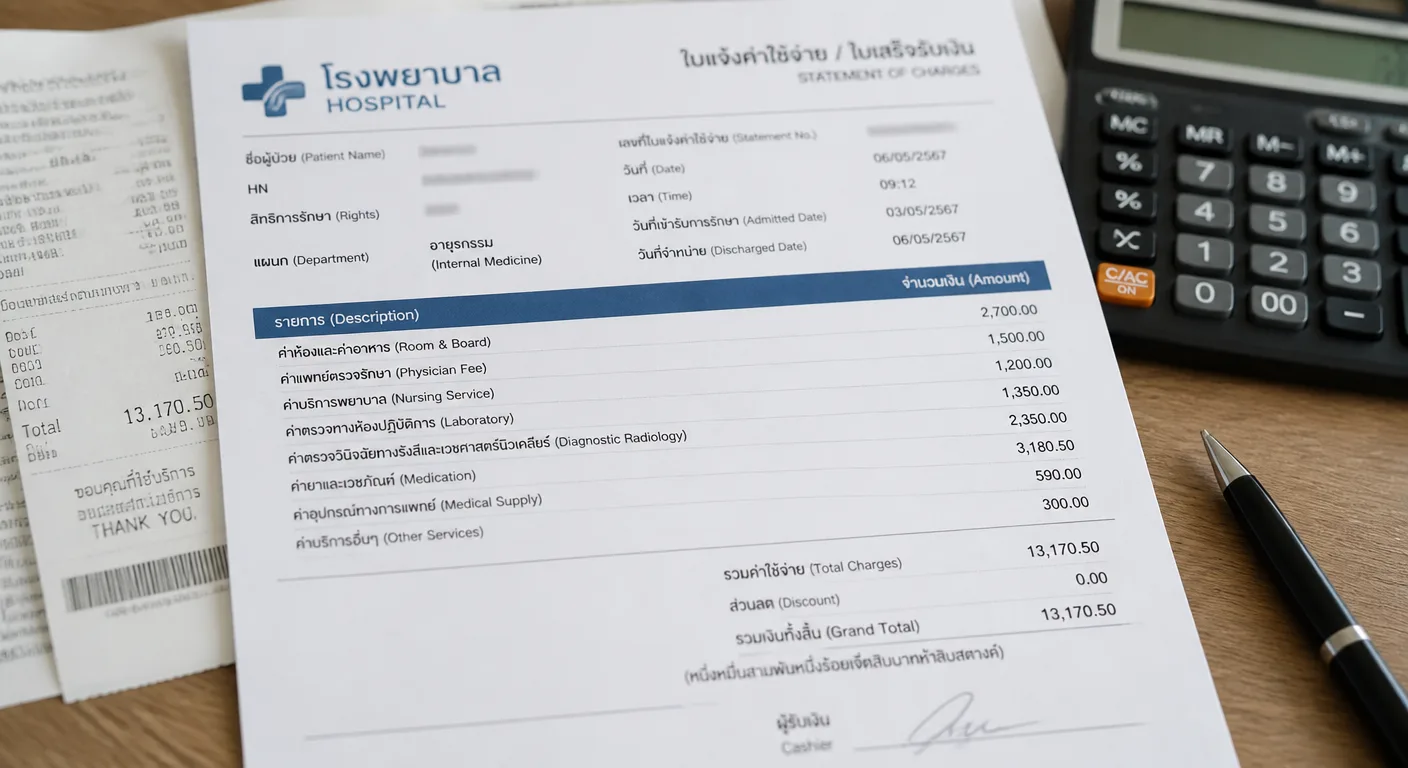
Outpatient visits compress most of these into two or three visible lines. Admissions separate them out in full, which is why a two-night stay generates a multi-page invoice rather than a single total. Bumrungrad, one of Bangkok's flagship international hospitals, makes this structure explicit in its own patient-facing materials: Bumrungrad's published patient-finance and deposit policy states that the hospital requires a full deposit before procedures and an initial deposit for general medicine admissions, refunds any excess deposit at discharge, and — for payments made by credit card — processes refunds through the card's own billing cycle, which the hospital estimates at three to four weeks. That timeline matches what we experienced elsewhere, and it's worth treating as a realistic planning number rather than an outlier.
Pro-tip: keep every discharge summary, not just the invoice. Schools abroad and re-entry paperwork for some visa categories have asked us for a physician's summary of a hospitalization, and the invoice alone doesn't satisfy that request — you need the clinical note the hospital issues separately at discharge.
Mistakes we made with Thai hospital bills
- We paid a small outpatient bill in cash and didn't ask for an itemized receipt, only to find weeks later that our insurer wanted a line-by-line breakdown to process even a modest reimbursement — we had to go back and request a reissued invoice.
- We assumed a guarantee letter would be approved before treatment started and let a receptionist know we were "covered," when in fact the hospital had only submitted the request; treatment proceeded on the strength of triage urgency, not on a confirmed approval, and the paperwork caught up afterward.
- We underestimated how long a credit-card deposit refund would take and budgeted as though the money would reappear within days rather than the three-to-four-week cycle hospitals like Bumrungrad openly publish.
- We filed an insurance claim without the physician's referral note attached, assuming the invoice alone would suffice, and lost several weeks to resubmission over a document we could have requested at the counter the same day.
- We chose a private hospital for a genuinely minor complaint out of habit, when a public facility nearby would have handled it at a fraction of the cost with an acceptable wait.
Frequently asked questions
How much does a doctor visit cost at a private hospital in Thailand?
In our experience a routine outpatient consultation at a private hospital billed roughly 1,000–3,500 THB (about USD 30–105) all-in, covering the physician fee, hospital fee and basic medication. Hospitals set their own prices rather than following a fixed law, so the figure varies significantly by tier and city.
Is healthcare in Thailand free for foreigners?
No. Public hospitals run on national insurance schemes that most long-stay foreigners never join. A foreign family pays a private hospital directly or claims on international insurance. UCEP rules guarantee life-saving stabilization without an upfront deposit, but foreigners remain financially responsible for the resulting bill.
How much is an emergency room visit at a Thai private hospital?
Third-party pricing guides quote private ER facility fees of 2,000–5,000 THB before any treatment is added. Uninsured families should expect a registration deposit conversation once immediate stabilization is complete. Public hospital emergency rooms can be significantly cheaper for the same complaint.
Do Thai private hospitals require payment upfront?
For scheduled care, yes. Genuine emergencies are stabilized first under UCEP rules, but the deposit or guarantee-letter conversation follows immediately once the danger has passed, and credit-card refunds on any unused deposit can take several weeks to clear.
Can foreign children be vaccinated at Thai private hospitals?
Yes. Private hospitals run dedicated vaccine clinics with age-based catch-up packages built for foreign children. A published example we checked starts around 16,600 THB for a two-year schedule at MedPark in Bangkok, with no residency or visa conditions attached to that price.
Are Thai private hospitals accredited to Western standards?
The top tier is. Thailand has dozens of internationally accredited hospitals, including Bumrungrad, holding standards comparable to Western accreditation bodies. Accreditation is voluntary rather than mandatory, so it's worth checking a specific hospital's current status before relying on it.
Will a Thai private hospital bill my international insurance directly?
Sometimes. Direct billing depends entirely on your specific insurer holding an existing guarantee-letter relationship with that specific hospital. Without that relationship, you generally pay at the counter first and submit for reimbursement afterward, regardless of what your policy covers on paper.
How much does it cost to give birth in a private hospital in Thailand?
Published package prices we checked at Bangkok Hospital's head office list a normal delivery at 110,400 THB (about USD 3,200) and a caesarean at 151,800 THB (about USD 4,400). These are the hospital's own quoted package figures, not a billed total we generated from our own delivery.
Can foreigners use public hospitals in Thailand?
Yes. Foreigners can be treated at public hospitals and pay per visit out of pocket, typically far below equivalent private pricing, in exchange for longer queues and less reliable English-language service at the counter, especially outside major cities.
Our checklist before you need a hospital in Thailand
- Pick your default private hospital and your fallback public hospital before anyone is sick, not while you're driving there at 2 a.m.
- Save your insurer's emergency claims number in your phone, alongside the 191 national emergency line the U.S. Embassy and other consulates point to.
- Ask your insurer in advance which hospitals in your city they hold a guarantee-letter relationship with, rather than assuming coverage means direct billing everywhere.
- Keep a folder — physical or digital — of every itemized invoice and discharge summary; schools and future insurance claims both eventually ask for them.
- Budget for a deposit at admission and a multi-week wait on any refund, even when you're confident the final bill will land on your insurer rather than on you.
Sources
- https://th.usembassy.gov/medical-emergency/
- https://www.bangkokhospital.com/en/bangkok/package/obstetric-delivery-packages
- https://www.nhso.go.th/en/news-events/news-announcements/patient-case-shows-strength-of-thailand-s-universal-emergency-care
- https://rph.co.th/en/admission-payment/
- https://www.bangkokhospital.com/en/chiangmai/visit/room-rate-bcm
- https://www.bumrungrad.com/en/patient-finance-information
Written by Fabrizio Bestoso
Fabrizio Bestoso is a digital entrepreneur and the father of a family that lives and works on the move across Thailand, Asia, Spain and Middle East. He started Nomad Family Hub to turn the logistics his own family works through — the DTV visa, health insurance, multi-currency money, distance schooling, work — into step-by-step guides, each checked against official sources and against what actually happened.