The Real Cost of Living in Thailand for a Nomad Family of 3
A field-tested, THB-first budget guide for a working family of three in Thailand, showing exactly how rent, electricity, and schooling swing a monthly total from around 60,000 THB to well over 200,000 THB.
 By Fabrizio Bestoso · · 21 min read
The Real Cost of Living in Thailand for a Nomad Family of 3
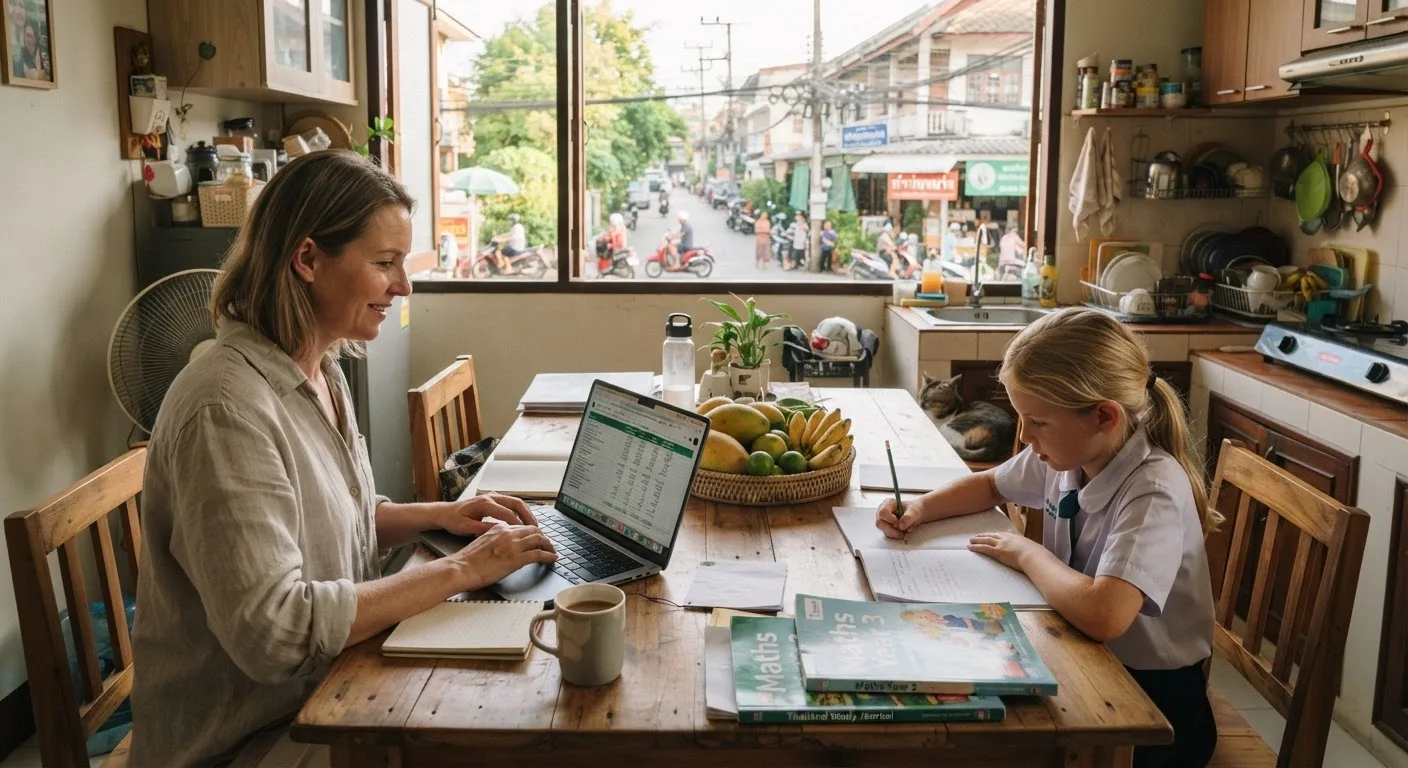
We are going to give you the number first, because that is the question you actually came here with: can we afford this, honestly? For a remote-working family of three — two parents, one school-age child — living in Thailand in 2026, the realistic monthly range runs from roughly 60,000 THB to 250,000 THB (about $1,750–$7,300), depending on three decisions and almost nothing else.
Those three decisions are rent, air conditioning, and schooling. Everything else in this article — groceries, transport, phone plans, kids' swimming lessons — is real money, but it is noise compared to what those three lines do to your total. A family running a distance-education program out of a modest local rental spends a small fraction of what a family with a child in international school, a villa with three air-conditioned bedrooms, and an imported grocery basket will spend, in the exact same country, sometimes in the exact same neighborhood.
This is not a single nomad's minimalist budget, and it is not a retired couple's condo budget. It is also not one of those "we live on $900 a month" posts that quietly omits the school run, the health insurance premium, and the electricity bill. This is a cost of living in Thailand for a family guide built from a real household of three, with the two lines that everyone else's budget tends to skip: education and healthcare.
A remote-working family of three can live in Thailand on roughly 60,000–90,000 THB per month (about $1,750–$2,650) with distance education, a local-neighborhood rental, and mostly Thai groceries. Add one child in international school, a villa in a tourist area, and an imported grocery basket, and the same family can comfortably spend 150,000–250,000 THB per month (about $4,400–$7,300). The gap is not the country — it is three line items.
How We Track This (and How to Read These Numbers)
Our numbers come from two sources, and we keep them separate. The first is our own household's spending over multiple years in Thailand, running two remote jobs and one child through accredited distance education. The second is current market ranges — rents, tuition, insurance premiums — which we cross-check against what other families and agents report in 2026, since our own rent or school choice is one data point, not a benchmark.
Every figure in this article is in Thai Baht first, with an approximate US dollar conversion in parentheses. We are assuming a rate of roughly 33–35 THB to 1 USD through 2026, which is the working range at the time of writing. That rate moves, sometimes by more than 10% within a year, and a swing of that size changes a family's real cost of living more than almost any lifestyle adjustment you could make. Check the live rate on the Wise currency converter before you build your own numbers from ours.
We publish ranges, not single totals, because a single number invites false precision in a country where rent varies by neighborhood, electricity varies by how hard you run the AC, and school fees vary by provider and year group. Anyone offering you one exact monthly figure for "Thailand" is rounding something uncomfortable out of view.
Rent: The Line That Sets Everything Else
Rent is the first number that sets the shape of everything downstream, because it fixes your neighborhood, your school-run distance, and often whether you need a car. Here is the honest range by city and property type, in Baht, as of 2026.
| City | Property type | Monthly rent (THB) | Approx. USD |
|---|---|---|---|
| Chiang Mai | One-bed condo | 8,000–15,000 | $235–$440 |
| Chiang Mai | Family house (2–3 bed) | 15,000–35,000 | $440–$1,030 |
| Phuket | One-bed condo | 15,000–30,000 | $440–$880 |
| Phuket | Two-bed house/villa | 25,000–40,000+ | $735–$1,175+ |
| Bangkok | Central one-bed | 20,000–40,000 | $590–$1,175 |
| Bangkok | Suburbs | 10,000–18,000 | $295–$530 |
Three variables move these numbers more than the city name does: neighborhood, lease length, and season. A 12-month lease will consistently beat a monthly rate by a meaningful margin, and in Phuket especially, a "monthly" listing found online in December is often priced for a tourist, not a resident — the same unit signed on a year contract in low season can cost noticeably less.
For a family specifically, the calculus is different from a couple's. A study corner is not the same as a real second bedroom once a child is doing schoolwork at the kitchen table every morning. A pool matters less than a patch of shared garden or a nearby park if you have a young child and no outdoor space of your own. Noise, ground-floor security, and distance to school or activities matter more than they do for two adults, and "furnished" can mean anything from a fully equipped kitchen to a bed frame and nothing else — always ask for photos of the actual unit, not the show unit.
The cash required at signing is a real shock that families under-plan for. A typical arrangement is two months' deposit plus the first month upfront, and sometimes an agent fee on top — meaning your move-in month can require three to four times a normal month's rent in cash before you have even unpacked a box.
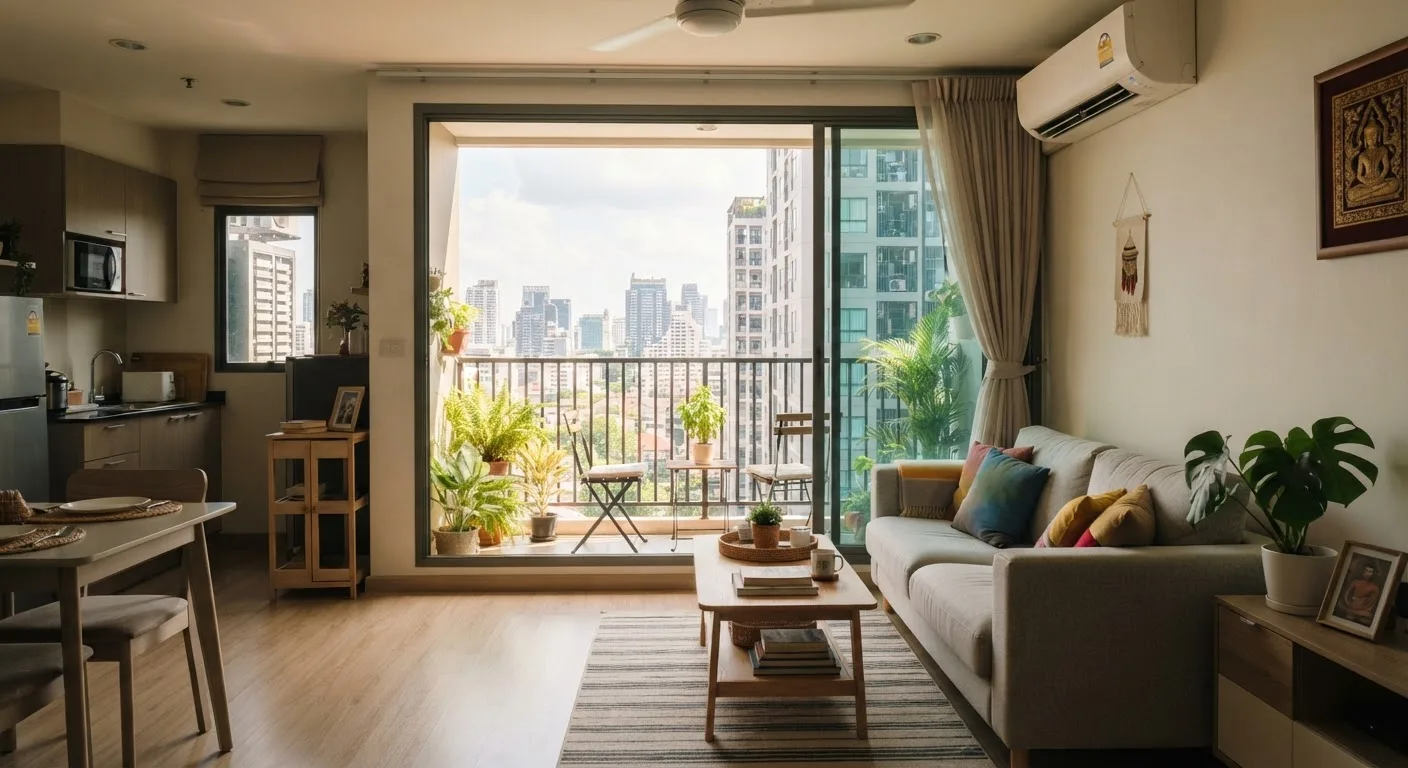
We never sign a lease longer than a month or two from abroad, sight unseen. Budget a flexible, slightly more expensive first month so you can view properties in person, negotiate with a local speaker if you have one, and only then commit to the 12-month rate that actually saves you money.
Utilities, Internet, and the Air Conditioning Problem
Electricity is the most under-budgeted line in a Thailand household, and it is also the one you have the most control over. Running air conditioning all day in a one-bedroom condo typically produces a bill in the range of $100–$150 a month; the same unit with AC used at night only tends to run $40–$70. A family house or villa with multiple bedrooms running AC hard in Phuket or Bangkok can push well past those figures, sometimes rivaling the rent payment itself.
There is a contract detail that catches new arrivals every year: some landlords bill electricity at the government meter rate, and others bill a flat inflated rate per unit consumed, sometimes well above what the utility actually charges. Ask which arrangement applies before you sign, not after your first bill.
Water is close to negligible for a normal household. Fiber internet typically runs 500–900 THB a month (about $15–$26), and a generous local SIM plan is usually 350–700 THB a month (about $10–$20) per line. On the coworking question: a paid desk is worth it if you need reliable video-call quiet, but plenty of remote-working parents find one parent's café habit, at 60–120 THB a coffee, is genuinely cheaper across a month than a coworking membership.
The levers that actually cut this line without turning your household into a lifestyle sermon are simple: set the AC a few degrees warmer, use fans to extend the comfortable range, and choose a unit with cross-ventilation or shade over one that photographs well but bakes all afternoon.
Food: Where a Family Actually Spends Its Money
The single biggest swing factor in a family's food budget is not how much you eat, but where you buy it. Here is what a week's groceries for three looks like across three baskets.
| Basket type | Weekly grocery spend (THB) | Approx. USD |
|---|---|---|
| Fresh market + Thai supermarket | 1,200–2,200 | $35–$65 |
| Mixed (local staples + some imported) | 2,500–4,000 | $75–$115 |
| Heavily imported (Villa Market/Rimping-style) | 5,000–9,000+ | $145–$260+ |
Eating out follows the same logic. A local restaurant meal for one runs roughly 60–120 THB ($1.75–$3.50), so a family of three can eat out locally for the price of one Western restaurant meal, which typically runs 350–700 THB ($10–$20) per person. With two working parents, it is realistic to eat out or order in several times a week, and that habit alone can move a monthly food total by a large margin depending on which kind of restaurant you default to.
Kids change the equation in a way that is worth naming honestly. A child's tolerance for spice, fish sauce, and unfamiliar textures directly affects how much of your basket ends up imported, and that is a budget line, not a parenting failure. The practical middle path most families land on is buying local staples, fruit, and protein from the fresh market, and reserving the import store for a short, fixed list — cheese, a particular cereal, peanut butter — rather than doing a full weekly shop there.
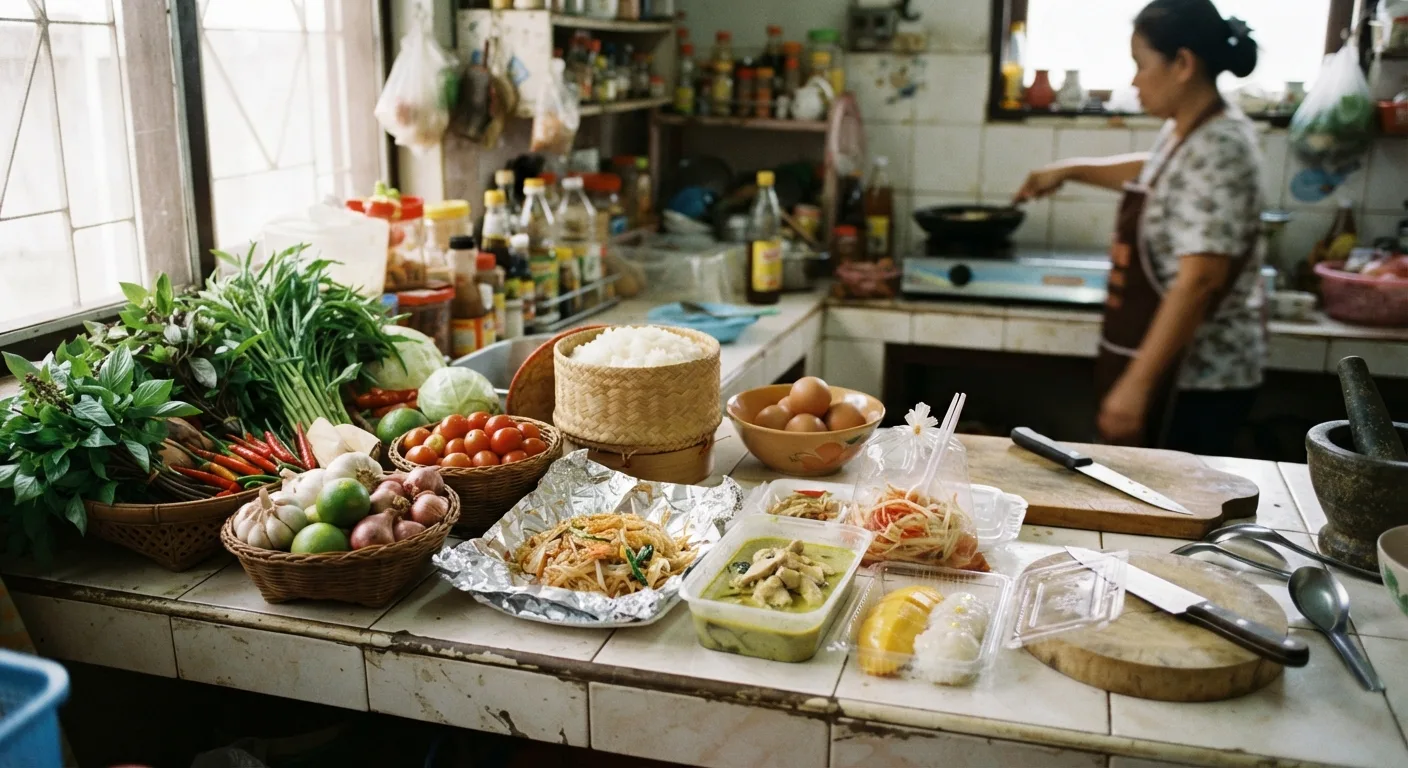
Pro-Tip: the single highest-leverage food habit we have found is shopping the wet market or a Thai supermarket for produce, rice, and protein, and treating the import store as a once-a-month top-up for a defined short list, not a weekly habit. That one change alone can cut a family's grocery bill by half or more.
Education: The Line That Decides Your Entire Budget
This is the line that decides everything else, and it deserves to be shown plainly rather than buried inside a total.
| Path | Approx. annual cost | Monthly equivalent (THB) | Approx. USD/month |
|---|---|---|---|
| Accredited distance education | A few hundred to ~2,000 GBP/USD equivalent | ~1,000–7,000 | $30–$205 |
| International school, Chiang Mai | 180,000–550,000 THB | 15,000–46,000 | $440–$1,350 |
| International school, Phuket | 200,000–700,000 THB | 17,000–58,000 | $500–$1,700 |
| International school, Bangkok (top-tier) | Far higher | Higher still | Higher still |
Distance education is, in almost every case, a rounding error next to international school tuition. But headline tuition is not the real number: add 20–25% on top for registration, uniforms, transport, lunch, school trips, and exam fees, and expect 3–5% annual increases on top of that. A quoted 300,000 THB tuition line is realistically closer to 360,000–375,000 THB once the first year's full costs land.
What distance education costs instead of money is worth being honest about: parent supervision hours, a protected morning study block, and real coordination between two working parents to make sure someone is actually present for it. This is unpaid labor, not a free option, and families who treat it as "the cheap choice" without budgeting the time often find it is the parent working part-time, not the school fee, that is the real cost. We found our own experience with structured distance providers, including reading a detailed Wolsey Hall Oxford review before committing, useful for understanding what the supervision load actually looks like week to week.
International school earns its cost for specific families: those staying multiple years who benefit from continuity, a child who needs peer structure or specialist learning support that a home setup cannot provide, and a child approaching external exam years where accreditation and pathway matter more than flexibility.
Pro-Tip: decide your schooling model before you decide your city or your rental, because it constrains both. A family choosing international school is often choosing a city and even a specific neighborhood by default; a family choosing distance education has far more freedom in where they live.
Healthcare and Insurance
Out-of-pocket private healthcare in Thailand is genuinely affordable in isolation, and that affordability is exactly what lulls families into skipping coverage. A private pediatric or GP consultation typically runs 1,200–2,500 THB ($35–$75), and routine dental work or vaccinations are similarly modest by Western standards.
The scenario that ends that logic is the one you are not planning for: an uninsured pediatric hospital admission, a scooter accident requiring surgery, or an evacuation to a Bangkok specialist hospital for something a local clinic cannot handle. Those bills run into the hundreds of thousands of Baht, not the thousands, and they arrive with no warning.
Private expat health insurance for a family of three runs roughly 25,000–65,000 THB a year per adult ($735–$1,900), depending on scope, with a child's premium typically lower but still a real line item, not a rounding error. When comparing policies, the questions that actually matter for a mobile family are whether coverage is outpatient-only or includes inpatient care, whether the geographic scope follows you outside Thailand, whether a child's policy travels with the family across renewals, and how pre-existing conditions are handled at each renewal. We go through this in more detail in our guide to family health insurance in Thailand, which is worth reading before you compare quotes rather than after.
Transport, Activities, and What the Kid Costs
A scooter rental runs roughly 3,000–4,000 THB a month ($90–$115) and is the default for many families, but it is worth saying plainly that cost is not the only variable here — road safety for a family carrying a child is a real consideration, not just a budget line. A small car rental costs substantially more, and a daily Grab habit for the school run adds up faster than most families expect once you total a full month of rides.
Kids' activities are one of the genuine value stories in Thailand. Swimming lessons, martial arts, music, climbing, and organized sports are commonly available at a fraction of Western pricing, often in the range of 300–1,500 THB ($9–$45) per session or class package, depending on the activity and the city.
What families discover in month two, not month one, are the small recurring costs: birthday parties, playdates that involve a café bill, weekend day trips, and the steady trickle of small purchases that a new household in a new country generates before it settles into a rhythm.
Where You Live Changes Everything
The same middle-tier family-of-three budget looks meaningfully different depending on which city it is built in.
| Line item (monthly) | Chiang Mai | Phuket | Bangkok |
|---|---|---|---|
| Rent (family-sized) | 18,000–28,000 THB | 25,000–38,000 THB | 25,000–40,000 THB |
| Electricity (moderate AC) | 2,500–4,500 THB | 3,500–6,000 THB | 3,000–5,500 THB |
| Groceries (mixed basket) | 10,000–16,000 THB | 12,000–18,000 THB | 11,000–17,000 THB |
| Transport | 3,000–5,000 THB | 4,000–7,000 THB | 3,000–6,000 THB |
| Approx. total (excl. school/insurance) | ~35,000–55,000 THB | ~45,000–70,000 THB | ~42,000–68,000 THB |
Cost of living in Chiang Mai for a family
Chiang Mai is consistently the cheapest of the three on rent, food, and transport, which is why it remains the default base for many nomad families. The genuine caveat is the seasonal burning period, roughly February through April, when air quality deteriorates significantly. Mitigating it costs money too — air purifiers for the home, or leaving the region for six to ten weeks during the worst of it, which is itself a real budget line, not a footnote. Check IQAir's live Chiang Mai air quality data before committing to a season-long lease during that window. For a full head-to-head, our Chiang Mai vs Phuket for nomad families comparison goes deeper on the trade-offs between the two.
Cost of living in Phuket for a family
Phuket carries a clear rent and electricity premium over Chiang Mai, and high-season pricing on short-term rentals can be sharply higher than the annual-lease rate for the same unit. What that premium buys is beach access, a strong international-school market, and a large expat community with established family infrastructure — real value for some families, unnecessary cost for others.
Bangkok as the third option
Bangkok is the most expensive of the three on rent, but it offers the strongest public transit, the deepest healthcare and international-school choice in the country, and no agricultural burning season like the north's, though it has its own PM2.5 haze season from roughly November to March, so check the live air-quality monitor before signing a long lease. For a family prioritizing school options or specialist medical access over lifestyle, it is often the more rational, if less romantic, choice.
Moving Money: The Silent 3% Nobody Counts
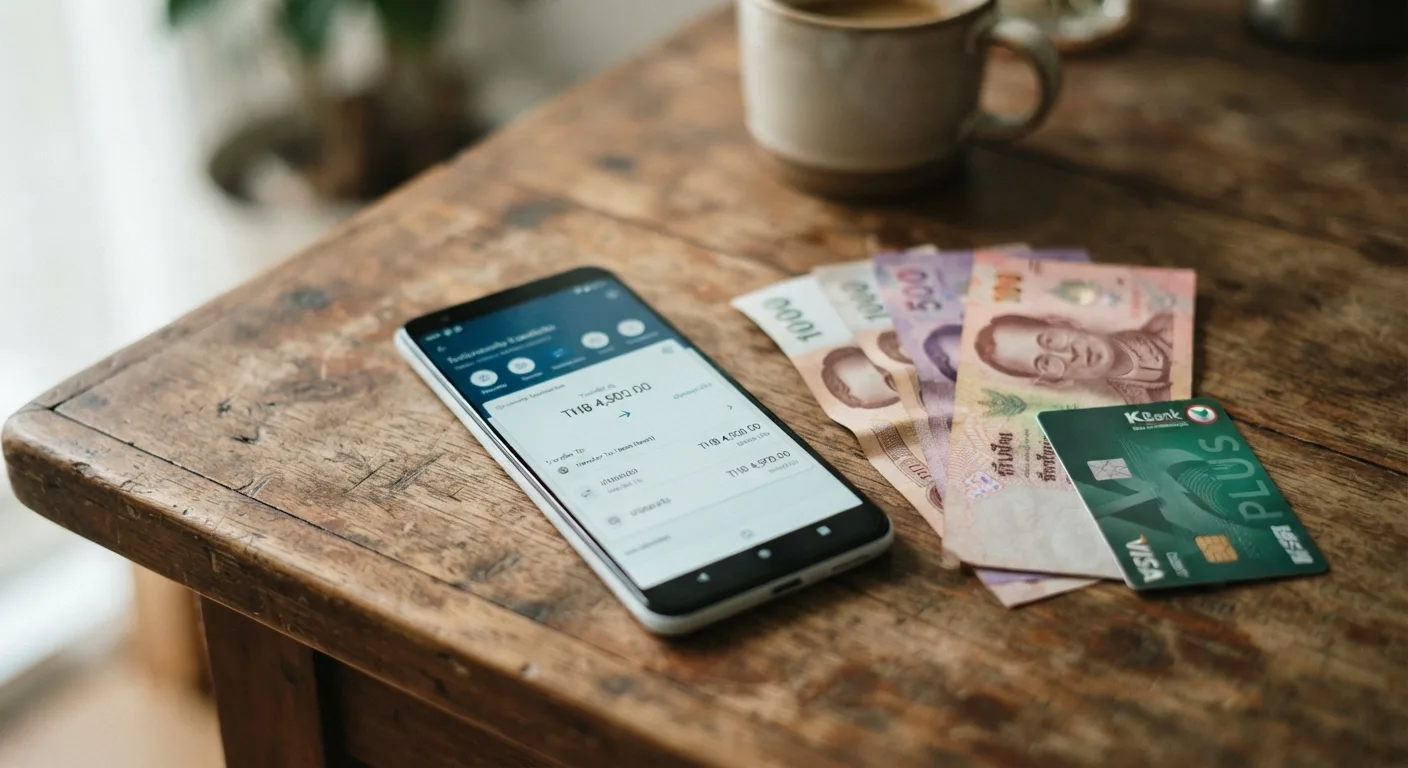
Most families transferring a monthly household budget from a foreign account lose money in two places at once: a marked-up exchange rate spread and a fixed wire fee, on every single transfer. On a household sending the equivalent of $2,500 a month, a combined loss of even 2–3% between spread and fees works out to $50–$75 a month — and over twelve months that is $600–$900, which routinely exceeds what the same family spends on transport for the entire year.
The practical setup questions worth resolving before you start: whether to send in your home currency and let the receiving side convert, or convert first and send Baht directly; which account actually receives the funds; and what Thai ATMs charge per withdrawal, since Thailand's flat per-transaction ATM fee punishes small, frequent withdrawals far more than one larger monthly one.
Opening a Thai bank account is also genuinely difficult on some visa types, which is why many families route money through international transfer providers rather than a local bank relationship at all.
The Costs Nobody Budgets For
Beyond rent, food, school, and insurance, a family of three in Thailand carries a set of costs that rarely make it into a first-draft budget.
- Flights home: one family trip a year, priced honestly for three people rather than one, is often the single largest annual expense after school fees.
- Visa and document costs: application fees per person, extension fees, and document legalization or certified translation costs add up across a family of three.
- Border runs and travel tied to a 180-day rhythm: these carry their own transport and accommodation costs beyond the visa fee itself.
- Month-one setup costs: bedding, kitchen equipment, a desk chair that will not wreck your back after eight hours of remote work, air purifiers, and school supplies.
- Double rent during any relocation overlap between an old lease ending and a new one beginning.
- Gear replacement: heat and humidity are genuinely hard on laptops and electronics, and one failure can turn into a four-figure month.
- Insurance excess and out-of-pocket costs that fall below your policy's deductible.
- Thai tax residency: spending 180 days or more in Thailand in a calendar year is a tax-relevant threshold with real financial consequences that most nomad budgets simply ignore. This is a planning matter, not a line item we can price for you — check the current rules with the Thai Revenue Department and speak with a cross-border tax professional before your travel pattern locks you into residency you did not plan for.
Visa and document costs are the line families most often price for one person and then multiply wrong. Our DTV visa guide for families walks through the current fee structure in detail.
Warning Note: hold a defined emergency reserve in liquid, accessible funds, separate from your monthly budget. Families on the DTV visa route are already required to hold a substantial liquid balance as part of the visa's financial requirements — treat that balance as your buffer, not as spending money for a rough month.
Three Real Monthly Budgets for a Family of Three
Here is the centerpiece: full line-item monthly budgets for a family of three across the three tiers, in Baht with USD.
| Line item | Lean (THB) | Middle (THB) | Comfortable (THB) |
|---|---|---|---|
| Rent | 12,000–18,000 | 22,000–32,000 | 35,000–55,000 |
| Electricity/utilities | 2,000–3,500 | 3,500–6,000 | 6,000–12,000 |
| Internet/mobile | 1,000–1,500 | 1,200–1,800 | 1,500–2,200 |
| Groceries | 6,000–9,000 | 10,000–16,000 | 18,000–28,000 |
| Eating out | 2,000–4,000 | 5,000–8,000 | 10,000–18,000 |
| Education | 1,000–7,000 | 1,000–7,000 | 15,000–58,000 |
| Healthcare/insurance | 2,000–4,000 | 6,000–10,000 | 10,000–16,000 |
| Transport | 3,000–4,000 | 4,000–7,000 | 8,000–15,000 |
| Activities/misc. | 1,500–3,000 | 3,000–6,000 | 6,000–12,000 |
| Total (approx.) | ~31,000–54,000 | ~56,000–94,000 | ~110,000–216,000 |
| Approx. USD | $910–$1,590 | $1,650–$2,765 | $3,235–$6,350 |
The lean tier buys a local-neighborhood rental, distance education, mostly Thai groceries, a scooter, and basic insurance. It does not include international travel, a car, or much of a buffer for surprises — it is a genuinely tight, workable budget for a family willing to live largely as locals do.
The middle tier buys a comfortable condo or small house, a mix of local and Western groceries, real insurance coverage, some paid activities for the child, and either a car or a regular Grab habit. It still assumes distance education; adding international school here pushes the total toward the comfortable tier.
The comfortable tier buys a house with outdoor space or a well-located larger condo, one child in international school, private hospital-level healthcare, and regular domestic travel. It does not automatically include an imported grocery habit at the extreme end, or a second child's school fees, both of which push the range higher still.
We live, most years, in the middle tier, with one deliberate trade: we have kept our child in accredited distance education rather than international school, which is the single choice that keeps our total in the middle range rather than the comfortable one. That is not a judgment on families who choose differently — it is the specific trade we made to prioritize savings and flexibility over school-based peer structure, and we would make a different call if our child were approaching exam years.
Frequently asked questions
How much does a family of three need per month to live in Thailand?
Realistically, 60,000–250,000 THB a month (about $1,750–$7,300), depending almost entirely on rent, air conditioning use, and whether your child is in distance education or international school. A workable middle-ground budget for most families sits around 56,000–94,000 THB ($1,650–$2,765).
Is Thailand still cheap in 2026?
It depends on how you live. Thailand remains excellent value for a family living partly local — local food, a modest rental, distance education — but a family living entirely on imported groceries, international school, and a tourist-zone villa can spend as much as a European city. Both are true at once.
How much does international school cost in Thailand?
Roughly 180,000–700,000 THB a year ($5,300–$20,600) per child, depending on city and school tier, plus 20–25% on top for registration, uniforms, transport, and trips, with 3–5% annual fee increases. Bangkok's top-tier schools run considerably higher.
Can we live in Thailand on $2,000 a month as a family?
Yes, in the lean-to-middle range, if you choose distance education over international school, rent a local-neighborhood unit rather than a tourist-zone villa, and keep your grocery basket mostly Thai. It becomes difficult once you add international school or an all-day-AC villa.
What is the biggest hidden cost of living in Thailand with kids?
Electricity from air conditioning and the 20–25% add-on above headline school tuition are the two most commonly underestimated lines. Both can add tens of thousands of Baht a month that families typically forget to budget until the first real bill or invoice arrives.
Do we need private health insurance in Thailand?
Yes. Routine care is affordable out of pocket, but a serious pediatric admission, an accident, or a specialist evacuation can cost far more than a year's premium. Coverage scope — inpatient versus outpatient, geographic reach, and whether it travels with your child — matters more than the headline price.
How much should we save before moving to Thailand as a family?
Beyond your first three to six months of living costs, budget separately for the move-in cash shock (deposit plus first month, often three to four months' rent upfront), visa and document fees, and a liquid emergency reserve, which for DTV visa holders is already partly built into the visa's own financial requirements.
Build your own number
Start with the schooling model, because it constrains everything after it: distance education or international school. Next, pick the city, based on that schooling choice and on whether you value Chiang Mai's affordability, Phuket's beach access, or Bangkok's transit and healthcare depth. Then price the actual rent band in the actual neighborhood you would live in, not a citywide average. Add the honest electricity range for the property type and AC habit you expect to have. Finally, add roughly 15% on top of your total for the costs this article warned about — the double rent, the gear failure, the visa run — because they are not edge cases, they are a normal year.
What these numbers changed for us was not the lifestyle we imagined before we moved, but the shape of it: we chose a smaller rent, a distance-education schedule that costs us time rather than money, and a slower travel rhythm, so that the number stayed one we could sustain for years rather than one that looked good for a single glossy year.
Rents, school fees, insurance premiums, and exchange rates all move. Re-price every figure in this article against current listings and the live exchange rate before you commit to anything.
Sources
Written by Fabrizio Bestoso
Fabrizio Bestoso is a digital entrepreneur and the father of a family that lives and works on the move across Thailand, Asia, Spain and Middle East. He started Nomad Family Hub to turn the logistics his own family works through — the DTV visa, health insurance, multi-currency money, distance schooling, work — into step-by-step guides, each checked against official sources and against what actually happened.