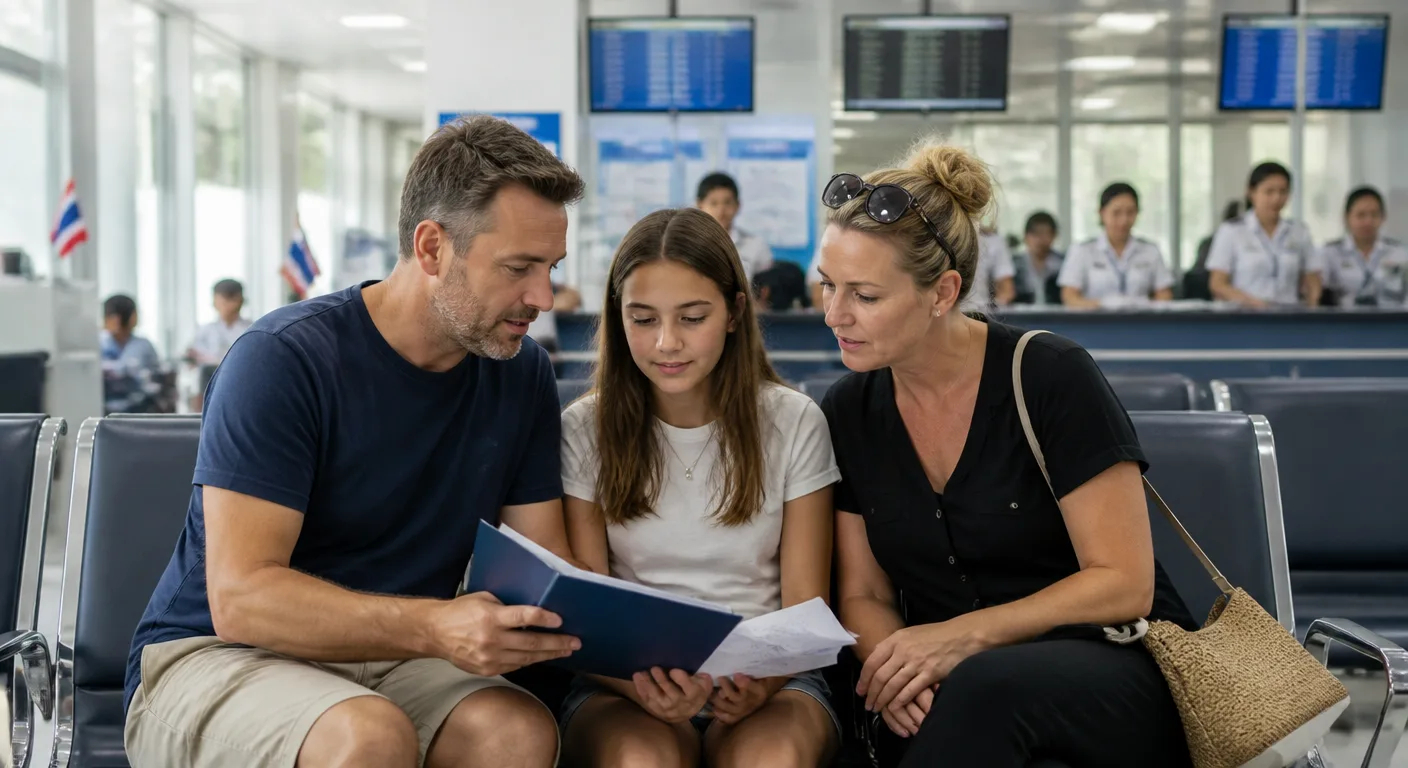
90-Day Reports and TM30 for Families: the Paperwork Nobody Warns You About
A plain, procedural guide to the two paperwork obligations underneath a long stay in Thailand — the foreigner's 90-day report and the landlord's TM30 — with what changes for a family and what to do when the landlord never filed.
 By Fabrizio Bestoso · · 17 min read

We had been in the rented house for a few weeks, passports freshly stamped, before anyone mentioned that there were two separate pieces of paperwork sitting under our stay, not one. Both have flat, forgettable names — TM30 and the 90-day report — and almost everyone we met in our first month mixed them up, including us at first. The short version is that one belongs to the landlord and one belongs to the foreigner, and they notify immigration of two different things. In our own household, only the foreign parent files the 90-day report at all, because my wife and daughter hold Thai citizenship. I don't file every cycle either, since work takes me out of Thailand often enough that most exits and re-entries reset the clock before a report is even due.
Before going further, here is the shape of it:
- The 90-day report (form TM.47) is the foreigner's own filing, due every roughly 90 consecutive days spent in Thailand.
- The TM30 is the landlord's, owner's, or hotel's filing, due within 24 hours of a foreigner moving in.
- The filing window for the 90-day report runs roughly two weeks before the due date to a week after it.
- The online portal for the 90-day report only works once you have already filed in person or by mail at least once.
- A late 90-day self-report costs 2,000 THB (roughly $56, and exchange rates move); whether an office also wants a current TM30 receipt at that counter varies.
What the 90-day report is, and when it is due
The 90-day report, filed on form TM.47, is the address notification a foreigner staying in Thailand more than 90 consecutive days must submit to immigration every 90 days, confirming they are still living where they said they would be. It applies to any long-stay foreigner, DTV holders included, not just retirees or work-permit holders. The count starts from your entry stamp, and a foreigner who stays in Thailand more than 90 consecutive days must notify immigration of their address every 90 days, with the count resetting every time they leave and re-enter the country — a rule confirmed on the Royal Thai Consulate-General's 90-day notification page. That reset is the reason some long-stay families, ours included, go whole cycles without ever needing to file: a work trip abroad restarts the clock before the 90 days are up.
Most current sources put the filing window at roughly 14 or 15 days before the due date through 7 days after it, though the consulate's own wording is narrower, "within 7 days before or after." Because the exact days-before figure isn't consistent across sources, we would treat "roughly two weeks before to a week after" as the safe working rule and confirm the precise number with your own office. If you arrived on a long-stay visa such as the one described in how we applied for the DTV as a family, your first 90-day due date is simply 90 days after your entry stamp, and every renewal after that counts from the previous report or the last re-entry, whichever came later.
Pro-tip: treat the opening of the window as your filing day, not the deadline. Filing in the first few days leaves slack if the office happens to be closed for a public holiday partway through your window — that is exactly what caught us out once, with no fine or lasting consequence, just a wasted trip and a returned visit a day or two later.
The two forms side by side: TM30 and TM.47
The TM30 tells immigration where a foreigner is sleeping. The 90-day report tells immigration that the foreigner is still there. Keeping those two sentences separate is the fastest way to stop confusing the forms.
| Item | TM30 | 90-day report (TM.47) |
|---|---|---|
| What it tells immigration | A foreigner is staying at this address | The foreigner is still at their reported address after 90+ days |
| Who files | Owner, house master, or hotel | The foreigner themselves |
| When | Within 24 hours of arrival at the address | Every ~90 consecutive days |
| Where | Local immigration office or online TM30 system | Immigration office, by mail, online, or via a representative |
| Consequence of missing it | Fine on the landlord or house master; can complicate the tenant's own paperwork | Fine on the foreigner, from 2,000 THB (roughly $56) upward |
| What you keep as proof | TM30 receipt or acknowledgment slip | Stamped TM.47 slip or portal confirmation |
People blur the two because both involve a stamp from the same office and both get requested at the same counters, sometimes on the same visit. But one is entirely about the address, filed by whoever controls the property, and the other is entirely about the person, filed by the foreigner living there — and an office asking for one is not asking about the other, even when it feels that way at the window.
How to file: in person, online, by mail
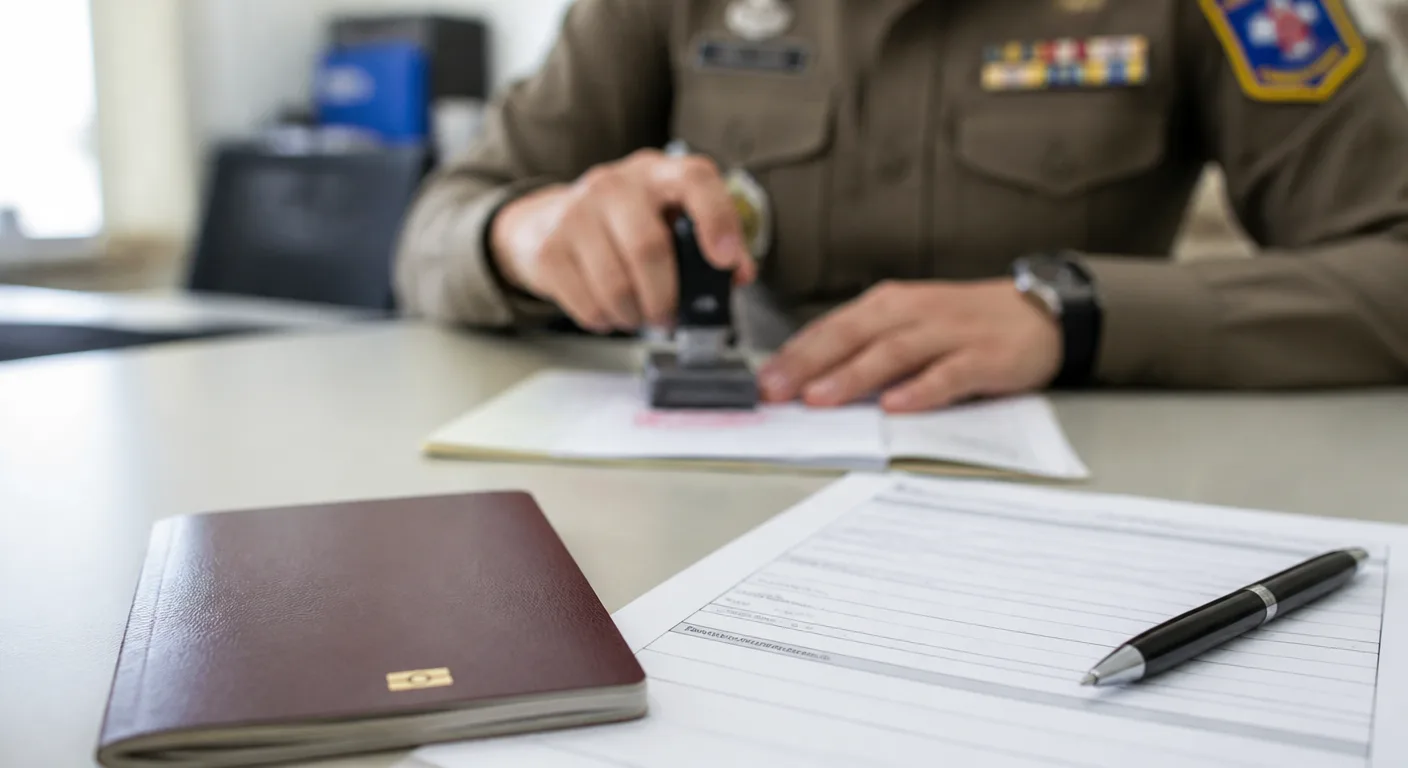
Yes, you can do your 90-day report online, through the Immigration Bureau's TM.47 portal — but only if you have already reported in person or by mail at least once before. The online route is unavailable for a first-ever report, after getting a new passport, after a change of address, or after a new entry into the country, according to both Acclime Thailand and ThaiLawOnline as checked in September 2026. In practice that means most long-stay families use the office at least once early on, then move to the portal for later cycles, until the next passport renewal or move resets them back to an in-person visit.
| Route | Best for | Catch |
|---|---|---|
| In person | First report, after a new passport, after moving, after re-entry | Requires a visit and, at some offices, a queue |
| Online (TM.47 portal) | Repeat reports with no recent changes | Needs one prior in-person or mailed report on file |
| Registered mail | Reporters far from an office who plan ahead | Must arrive at least 15 days before the due date |
| Authorized representative | Anyone who can't attend in person | Needs a signed authorization and your documents |
For an in-person report, most university and visa-service pages describe a similar document set:
- Your passport, plus photocopies of the photo page, current visa page, and latest entry stamp.
- A completed TM.47 form (some offices, including Chiang Mai's, post a QR code to it online).
- Your previous 90-day report slip, if you have one.
- A copy of your TM30 receipt — requested at some offices, not others, so treat this as office practice rather than a fixed national rule.
- Occasionally, a small photo, or a copy of your original TM6 arrival card — both listed by some sources but not universal.
Warning: the postal route only works if your documents physically arrive at least 15 days before your due date, with a self-addressed stamped envelope enclosed for the return slip. That timeline rules out mailing it in during the last week of your window — plan a mailed report well ahead, or use one of the other three routes if you're already close to the deadline.
The Thai government has also been rolling out a new immigration app, THIM, piloted from mid-2026 with a fuller launch planned for October 2026. Sources disagree on whether 90-day reporting is part of it from day one or arrives later, so we would not treat the app as a confirmed reporting channel yet — check with your own office whether it currently accepts 90-day reports there, and otherwise stick to the online portal, in-person visit, mail, or a representative, as described above.

What changes when the whole family reports
Each foreign adult in a household reports on their own passport, with their own entry stamp and therefore their own due date — a spouse who arrived a month after you, or on a different visa type, is on a different 90-day calendar even under the same roof. We haven't filed for children ourselves, because in our household only the foreign parent holds a passport subject to this rule, so what follows comes from the published guidance rather than anything we've done at a counter.
One immigration office's own published answer, the Samut Prakan Immigration's FAQ on children, states that if a child lives with a parent who already files their own 90-day report, the child does not need a separate one; from age 15, the office expects the child to report in their own right, with a possible 2,000 THB (roughly $56) fine if they don't. That is one office's stated practice, not a national law, and other offices may handle it differently — the consulate and university pages we checked don't mention a minors' rule at all, so we'd ask your own office directly rather than assume the Samut Prakan answer applies everywhere.
| Family member | Own report? | Watch out for |
|---|---|---|
| Foreign adult on a long-stay visa | Yes, on their own passport | Their own due date, separate from a spouse's |
| Child under roughly 15, living with a reporting parent | Not at most offices, per Samut Prakan's FAQ | Confirm with your local office; this isn't a national rule |
| Child from roughly 15 up | Expected to file at some offices | Possible 2,000 THB fine if skipped |
| Family member with Thai citizenship | No 90-day report at all | Not subject to this rule |
A mixed household like ours ends up with one filer and one calendar, which is simpler than it sounds; a fully foreign family with parents on different visa types, or on the same visa but entered on different dates, can end up tracking two or more due dates at once, which is where the interaction with extensions and border runs described in how we handle the 180-day extension and border-run cycle matters — every exit and re-entry moves that particular passport's count, not the whole household's.
When the landlord never filed the TM30
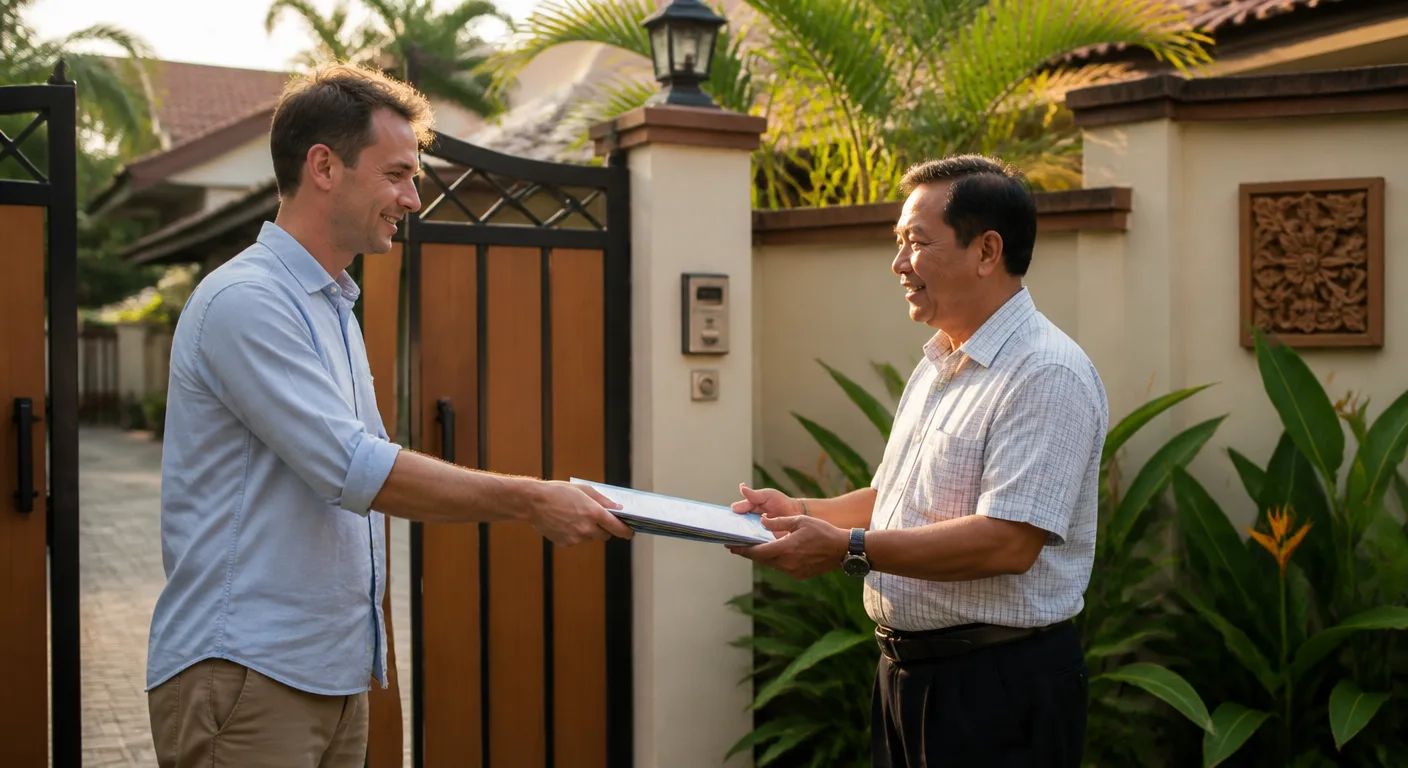
The TM30 is legally the landlord's, owner's, or house master's job, filed within 24 hours of a foreigner moving in — the tenant isn't the one who's supposed to submit it. In our case that duty sits entirely inside our own household, because my wife is the landlord of the property we live in, so we've never had to chase an outside landlord for it or self-file in their place. For a reader whose landlord is not family, the practical problem is real: the consequence of a missing TM30 tends to land on the tenant anyway, because it's the tenant who gets asked for the receipt at the 90-day counter or at an extension appointment, not the landlord.
At move-in, it's worth asking the landlord directly for a copy of the filed TM30 receipt, and asking again after every trip abroad, since a fresh entry can trigger a fresh filing requirement at some offices. If a landlord genuinely won't file, a tenant can go to the immigration office's TM30 counter directly, bringing their passport, the lease or a letter from the landlord, and either a copy of the landlord's Thai ID or the house registration book (tabien baan) number, according to guidance from the Chiang Mai Ambassador visa service — treat this as the general commercial-source procedure rather than something we've tested ourselves. The paperwork and cash that come up at that stage sit alongside everything covered in the lease clauses and signing-day cash that come before any TM30, which is worth reading before signing rather than after a filing problem shows up.
Pro-tip: whoever files it, photograph the TM30 receipt the same day it's handed to you. It's a small piece of paper that's easy to misplace, and having a photo on your phone means you can produce it at short notice at a 90-day report or an extension appointment without digging through a folder.
Office by office: the same rule, different counters
The underlying rule is national — the same 90-day duty, the same TM30 duty — but what happens at the counter is set locally, and it varies more than most pages admit. Some offices ask for a current TM30 receipt before accepting a 90-day report; others don't ask at all. Some expect a fresh TM30 after every re-entry into the country; others only care about the original filing. Which photocopies get taken, how long the visit takes, and whether an agent is worth paying for all come down to the specific office, not a fixed national standard.
In our experience, the office in Cha Am has been the quickest of anywhere I've filed, without ever asking for anything beyond the basic passport and copies — but that's one office, one filer, and shouldn't be read as how every counter in the country behaves. The Chiang Mai Immigration Office is a useful worked example precisely because it publishes its own address, QR code for the TM.47 form, and an online TM30 service on its site — a level of detail not every office offers online, so treat it as a model of what's possible rather than a guarantee your own office matches it. Visa agents around Chiang Mai commonly quote somewhere in the range of 500–800 THB (roughly $14–$22, and this figure is unverified beyond commercial listings) to handle a 90-day report on a client's behalf, which can be worth it for someone without the time for a counter visit.
Before your own visit, ask your office these three questions:
- Do you require a current TM30 receipt to process my 90-day report?
- Do I need a fresh TM30 filed after every time I leave and re-enter the country?
- Which documents and how many copies do you want, and is a QR code or online form available?
What a missed report actually costs
A late self-reported 90-day notification costs 2,000 THB (roughly $56, and exchange rates move), paid at the immigration cashier when you finally show up — and that figure is consistent across every source we checked, including the consulate page and Acclime. The figure for being caught without having reported at all, rather than self-reporting late, is less consistent: the consulate's own text describes at least 4,000 THB (roughly $111) plus up to 200 THB (roughly $6) per day, while Acclime describes a figure up to 5,000 THB (roughly $139). We'd report that range as it stands, rather than settle on one number, and note that self-reporting before you're caught is consistently the cheaper option.
Crucially, a missed 90-day report is not an overstay, and the two carry entirely different penalties. Overstay is charged at 500 THB (roughly $14) per day, capped at 20,000 THB (roughly $556), according to the Royal Thai Embassy's overstay guidance, with anything over 90 days treated as a serious offense leading to deportation and a re-entry ban whose length scales with the overstay. A lapsed 90-day report, by contrast, is purely a notification lapse tied to your address, and it tends to surface later rather than immediately — at your next visa extension, at a border crossing, or when a bank or school asks for a residence certificate that depends on an up-to-date filing history.
Warning: if you realize a report has lapsed, bring it to the office voluntarily and promptly rather than waiting to be asked. The self-report fine of 2,000 THB is consistently the lower figure across sources; the higher figures apply to being caught without having reported at all.
Frequently asked questions
Can I do my 90-day report online?
Yes, through the Immigration Bureau's TM.47 portal, but only if you have already reported in person or by mail at least once before. First reports, a report after getting a new passport, after a change of address, or after a new entry into the country usually require going to the office in person instead.
How early can I do my 90-day report?
Roughly two weeks before the due date up to about a week after it, though sources differ on whether the exact figure is 14 or 15 days before. Confirm the precise window with your own immigration office rather than relying on a fixed number from any single source.
Does every family member need a 90-day report?
Each foreign adult reports on their own passport and due date. One immigration office's published FAQ states that children under roughly 15 living with a reporting parent don't need a separate report, and that children from 15 up should file their own — but other offices may handle this differently, so ask locally.
Who files the TM30, the landlord or the tenant?
The owner, house master, or hotel is legally responsible for filing it, within 24 hours of a foreigner moving in. If they don't, a tenant can file it themselves at the immigration office's TM30 counter, bringing their lease and the landlord's identification details.
What is the fine for a late 90-day report?
A late self-report costs 2,000 THB (roughly $56). Being caught without ever having reported carries a higher, less consistently stated figure — sources describe amounts from around 4,000 THB plus a daily charge up to around 5,000 THB, so self-reporting promptly is the cheaper route either way.
Does leaving Thailand reset the 90-day count?
Yes. Every exit and re-entry starts a new 90-day count from the date of the new entry stamp, which is why some long-stay travelers who leave the country often go whole cycles without ever needing to file.
Is a missed 90-day report an overstay?
No. It's a separate notification offense with its own fine, distinct from overstay, which is charged per day on your visa validity. A missed report is about your address notification lapsing, not about staying in the country past your permitted period.
Do children need their own 90-day report?
At some offices, no — if they live with a parent who already reports. One office's FAQ says this applies under roughly age 15, with children older than that expected to file their own report and facing a possible fine if they don't. Confirm with your own office, since this isn't stated as a national rule.
Our 90-day and TM30 checklist
Between the two of these, the practical routine we'd suggest is short: get a copy of the TM30 receipt at move-in and again after every return from abroad, note the due date for each foreign passport in the household separately, file within the first few days of your window rather than waiting, and use the online portal only once you have one in-person or mailed report already on file. Bring photocopies of everything even when you think you won't need them, and ask your own office the three questions above before assuming your last office's practice still applies.
The one thing that surprised us was simple and low-stakes: the office being closed on a public holiday that happened to fall inside our filing window, which cost us a wasted trip and nothing more. Rules, fees, and office practice all shift over time, and your own immigration office's current instructions always override anything written here — if a report has genuinely lapsed, or you're facing an overstay, or a family member is on a visa type that complicates the picture, that's a conversation for your local immigration office or a licensed Thai immigration lawyer, not something to work out from an article.
Sources
- https://chiangmai.immigration.go.th/en/front-page-english/
- https://thaiconsulatela.thaiembassy.org/en/publicservice/foreigners-staying-in-thailand-more-than-90-days
- https://www.samutprakanimmigration.go.th/frequently-asked-questions/
- https://washingtondc.thaiembassy.org/en/page/advice-on-thailand-visa-overstay-regulations
Written by Fabrizio Bestoso
Fabrizio Bestoso is a digital entrepreneur and the father of a family that lives and works on the move across Thailand, Asia, Spain and Middle East. He started Nomad Family Hub to turn the logistics his own family works through — the DTV visa, health insurance, multi-currency money, distance schooling, work — into step-by-step guides, each checked against official sources and against what actually happened.