DTV Visa Thailand for Families: The Ultimate Step-by-Step Guide
A practical, step-by-step guide to Thailand's DTV visa for families, covering the 500,000 THB financial proof, dependent rules for spouses and children, document checklists, the e-Visa application process, and what changed since the visa's 2024 launch.
 By Fabrizio Bestoso · · 20 min read

Quick overview: what families need to know before filing
We are a mixed Thai–foreign family, so only the foreign parent needs a Thai visa (the mother and our daughter are Thai citizens) and our own filing was the principal applicant's DTV; the dependent steps in this guide come from the fully foreign families we have worked through the same process. The honest answer to "is it worth it" is yes, but only if you treat the paperwork with the same seriousness as a work visa application, not a tourist form. The DTV visa Thailand program replaced a patchwork of education visas, Elite memberships, and repeated visa runs with a single five-year framework that a spouse and children can join as dependents. Before this visa existed, a family of four commonly spent five figures a year in Elite program fees, or burned weeks each year crossing borders on tourist stamps to keep a household legally present.
The Destination Thailand Visa (DTV) is a 5-year multiple-entry visa designed for remote workers, digital nomads, and soft power participants, allowing stays of up to 180 days per entry, extendable once for another 180 days. Spouses and children under 20 qualify as dependents under the primary applicant's status, which makes it the most cost-effective long-term option currently available to nomad families in Thailand.
Before you start, here is what a family application actually requires:
- A primary applicant who qualifies under either the Workcation or Soft Power category, with documented income or activity.
- 500,000 THB (roughly $14,000–$16,000 USD) held in a personal account for at least three months before filing, ideally documented across six months of statements.
- Legally married spouse and/or unmarried children under 20 as the only eligible dependents, each filing a separate application.
- Apostilled or legalized, translated marriage and birth certificates — start this early, it is usually the slowest step.
- A filing sequence: principal applicant approved first at most posts, dependents filing afterward with the approved DTV attached.
What is the Destination Thailand Visa (DTV)? Mechanics & family scope
The DTV is issued under the framework of the Ministry of Foreign Affairs of Thailand and functions as a long-stay, multiple-entry visa rather than a work permit. The five-year figure describes the total validity window of the visa itself, not a five-year continuous permission to remain in the country. Each time you enter Thailand, immigration stamps you in for up to 180 days, and that stamp — not the visa's expiry date — governs your family's actual calendar for reporting, extensions, and border planning.
This distinction trips up a lot of families coming from older blog posts written around the visa's 2024 launch. The visa lets you re-enter Thailand repeatedly over five years; it does not let you stay 1,825 days without ever touching the entry stamp cycle. Understanding that early saves confusion later when you're mapping a school year around 180-day blocks.
It helps to see the DTV next to the options families used before it existed.
| Visa type | Approx. cost per family (4 people) | Stay length | Work rights | Dependent coverage |
|---|---|---|---|---|
| DTV | ~40,000 THB in fees | 180 days per entry, extendable to 360 | Remote work for foreign employers/clients only | Spouse + unmarried children under 20 |
| Education (ED) visa | Varies by school, often recurring | Typically 1 year, renewable | No independent work rights | Not built for dependents as a household unit |
| Thailand Privilege (Elite) | Substantially higher, membership-tier pricing | 5–20 years depending on tier | No work rights | Family packages exist but cost scales sharply |
| Tourist visa runs | Low fees, high recurring travel cost | 60 days, extendable 30 | No work rights | Each member re-enters independently |
| Marriage visa (Non-O) | Moderate, tied to Thai spouse | 1 year, renewable | Requires separate work permit for employment | Only applies where one parent is a Thai national |
The DTV's advantage for a working family is straightforward: it is the only one of these built specifically around a remote-earning parent bringing a spouse and children along as a package, at a fraction of the Elite program's cost.
Who qualifies: primary applicant vs. family dependents
Every DTV application starts with a primary applicant, and that person must be at least 20 years old. The primary applicant qualifies under one of two categories, and the whole family's status depends on which one fits.
Workcation applicants are remote employees of a company registered outside Thailand, freelancers with foreign clients, or owners of a foreign-registered business. In practice we've seen this cover a salaried software engineer working for a US company, a freelance designer invoicing European clients, and a couple running an e-commerce business incorporated abroad. Each of these needs different supporting paperwork, but the common thread is proof that the income and the employer sit outside Thailand.
Soft Power applicants qualify through Muay Thai training, Thai cooking courses, medical or wellness treatment, sports training, or approved seminars and festivals. This category has tightened noticeably since the 2024 launch — some programs that were waved through in the first year, notably thin language-school enrollments used mainly as a visa vehicle, are now routinely refused. If you're going the soft power route, choose a program with genuine substance and documentation, not the cheapest option that technically qualifies on paper.
Dependents are limited to a legally married spouse and unmarried children under 20. Long-term partners who are not legally married do not qualify as dependents under any circumstances; each adult in that situation needs to qualify independently under Workcation or Soft Power.
Pro tip: if both parents work remotely, it is often stronger to have each of them file as an independent primary applicant rather than structuring one as the principal and one as a dependent spouse. It removes a single point of failure — if one application hits a snag, the other parent's status and the children's dependent filings aren't automatically at risk.
Family logistics matter as much as the legal mechanics. The 180-day stamp cycle shapes how a school year actually runs: many DTV families plan a border exit or a flight home around the same window they'd naturally take a school break, rather than treating it as a disruption. Distance education and worldschooling curricula fit this rhythm well since they don't depend on a fixed in-country term calendar — we found reviewing options like the Wolsey Hall Oxford review useful when comparing structured distance-schooling providers against a looser worldschooling approach.
Here is how the requirements split between the person filing as principal and each dependent:
| Requirement | Primary applicant | Dependent |
|---|---|---|
| Financial proof | 500,000 THB seasoned balance in own name | Generally none nationally; some posts expect proportionally more per person |
| Work/activity documents | Employer letter, contracts, or soft power enrollment | Not required |
| Relationship documents | Not applicable | Legalized/translated marriage or birth certificate |
| Application fee | ~10,000 THB | ~10,000 THB, filed separately |
| Filing order | Filed and approved first at most posts | Filed after principal's approval, referencing it |
The financial proof: navigating the 500,000 THB requirement
The national baseline is a liquid balance of 500,000 THB (approximately $14,000–$16,000 USD, or roughly €13,000–€14,500 EUR at typical exchange rates — check the current rate on the day your statement is issued, since it moves) held in the primary applicant's personal bank account. This is the single figure most people fixate on, but the amount matters less than how you hold it.
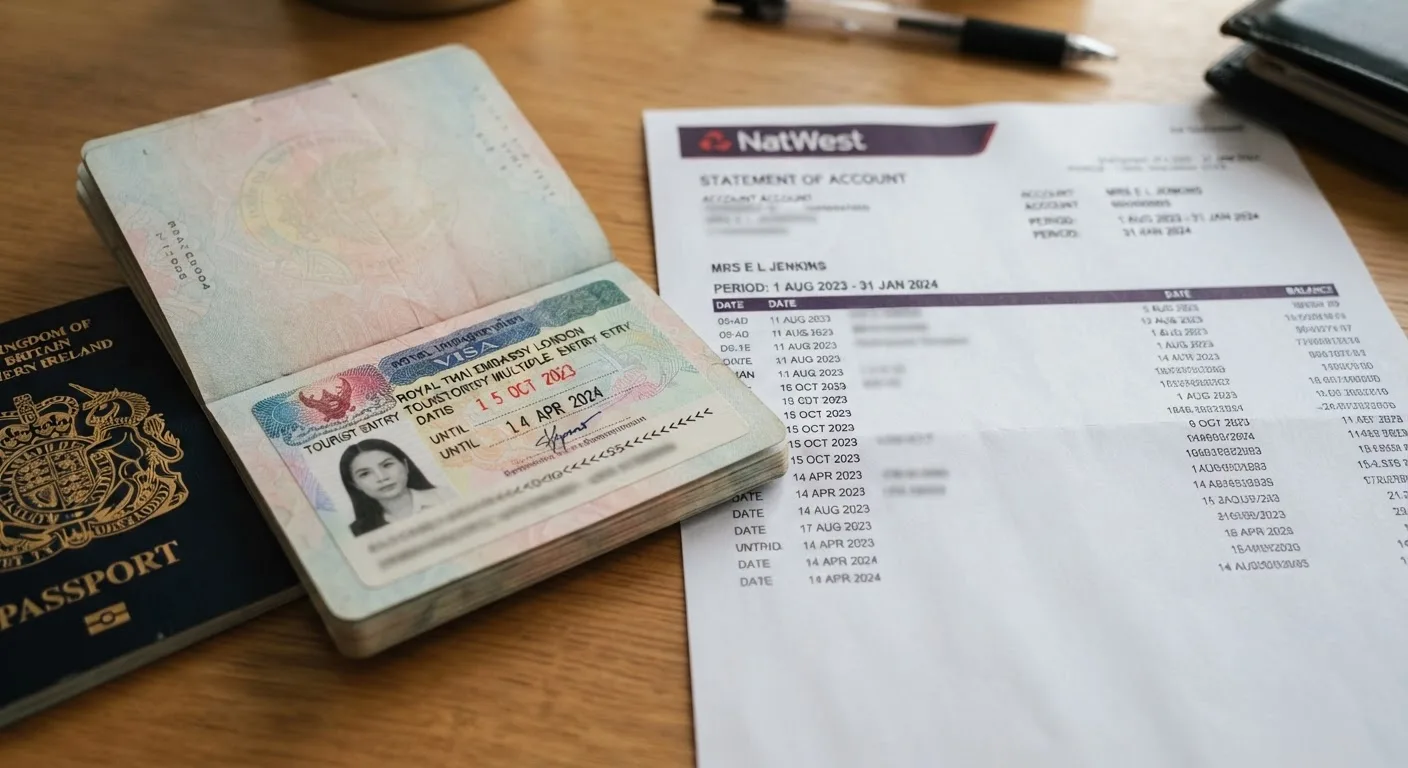
The most important update since the visa's 2024 launch concerns seasoning. At launch, some posts accepted a current-balance snapshot with little scrutiny of history. As of 2026, the widespread standard is bank statements covering the last three months with the balance at or above 500,000 THB throughout that entire window, and a number of embassies now ask for six months of history. A lump sum deposited shortly before filing — even one that comfortably clears the threshold on the closing date — is the single most common cause of rejection we've seen discussed among applicants and among people we know locally who've helped file these applications. The safe approach: hold the funds for at least three months, prepare six months of statements if you can, and always check the specific wording published by the embassy or consulate covering your jurisdiction.
Funds can be held in a foreign bank account and in a foreign currency — there is no requirement to convert to Thai Baht or open a Thai account before applying. Personal savings and checking accounts are the reliable form of evidence. Cryptocurrency holdings are not accepted under any post we're aware of, and several embassies also reject brokerage or investment account statements outright. If your funds sit in a brokerage account or a crypto wallet, move them into a standard personal bank account well before your seasoning window starts, rather than hoping to argue the point with a consular officer.
Warning: a balance that dips below 500,000 THB at any single point during the statement window — even briefly, even if it recovers before the closing date — can sink an application. Consular reviewers read the full statement, not just the final line.
Families often ask whether 500,000 THB is enough to cover four people. The national rule only requires that figure from the primary applicant; it does not scale automatically per dependent. In practice, though, we've seen documented variance where certain embassies apply an informal escalating expectation for larger households, effectively looking for something closer to the equivalent of 500,000 THB per applicant. This is embassy-level practice, not a national requirement, but it's real enough that families should budget for the possibility and check their specific post's published checklist before assuming the baseline figure covers everyone.
If your statements are in a currency other than Thai Baht, use a reliable source like the Wise currency converter to check the conversion on the date your statement was issued, and build in a buffer above 500,000 THB rather than filing at a number that barely clears the line — exchange rate movement between the statement date and the officer's review date can matter at the margin.
Complete document checklist for remote worker parents
Beyond the funds, the primary applicant's file needs to be airtight. Here is what to prepare:
- Passport with a minimum of 6 months' validity remaining from the date of application, plus a recent white-background photo meeting standard visa photo specifications.
- Proof of location confirming you are physically outside Thailand at the time of application, since the DTV cannot be filed from inside the country.
- Bank statements showing the 500,000+ THB balance across the seasoning window described above.
- Employment contract or employer letter explicitly approving remote work from Thailand, or company registration documents and proof of income for freelancers and business owners.
- Portfolio, client contracts, or invoices for freelancers, showing an active foreign client base.
The employer letter is where a lot of applications quietly fail. A strong letter states plainly that the employee is permitted to work remotely, names Thailand specifically as an approved location, and is signed by someone with authority to confirm it. A weak letter is vague about location, describes the role in general terms, and never actually says the company knows or approves of remote work from Thailand — reviewers read that vagueness as a red flag rather than an oversight.
Health insurance is not a hard national requirement for the DTV, but it is strongly advisable, and a small number of posts have requested proof of coverage during review. Beyond the visa application itself, having family health insurance in Thailand in place before you land matters for entirely practical reasons — local hospital billing for a family without coverage can be a serious financial shock, DTV status aside.
Dependent document checklist (spouse & children under 20)
Each dependent files a separate application and needs their own file, even though it's built on top of the principal's approval. The checklist:
- Marriage certificate for a spouse, legalized or apostilled and translated into English if required by the specific embassy handling the application.
- Birth certificates for every child under 20, held to the same authentication standard as the marriage certificate.
- Copy of the primary applicant's approved DTV, since most posts expect the principal to be approved before dependents file and require the approval referenced in the dependent's application.
- Individual passports for every family member, each with at least 6 months' remaining validity.
- A separate ~10,000 THB fee for each dependent, paid individually.
Pro tip: start the apostille or consular legalization process for marriage and birth certificates before you touch anything else. Legalization timelines in many home countries routinely run longer than the visa's own processing window, and it's the step families most often underestimate.
One preventable but common rejection cause deserves its own callout: name mismatches. A maiden name on a marriage certificate that doesn't match the name on a passport, or a transliterated name spelled differently across a birth certificate and an application form, can stall or sink an otherwise solid dependent file. Check every spelling, every hyphenation, and every transliteration across all documents before you upload anything.

Step-by-step e-Visa application walkthrough
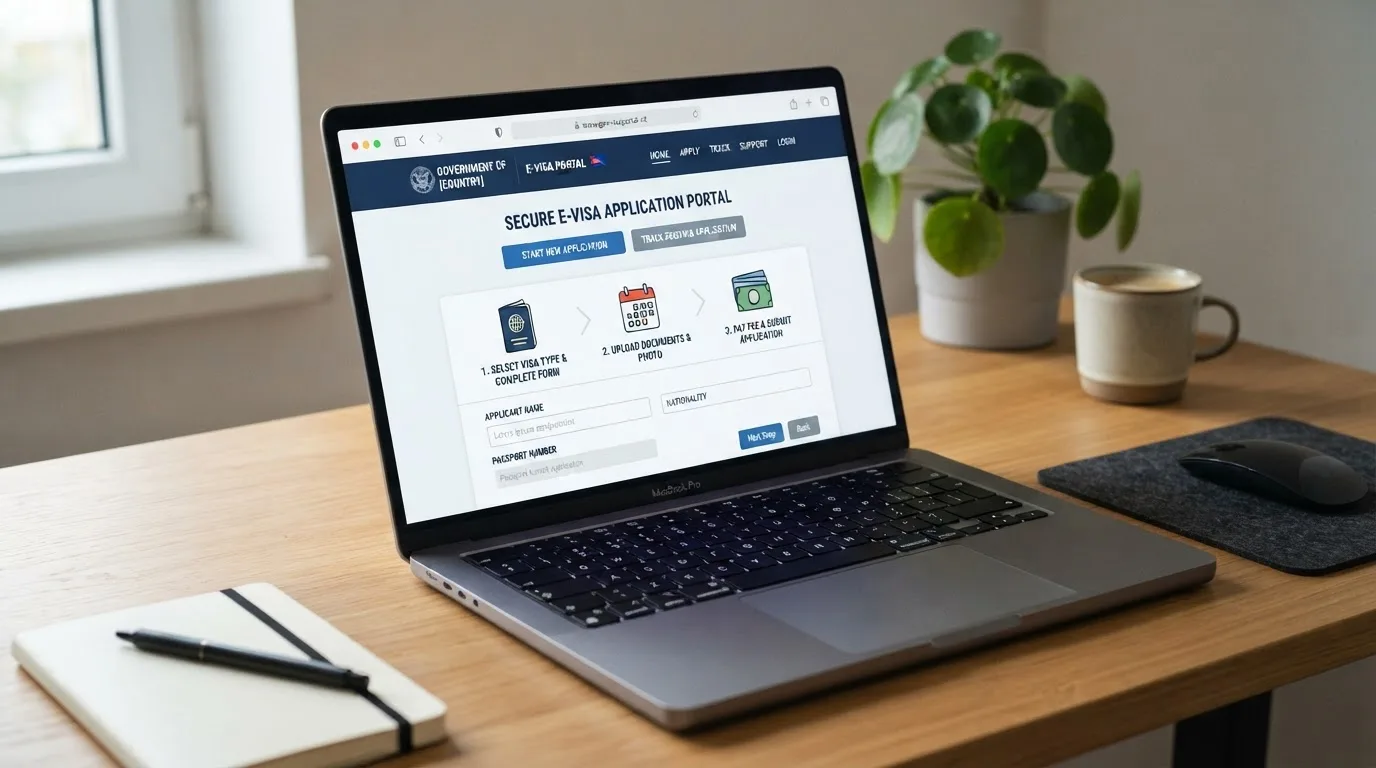
Applications are filed entirely online through the official Thai e-Visa portal. Since January 2025, walk-in filing has effectively ended at nearly every post, so the online system is the only route for almost all applicants. The visa itself is issued as a PDF e-Visa, not a sticker in your passport, so keep digital and printed copies accessible for travel.
The practical sequence looks like this:
- Create an account on the portal and select the embassy or consulate jurisdiction responsible for your current location or nationality — this determines which specific checklist and scrutiny level applies to you.
- Complete the application form for the primary applicant, entering personal, employment, and travel details accurately.
- Upload supporting documents in the accepted formats (PDF, JPG, PNG), keeping files under the portal's size limits — oversized or poorly scanned documents are a common cause of processing delays, not just rejections.
- Pay the application fee, roughly 10,000 THB (~$290–$310 USD) per applicant, charged in local currency at your chosen post — some posts collect a local-currency equivalent that lands somewhat higher than the baseline conversion.
- Submit and wait for processing, typically 5 to 15 working days, though busier posts can run longer.
- If the embassy requests additional information, respond quickly and send exactly what was asked for — volunteering extra, unrequested documents tends to slow review rather than help it.
- Once the principal applicant is approved, file each dependent's application separately, attaching the approved DTV and the dependent's own supporting documents.
Families sometimes ask whether to use one account for everyone or separate accounts per family member; either can work, but keep each person's documents cleanly organized under their own application regardless of account structure.
Here is a realistic cost picture for a family of four filing together:
| Cost item | Approximate amount |
|---|---|
| Visa fees (4 applicants x ~10,000 THB) | |
| Apostille/legalization (marriage + 2 birth certificates) | Varies by country, often $150–$400 per document |
| Certified translations | Varies by language pair, often $30–$80 per document |
| Contingency (courier, reprints, travel to a jurisdiction embassy) | Budget at least $200–$300 |
| Estimated total | Roughly $1,800–$2,500+, excluding travel to file |
These figures are estimates based on typical costs reported by applicants and should be checked against current pricing in your home country before budgeting precisely.
Arrival, 180-day stamp, extensions, and living in Thailand
At the port of entry, you present the e-Visa PDF along with your passport, and the immigration officer stamps you in for up to 180 days. That stamp date, not the DTV's five-year expiry, is what governs your family's practical calendar from that point forward — track it closely, because it determines your reporting obligations and your extension window.
The 180-day stay can be extended once per entry at a local immigration office, through the Thai Immigration Bureau, for a fee of 1,900 THB, allowing up to 360 continuous days within that entry block. This extension is discretionary, not automatic — some offices approve it routinely, others expect an exit and re-entry instead, and immigration may ask for an updated bank statement showing the 500,000 THB balance at the extension appointment. Always have a Plan B border exit ready in case the extension is refused at your local office.
Anyone staying continuously past 90 days must complete a 90-day report, filed either online or in person at immigration, and landlords or the family itself may need to file a TM.30 residence notification when moving into new accommodation. Neither of these is optional paperwork to skip, even though enforcement varies by province.
Families who plan to stay past the 360-day mark on a single entry need to think about border runs the way they'd think about school terms — scheduled in advance around a break, not scrambled together at the last minute because the stamp is about to expire. Once you're settling into a location, practical questions around leases, school enrollment, and everyday banking friction on a DTV status start to matter more than the visa paperwork itself; comparing the cost of living in Chiang Mai for a family against other hubs is a useful exercise before committing to a lease longer than a few months.
Tax residency & common mistakes that cause rejections
Immigration status and tax residency are separate questions, and conflating them is a common mistake. Under Thai tax rules, spending 180 days or more in Thailand within a calendar year can make an individual a Thai tax resident, regardless of what visa they hold. Remittance rules and treaty positions vary by nationality and have been subject to revision in recent years, so this is genuinely a "check with a professional" area rather than something a travel guide can responsibly resolve for you. We'd recommend speaking with a cross-border tax professional before your first long stay, not after, and reviewing guidance from the Thai Revenue Department directly rather than relying on secondhand summaries.
We are a family sharing what we've learned filing and living on this visa, not a law firm or a tax practice — this section, like the rest of the guide, is practical information rather than legal or tax advice, and the rules can and do change.
With that scope in mind, here are the rejection causes we see repeated most often, along with the fix for each:
- Applying from inside Thailand — the DTV must be filed while outside the country; a tourist entry cannot be converted in-country. Fix: file before you travel, not after you arrive.
- Unseasoned funds — a lump sum landing weeks before filing. Fix: season the balance for at least three months and document six.
- A balance dipping below 500,000 THB during the statement window. Fix: keep a buffer well above the threshold throughout, not just on the closing date.
- Uncertified or unlegalized translations of birth and marriage certificates. Fix: start legalization immediately, before anything else.
- Vague employer letters that never explicitly permit remote work from Thailand. Fix: get the letter rewritten to name Thailand and state approval plainly.
- Name mismatches across passports and civil documents. Fix: audit spelling and transliteration across every document before uploading.
- Thin soft-power enrollments used purely as a visa shortcut. Fix: choose a program with genuine substance and documentation if going this route.
- Filing dependents before the principal is approved, at a post that requires sequencing. Fix: confirm your specific post's expected order before filing anyone.
The application fee is non-refundable if the application is rejected, which is the practical argument for spending an extra week preparing documents properly rather than filing quickly and hoping for the best.
Frequently asked questions
Can I apply for the DTV visa while inside Thailand?
No. The DTV e-Visa must be submitted while you are physically located outside Thailand, through the official e-Visa portal, selecting the embassy responsible for your current location or home country of residence. Tourist entries and visa exemptions cannot be converted to a DTV in-country.
Does each family member need to show 500,000 THB in bank balance?
Under the national rule, no — the primary applicant shows the 500,000 THB liquid balance and dependents apply under that status. In practice, some embassies expect proportionally higher household funds for larger families, so confirm your post's published checklist before filing.
How long do the funds need to be in my account?
Most embassies now require bank statements covering the last three months with the balance at or above 500,000 THB throughout, and some request six months. A large deposit made shortly before applying is the most common cause of rejection, even when the final balance qualifies.
Can my children attend school in Thailand on a DTV dependent visa?
It depends on the school. A DTV dependent visa lets children join worldschooling and distance-education programs, but international schools set their own visa rules: as of September 2026, Grace International School in Chiang Mai states that the DTV is not eligible for student enrollment, and SBS International School Chiangmai says non-Thai students must hold an Education Visa. Ask each school before you pay anything.
How much does the DTV visa cost for a family of four?
The application fee is approximately 10,000 THB (~$290–$310 USD) per applicant, so roughly 40,000 THB for two parents and two children. Budget separately for apostille or legalization, certified translations, and any in-country extension fees of 1,900 THB per person.
Can I work for a Thai company on a DTV visa?
No. The DTV permits remote work for foreign clients and employers, or participation in approved soft power activities. Working for a Thai employer requires a Non-Immigrant B visa and a Thai work permit. You may hold passive shares in a Thai company but not run daily operations.
Is the 180-day extension guaranteed?
No. The extension costs 1,900 THB and is available once per entry, but approval is at the discretion of the local immigration office and practice varies. Some offices request an updated bank statement showing 500,000 THB. Always keep a border exit as a backup plan.
What happens when my child turns 20 while on a DTV visa?
Once a child reaches 20, they no longer qualify as a DTV dependent. They must transition to their own independent DTV as a remote worker or soft power applicant, an ED visa, or another valid category. Plan the transition several months before the birthday.
Your family filing checklist
When we lay it out plainly, the whole process comes down to a four-stage sequence: season the funds for at least three months, authenticate every civil document while that seasoning clock runs, file the principal applicant and wait for approval, then file each dependent referencing that approval. Rushing any one of those stages is what turns a straightforward filing into a rejected one.
What the DTV actually changed for us was less about the paperwork and more about the shape of ordinary life — we stopped planning our year around visa runs and started planning it around school terms, work deadlines, and where we actually wanted to live. That's a small-sounding shift, but it's the difference between treating Thailand as a temporary stop and treating it as a real, workable base for a family.
Rules, fees, and embassy-level practice change over time, so always verify the current checklist published by the specific embassy or consulate covering your jurisdiction before you file anything.
Sources
Written by Fabrizio Bestoso
Fabrizio Bestoso is a digital entrepreneur and the father of a family that lives and works on the move across Thailand, Asia, Spain and Middle East. He started Nomad Family Hub to turn the logistics his own family works through — the DTV visa, health insurance, multi-currency money, distance schooling, work — into step-by-step guides, each checked against official sources and against what actually happened.