Wolsey Hall Oxford Review: Honest Pros & Cons from a Nomad Family
As a fee-paying family we review Wolsey Hall Oxford after using it continuously from Year 3 through the second IGCSE year (and still), covering real costs, the honest cons, and how the model changes at each stage.
 By Fabrizio Bestoso · · 25 min read

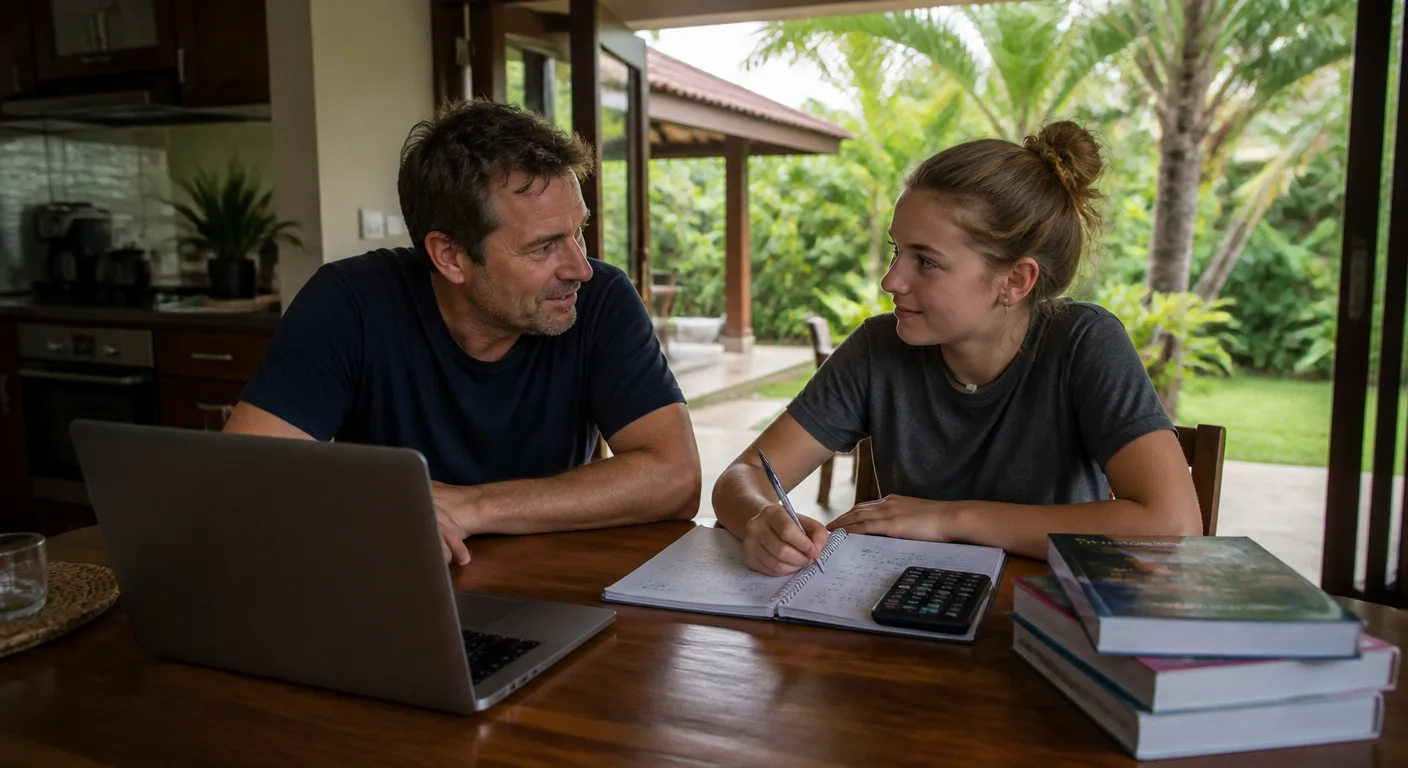
Our daughter has studied full-time with Wolsey Hall Oxford from Year 3 of the British curriculum through to her second IGCSE year, while we have worked remotely across Thailand, Spain, and elsewhere
That span is the reason this review exists. Most pages ranking for Wolsey Hall Oxford are written by families comparing providers on paper, by parents in their first term, or by the provider itself. We have paid the invoices at every stage, and this review covers Upper Primary, Lower Secondary, and IGCSE as the same child moved through all three.
That matters because a first-year review cannot tell you what this looks like when your child is eight and needs you sitting next to them for most of the working day, when they are twelve and negotiating every deadline they can, and when they are fifteen and sitting external exams with real dates in the calendar. We can, because we have lived all three.
We are a fee-paying family. This review is independent and unsponsored. Where a link in this article may earn a commission, it costs the reader nothing and does not change our assessment — the criticisms below are the ones we would give a friend over dinner, not the ones a provider would approve.
The verdict, up front: Wolsey Hall Oxford is an asynchronous, tutor-supported British curriculum for ages 4–18, priced per course rather than per term. Our family has used it continuously from Year 3 to the second IGCSE year while living abroad. It suits self-directed learners and families who need to move across time zones without a timetable. It does not suit families who want live lessons, a class cohort, or a provider that handles exam entry — and at Primary age it requires a parent present for most of the working day.
What Wolsey Hall Oxford Actually Is
Wolsey Hall Oxford is a self-paced distance learning provider, not a virtual school with a class timetable. Students work through modules on Canvas, the learning platform, at their own pace, and submit assignments for written feedback from a subject tutor rather than sitting in a scheduled lesson.
The human structure around that self-paced work has two parts. A Student Progress Manager, referred to as the SPM, tracks how a child is moving through their courses and is the family's main point of contact for anything that isn't subject-specific marking. A Parent Portal gives the paying adult visibility into submissions, feedback, and progress without needing to log in as the student.
It is worth being precise about what this is not. There is no live video lesson, no fixed weekly timetable, and no class your child belongs to in the way they would at a conventional school. Enrolment is rolling and year-round — there is no fixed term start, which we will come back to because it is one of the model's real strengths.
Wolsey Hall covers Lower and Upper Primary, Lower Secondary (Years 7–9), IGCSE, and A Level, spanning ages roughly 4 to 18. On accreditation, Wolsey Hall is a registered Cambridge school and works with Cambridge and Pearson qualifications, which means the IGCSE and A Level courses lead to externally recognized certificates from those exam boards. It is not itself an exam centre, and it carries no Ofsted or ISI inspection rating, because it does not operate as a registered school in England. Neither fact is a criticism on its own — a private candidate's IGCSE certificate is identical to one earned through a school — but families who need an inspected institution for a specific administrative purpose are looking at a different category of provider, and we will spell out exactly who that affects further down.
For corporate context rather than as a judgment: the school was established in 1894 and now operates as Wolsey Hall Oxford International Ltd, part of Faria Online Schools.
What a Wolsey Hall Week Actually Looks Like
A Wolsey Hall week has no external rhythm imposed on it, which is both the entire appeal and the entire risk of the model. In practice, our daughter's week has always been built around a morning study block that we set, not one the provider sets, because Wolsey Hall does not publish a timetable at any stage.
Within that block, she works through the current module for a subject, completes the associated exercises, and submits an assignment when it's ready rather than on a fixed date. Tutor feedback on a marked assignment has, across the years we have used the service, typically come back within a period we would describe as workable rather than instant — closer to days than hours, which matters for planning but is not a bottleneck if a family builds in buffer. The SPM check-in exists to flag if a subject has stalled, and to be the person a parent contacts if something isn't adding up, rather than to manage day-to-day pacing.
The parent's actual role in this rhythm is not teaching the curriculum. It is scheduling the study block, supervising it, chasing submissions that have quietly slipped, and — the part that takes real judgment — noticing when a child has stopped understanding something three weeks ago and has simply worked around it rather than raising a hand. Nobody raises a hand automatically in an asynchronous course. We cover the mechanics of how we structure that block day to day, including how we handle time zones, in our worldschooling daily schedule.
The friction here is specific and worth naming plainly: nothing happens if your child does nothing on Tuesday. There is no teacher taking attendance, no classmate asking where the homework is, no bell. That freedom from a fixed schedule is exactly what makes the model portable for a traveling family, and it is exactly what makes it fail quietly for a family that assumes the platform will supply the structure a school would have supplied. It will not. You have to.

Year 3 to IGCSE: How It Changes at Each Stage
This is the section a first-year review cannot write, because it depends on watching the same child move through the model over years, not months. At each stage the honest questions are the same four: how much parent time it takes, how much the child can run alone, what the tutor relationship looks like, and what it costs.
Upper Primary (roughly Years 3–6)
This is the stage where Wolsey Hall's own terms require full-time support from a responsible adult, and in our experience that phrase was not an exaggeration. At this age, what we actually did was sit alongside her for nearly every session: reading instructions aloud when the wording tripped her up, managing the pace so a lesson didn't sprawl across the whole morning, and being, honestly, the reason the work happened at all rather than a background presence. If we had stepped away, the work would have stopped.
This is the stage most families underestimate, and in our view it is the stage most likely to end the arrangement before it has a chance to prove itself, because two working parents without genuine schedule overlap will struggle to supply what full-time Primary support actually means day to day. We should be clear that our Primary-stage experience dates from several years ago now, and that the platform, course structure, and support staffing have all evolved since — what follows describes what we lived through at the time, not the current Primary offering, which prospective families should check directly against Wolsey Hall's live pages.
Lower Secondary (Years 7–9)
Lower Secondary is where the shift actually happens, and it happens unevenly rather than on a fixed date. Our daughter started running the platform herself — logging in, opening the right module, submitting her own assignments — without us doing it for her. The parent's role moved from teaching to auditing: checking that submissions were happening, not checking every answer.
The specific failure mode of this stage is worth naming because it is the one that catches families off guard: a child who can technically operate the platform independently has not necessarily built the judgment to notice they've fallen behind. Independence in mechanics arrived well before independence in self-management. Our supervision shifted from sitting beside her to a weekly review of the portal, roughly around the midpoint of Lower Secondary, once we'd seen enough evidence that daily hovering was no longer catching anything a weekly check wouldn't.
IGCSE (Years 10–11)
This is where we are now, in her second IGCSE year, and it is a genuinely different proposition from the two stages before it. Course volume rises — a typical IGCSE program runs to several subjects rather than the four-course Primary bundle — and premium subjects push the annual cost up sharply, which we detail in the next section. For the first time, the work is deadline-driven, because there is now a fixed external exam date that neither we nor Wolsey Hall control.
Independence at this stage is finally real rather than assumed. Her workload is genuinely her own, and our role has moved almost entirely into logistics: tracking exam registration windows, confirming entry deadlines, and handling the administrative side of sitting exams as a private candidate, which we cover in full below.
| Stage | Parent hours required | Child's independence | Tutor relationship | Illustrative annual cost |
|---|---|---|---|---|
| Upper Primary (Yrs 3–6) | Full-time adult support, per provider's own terms | Minimal — adult drives the session | Marking on submitted work; little direct child-tutor contact | Lower of the three stages |
| Lower Secondary (Yrs 7–9) | Weekly auditing rather than daily supervision | Runs the platform alone; judgment still developing | Written feedback the child reads and acts on directly | Mid-range, rising with course count |
| IGCSE (Yrs 10–11) | Logistics and exam administration only | High — largely self-directed | Feedback tied to exam-board syllabus requirements | Highest — premium subjects add up quickly |
The pattern across the three stages is the single most useful thing a prospective family can take from this review: the parent-hours curve falls steeply as the child gets older, and the cost curve rises in almost the opposite direction. Families planning their budget and their calendar should plan for that trade, not against it.
Pro-tip: Budget your attention for the early years and your money for the later ones. Families who plan the reverse — assuming Primary will be cheap and easy, and that IGCSE will need less hands-on time because the child is "old enough" — tend to get caught twice.
What It Actually Costs
Wolsey Hall Oxford prices per course rather than per term, and the per-course rate drops the more courses a family enrolls at once — this bundling is the single fact that makes any quoted figure meaningless without knowing how many subjects your child is taking. Wolsey Hall prices in GBP; the following figures are illustrative only, dated to mid-2026, and should be re-checked against the provider's own published fee schedule before you budget against them.
At Lower Primary, the published fee documents we reviewed showed a four-course bundle priced at roughly £650 (approximately $820 at the exchange rates we used, GBP being the provider's actual pricing currency) per core subject such as English or Maths, and £550 for other subjects. Upper Primary equivalents sat around £617.50 and £522.50 for the same split, giving a four-subject total near £2,280 per year at that stage.
At IGCSE level, costs rise. A five-or-more-course bundle worked out to roughly £700 per course, climbing toward £900 on smaller bundles, and premium subjects — Maths, English Literature, and Co-ordinated Sciences among them — were priced substantially higher, up into the £1,395–£1,800 band per subject. A published eight-subject IGCSE illustration totalled around £6,245 paid in full.
On top of tuition, there is a one-off registration fee of roughly £95, and a sibling discount of 10% applies to additional children enrolled. Families who don't pay in full can use an instalment plan structured as 25% upfront followed by six monthly payments of 12.5% each — and this plan must complete before the exam or course completion date, which catches families who budget to the very last month.
| Cost item | Illustrative figure (mid-2026) | Notes |
|---|---|---|
| Lower Primary, 4-course bundle | ~£2,280/year | Core subjects priced higher than others |
| Upper Primary, 4-course bundle | Similar band, lower per-subject rate | Same bundling logic |
| IGCSE, 5+ courses | ~£700–£900 per course | Premium subjects priced separately |
| IGCSE premium subjects | £1,395–£1,800 per subject | Maths, English Lit, Co-ordinated Sciences |
| 8-subject IGCSE illustration | ~£6,245 total | Published example, paid in full |
| Registration fee | ~£95 | One-off, per student |
| Sibling discount | 10% | On additional children's fees |
| Instalment plan | 25% upfront + 6 × 12.5% | Must complete before exam/course end date |
A family comparing this to an international school place in Thailand or the UK should do the comparison per year, and remember that Wolsey Hall replaces tuition, not the parent's time. The fees above do not include exam entry fees charged by the external centre where your child actually sits the exam, travel to that centre, required textbooks and materials, printing, a reliable laptop, or the cost of any re-sit. Price your own child's actual course list on the provider's own published fee schedule rather than trusting any single figure in this article, including ours.
Warning: The instalment plan must be completed before the exam or course completion date. A family that spreads payments evenly across a school year and assumes the last instalment lines up with exam season can find it is due earlier than expected.
The Honest Pros
Genuine portability. No timetable means no time-zone problem, and that is the single biggest reason this model has worked for a family that has lived in several countries while our daughter studied. Nothing about the course cares what time it is where you are.
Rolling enrolment. You can start in March, not just September, and you can pause around a move without losing a term the way you would in a system built around fixed academic terms. This has mattered to us directly more than once.
Written tutor feedback quality. A marked assignment that comes back typically includes specific corrections, a written comment on where the reasoning went wrong, and, at the more advanced stages, guidance tied to what the exam board is actually looking for — not just a grade.
A real human contact point. The SPM is more than most pure self-study providers offer. When something isn't adding up — a subject stalling, a question about pacing — there is a named person to ask, rather than a generic support inbox.
A recognized qualifications route. Cambridge and Pearson IGCSE and A Level are qualifications that university admissions systems understand, because they are the same certificates any student earns through those exam boards, private candidate or not.
Priced per course. A family can build a partial program — one or two subjects to supplement another curriculum — rather than being forced into an all-or-nothing enrolment.
Learning support provision. Wolsey Hall offers learning support for additional needs, including the ability to produce the documentation families need when applying for exam access arrangements, which is a meaningful practical service most self-study packs simply don't offer.
The Honest Cons
A review where every drawback turns out to be a disguised compliment is not a review a reader can trust. These are real, and several of them are the reason some families leave.
The adult-supervision requirement is not a detail. Wolsey Hall's own terms and conditions state that Primary students need full-time support from a responsible adult, and that Lower Secondary students also require adult support. For two remote-working parents, that is a work-schedule redesign, not a footnote to read once and forget.
No live lessons, no cohort. There is no class your child belongs to, and the social gap that leaves is real, not theoretical. Our daughter's peer group has come from activities and worldschooling communities we sought out separately, not from the course itself.
Self-discipline is the whole game. Asynchronous learning punishes a child who needs external structure to get started. The failure mode is quiet: a day skipped, then a week, a backlog nobody flagged, and then a stressful catch-up right when it's least convenient.
Parents own exam logistics, fully. Registering your child as a private candidate, finding an available centre in whichever country you happen to be living in, meeting entry deadlines set months in advance, and possibly traveling for the exam itself — all of it sits with the family, not the provider.
Feedback is asynchronous too. A child stuck on a concept on Monday will not necessarily get an answer the same day. What we do instead is keep a running list of sticking points and address the easier ones ourselves rather than waiting on every one.
Cost creeps sharply at IGCSE level. Premium subjects are priced well above the base bundle rate, so an eight-subject IGCSE year is a genuinely different financial proposition from a four-subject Primary year, not a proportional step up.
No Ofsted or ISI inspection. This will not matter to most traveling families, but it matters directly to families who need to satisfy a local authority's specific documentation requirements, an employer relocation package that specifies an inspected school, or a future school's admissions office that asks for one.
It is not a substitute for a school if your child wants school. If what your child actually wants is a classroom, a timetable, and classmates in the room, no amount of good tutor feedback replaces that, and it is worth saying so plainly rather than dressing it up.

Exams: The Part Families Underestimate
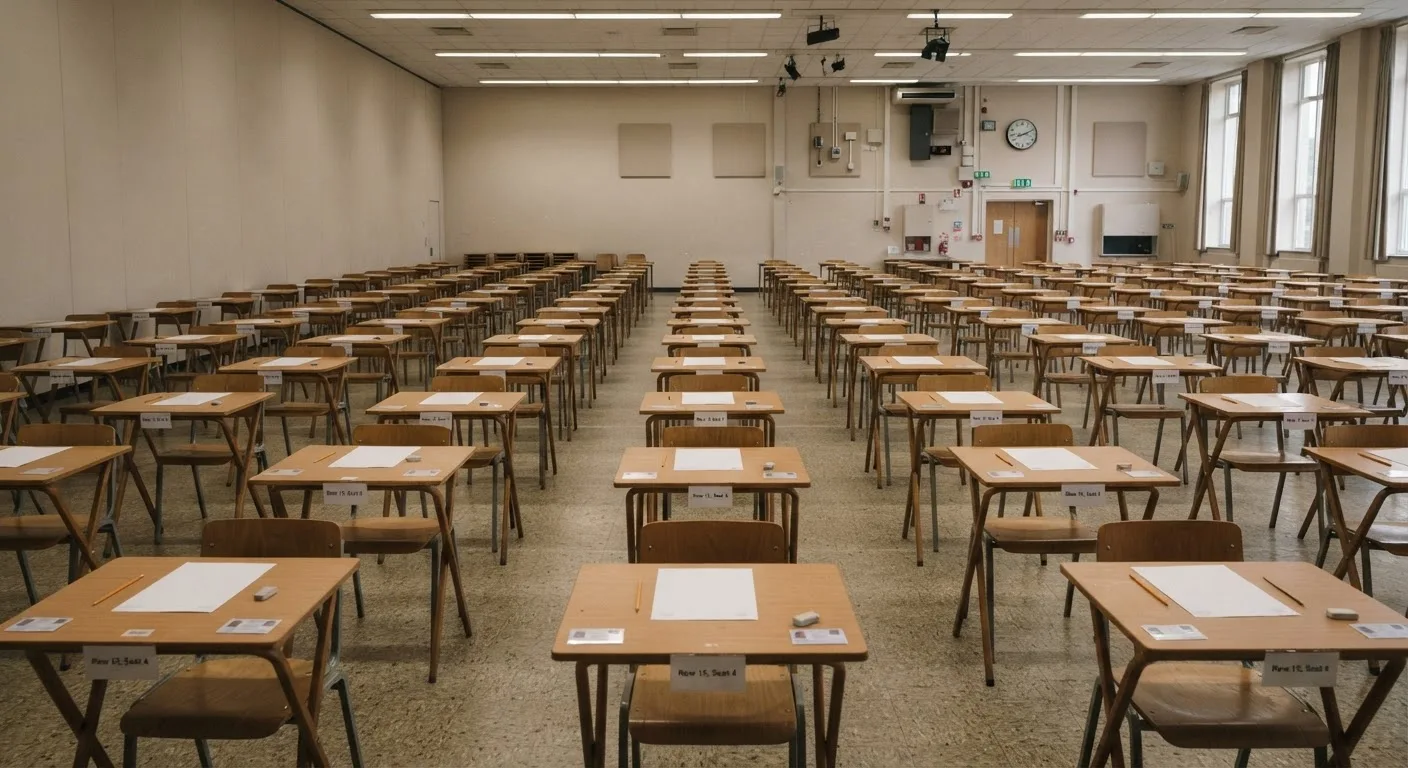
We are writing this section while going through it, in our daughter's second IGCSE year, which is why it is the most current section in this review rather than a recollection. The direct answer to the question every prospective family asks is this: Wolsey Hall's exams officers and the SPM advise on the process, but arranging exam entry — registering, booking, and paying — is the parent's responsibility, not the provider's.
The private candidate route works roughly like this end to end: you choose an external centre, that centre opens a registration window months before the exam series, you pay the centre directly for entry, and your child sits alongside other private candidates from various providers and home education setups, not alongside a Wolsey Hall class.
What we underestimated when we started this stage was the lead time. Registration windows for exam series open earlier than a family used to a school's internal deadlines expects, and centre availability abroad is not guaranteed — a centre near you one exam series can be full, or simply not offering your subject combination, by the next. If we were advising a family entering Year 10 today, we would tell them to check centre availability for their specific subjects a full series ahead, not the season before.
Options abroad typically include the British Council, which operates in many countries, approved local centres such as those Wolsey Hall itself points families toward for exams sat in the UK, and some international schools that accept external candidates for a fee. Full detail on registration and centre options sits on Wolsey Hall's own exam information page.
There is a practical planning consequence to all of this that a family should factor into their travel calendar, not discover after the fact: exam series dates effectively lock your location for that window. A family used to moving every couple of months will need to sit still for the exam series, at minimum, and ideally for a stretch either side of it. Families needing access arrangements for additional learning needs should start that conversation with Wolsey Hall's learning support team well before the registration window opens, since the paperwork itself takes time to prepare and submit.
Studying On the Road: Connectivity, Time Zones and Reality
What this model actually demands technically is lower than most families assume: a reliable connection for downloading modules and uploading submissions, not for streaming a live class. That is a much easier bar to clear on the road than the connectivity a timetabled online school requires.
Where it actually breaks is in the details: uploading a scanned or photographed page of handwritten working over a slow connection, a power cut mid-session, or trying to get a focused study block done in a café that is fine for a laptop but not for an eight-year-old's attention span.
This is the real argument for a basecamp rather than constant movement: families running this curriculum tend to settle into stays of three to six months rather than moving every few weeks, because the study routine benefits enormously from a stable desk, a stable connection, and a stable time of day, even though the platform itself doesn't require any of that in theory. The choice of base affects that routine directly, which is part of why we've written about comparing Chiang Mai vs Phuket for nomad families specifically through the lens of what makes a study routine workable, not just what makes a good holiday base.
The practical setup we actually use is simple: a defined study spot that isn't the same table used for anything else, a backup connection for submission days, an offline-first habit of working locally and syncing when possible rather than depending on a live connection throughout, and a printing solution sorted out before it's urgently needed, not after.
Does It Satisfy Your Home Country's Legal Requirements?
Enrolling with Wolsey Hall Oxford does not, by itself, satisfy any country's home education law. That legal duty sits with the parents, in whichever jurisdiction the family is legally resident, regardless of which curriculum provider they use.
What an accredited, documented curriculum like this does give you is useful evidence: a structured, externally recognized program, progress reports from the SPM and tutors, and a paper trail that is exactly what a local authority or a future school admissions office will typically ask to see if your family's legal home education requirements are ever checked. We cover how that plays out in practice, country by country, in our guide to the legal requirements for homeschooling while traveling.
This is our practical experience as one family, not legal advice, and families should confirm their specific obligations directly with the relevant authority in their country of legal residence.
Wolsey Hall vs. the Alternatives
Rather than comparing brands on marketing claims, the useful comparison is by category — model, typical cost, who handles exam entry, and inspection status.
| Category | Model | Typical annual cost band | Who handles exam entry | Inspection status | Best-fit family |
|---|---|---|---|---|---|
| Asynchronous, tutor-supported (Wolsey Hall's category) | Self-paced modules, written tutor feedback, SPM support | Rises with course count and subject level | Parents, as private candidates | Not Ofsted/ISI inspected; exam board qualifications | Self-directed learners, traveling families, mid-year starters |
| Live-lesson online schools | Fixed timetable, teacher-led video classes, class cohort | Generally higher, term-based billing | Often supports or coordinates entry | Varies by provider | Families wanting structure and a peer group without physical relocation |
| Low-cost self-study packs | Materials with optional marking add-on, minimal support staff | Lower than tutor-supported models | Entirely the parent's responsibility | Not inspected | Confident homeschoolers on a tight budget |
| Fully self-directed homeschooling | Parent-designed curriculum, no provider | No provider fee; exam fees only | Entirely the parent's responsibility | Not inspected | Highly self-directed families comfortable designing their own program |
If our circumstances changed and our daughter needed daily structure and a consistent peer group rather than independent pacing, we would look toward the live-lesson category rather than staying in Wolsey Hall's category — that is a statement about fit, not about quality, and we have no basis for comparing the teaching quality of providers we haven't paid.
Who This Suits (and Who It Does Not)
| Fits well | Does not fit well |
|---|---|
| Families crossing time zones regularly | Children who need live teaching and external accountability to stay on track |
| Children who already work independently, or are being built toward it | Families where both parents work fixed full-time hours with no supervision overlap |
| Families needing to start mid-year rather than in September | Families wanting a school community as part of the point |
| Families wanting a recognized UK-curriculum qualification route | Families who need a provider to handle exam entry directly |
| Families supplementing another system with one or two subjects | Families whose local authority specifically requires an inspected school |
| Families with at least one adult genuinely available during study hours | Families who assumed "online" meant "hands-off" |
This ties directly back to how a family structures its long-stay bases, its work schedule, and its visa rhythm — a household on a visa that supports long, stable stays, such as what we cover in our DTV visa guide for families, has an easier time supplying the supervision this model needs than a household hopping short-stay visas every few weeks.
Frequently asked questions
Is Wolsey Hall Oxford accredited?
Wolsey Hall Oxford is a registered Cambridge school working with Cambridge and Pearson qualifications, but it is not an exam centre itself and carries no Ofsted or ISI inspection rating, since it does not operate as a registered school in England. The certificates students earn are the same exam-board qualifications any private candidate would receive.
How much does Wolsey Hall Oxford cost per year?
Cost depends entirely on how many courses are enrolled at once, because pricing is bundle-based. As of mid-2026, illustrative figures ranged from roughly £2,280 a year for a four-course Primary bundle to over £6,000 for an eight-subject IGCSE year with premium subjects. Confirm current figures on the provider's own fee schedule.
Does Wolsey Hall Oxford have live lessons?
No. Wolsey Hall Oxford is fully asynchronous — students work through self-paced modules on Canvas and receive written tutor feedback on submitted assignments, but there are no live-taught video classes and no fixed weekly timetable.
Who arranges the IGCSE exams — the school or the parents?
Parents arrange exam entry, not Wolsey Hall. The Student Progress Manager and exams officers advise on the process, but registering as a private candidate, booking a centre, and paying entry fees are the family's direct responsibility from start to finish.
How many hours a day does a child need for Wolsey Hall?
There is no fixed daily requirement published; families set their own study block. In our experience, that block shrank in supervised intensity, not necessarily in raw hours, as our daughter moved from Primary to IGCSE, with parent time falling sharply while the child's own working hours stayed broadly steady.
Can a child stay with Wolsey Hall from Primary all the way to IGCSE?
Yes — our daughter has done exactly that, continuously from Year 3 through her second IGCSE year. Records and progress reports carried over across stage transitions without a break, and enrolment simply continued into each new stage's course list as she became eligible for it.
How much parent supervision does each stage need?
Supervision falls steeply as the child progresses. Upper Primary required full-time adult presence per the provider's own terms; Lower Secondary shifted to weekly auditing rather than daily sitting-beside; IGCSE has moved our role almost entirely into exam logistics rather than academic supervision.
Is Wolsey Hall Oxford recognized by universities?
The qualifications themselves — Cambridge and Pearson IGCSE and A Level — are recognized by universities, because they are identical to the certificates earned through any school or exam centre. Wolsey Hall as a brand is not the credential; the exam board's certificate is.
Can we start mid-year or pause while we relocate?
Yes. Enrolment is rolling and year-round with no fixed term start, which lets a family begin in any month and pause around a move without losing an academic term the way a fixed-term school system would force.
Is Wolsey Hall Oxford worth it compared to an international school?
That depends on what you're buying. Wolsey Hall typically costs less than international school tuition and replaces the classroom, but not the parent's time — an international school also buys supervision, structure, and a peer group that Wolsey Hall's fee does not include.
Would We Enroll Again?
Yes, and we can answer that as people who have made this decision every year since Year 3, not as people making it once and hoping. The reason is simple: the portability has let us keep working and keep our daughter's education continuous across several countries, and the qualification at the end is one that will actually count when she applies to university.
If we were starting over at Year 3 knowing how the IGCSE years turned out, the one thing we would do differently is plan our own working schedule around full-time Primary supervision from day one, rather than discovering how much it demanded partway through the first term. We would not have switched providers at any point along the way; the continuity of records, tutor relationships, and progress history across stage transitions has been worth more than whatever marginal advantage a different provider might have offered at any single stage.
Fees, policies, and course structures change, and readers considering this route should confirm current details directly with the provider before enrolling rather than relying on figures in any review, including this one.
Sources
Written by Fabrizio Bestoso
Fabrizio Bestoso is a digital entrepreneur and the father of a family that lives and works on the move across Thailand, Asia, Spain and Middle East. He started Nomad Family Hub to turn the logistics his own family works through — the DTV visa, health insurance, multi-currency money, distance schooling, work — into step-by-step guides, each checked against official sources and against what actually happened.