IGCSE Exams as a Private Candidate Abroad: How We Book a Centre
Registering for IGCSE exams as a private candidate abroad requires finding an approved physical centre, navigating board-specific restrictions, and planning family travel. We break down the exact steps, deadlines, and costs we managed for our daughter's distance-education exams.
 By Fabrizio Bestoso · · 11 min read

Introduction and Quick Overview
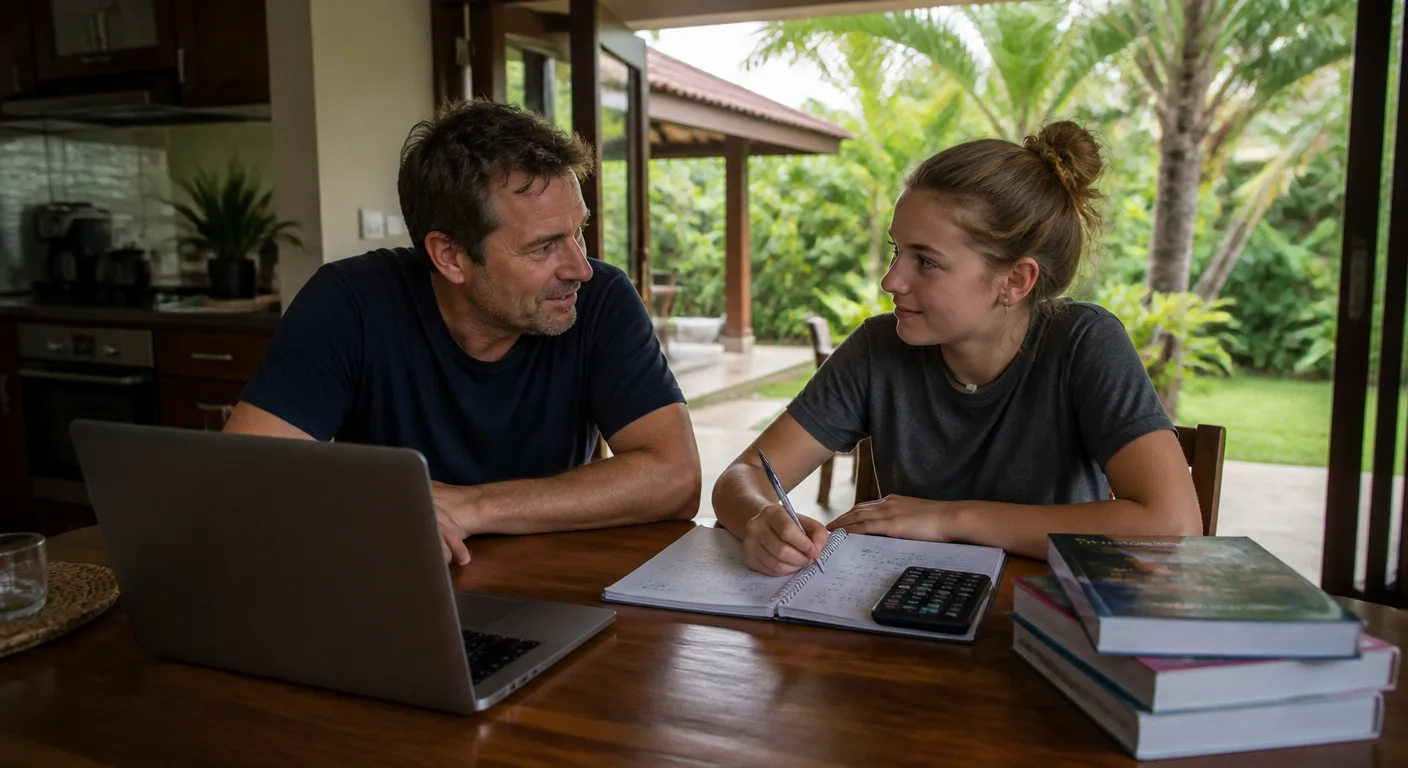
Distance-education families usually get the curriculum and the daily teaching sorted first, only to hit a logistical wall nobody warns them about. Actually sitting the exam requires finding a physical building, on a specific date, run by an organization that agrees to let a stranger's child walk in and take the paper. This is the exact process we went through for our daughter's second year of IGCSEs, not a summary of secondhand forum advice.
Before diving into the mechanics, here is what you will need to figure out to make this work:
- Which exam board your chosen curriculum aligns with.
- Which physical centre will actually accept you as an external candidate.
- Which specific subjects and components are available to private candidates at that centre.
- The exact registration window and the real financial cost.
- How to integrate travel and exam-day logistics into your family's movement schedule.
What Being a Private Candidate Actually Means
A private candidate is a student who sits Cambridge International or Pearson Edexcel exams without being enrolled full-time at a registered school. This distinction matters structurally because neither exam board takes entries directly from individuals. An approved centre must make the entry on the candidate's behalf, which is why finding a willing centre is the entire logistical problem, rather than the exam content itself.
Our daughter has been educated through Wolsey Hall Oxford since Year 3, and navigating this external registration process is a core part of our distance-education reality. When you register as a private candidate, you are subject to specific limitations that enrolled students do not face. Per the Cambridge International private candidates guidance, centres typically cannot offer certain exam components to external students.
Speaking and oral assessments, practical laboratory tests, and coursework-based components are commonly excluded. This has real subject-choice consequences. Sciences with a mandatory practical component, and languages with a speaking element, may need to be dropped or substituted with a private-candidate-friendly syllabus variant, such as an "Alternative to Practical" paper. You must check these exclusions before finalizing a subject list, not after you have already paid the registration fee.
Two Boards, Two Different Routes: Cambridge vs. Pearson Edexcel
Cambridge International operates a highly standardized global model, working primarily with the British Council network in most countries to offer private-candidate entries. Some individual Cambridge schools also accept private candidates directly, but this is entirely at their own discretion. Pearson Edexcel runs its own separate network of approved international centres. They publish an official Pearson Edexcel find an international centre tool to help you locate them. Centres decide individually whether they accept private candidates, and this policy can change from year to year.
In Thailand, this split is very concrete. The British Council Thailand channel is strictly for Cambridge International Education. Their own site does not list Pearson Edexcel as an option through that specific registration channel. Separately, several Pearson-approved schools in Thailand run their own private-candidate intake for Pearson Edexcel International GCSE. For example, Anglo Singapore International School and Keaes Academics in Bangkok both explicitly advertise private-candidate and homeschool-student registration for Edexcel. Anglo Singapore also runs a separate track for Cambridge, distinct from the British Council's channel.
The practical takeaway is that the British Council and an Edexcel-approved school are not interchangeable in Thailand. A family choosing Edexcel needs to find a Pearson-approved centre directly, rather than assuming the British Council covers it. We present this as the Thailand-specific picture, which is subject to change and must be reconfirmed by the reader for their own country.
Pro-Tip: Check which board your chosen centre actually offers to private candidates before you fall in love with a particular syllabus. Availability, not preference, decides your shortlist.
How We Chose and Booked Our Exam Centre
Evaluating centre options requires a methodical approach. We started by confirming which board each candidate centre worked with, ensuring it matched our curriculum. Next, we confirmed they explicitly accept private and external candidates, rather than just their own enrolled students. We then checked which of our specific subjects they could actually offer, keeping the excluded components in mind. Finally, we got fees and deadlines in writing before committing to anything.
Established private-candidate centres cluster heavily in Bangkok. The British Council, Anglo Singapore International School, and Keaes Academics are the primary hubs. Because we are not permanently based in the capital, this concentration meant we had to plan significant travel and overnight stays around the exam dates. If you are based in Chiang Mai, Phuket, or elsewhere, you will likely need to fly to Bangkok. While Edexcel-approved schools exist in other cities, private-candidate acceptance at those individual schools must be confirmed directly with them, as it is never guaranteed just because the school teaches the syllabus to its own students.
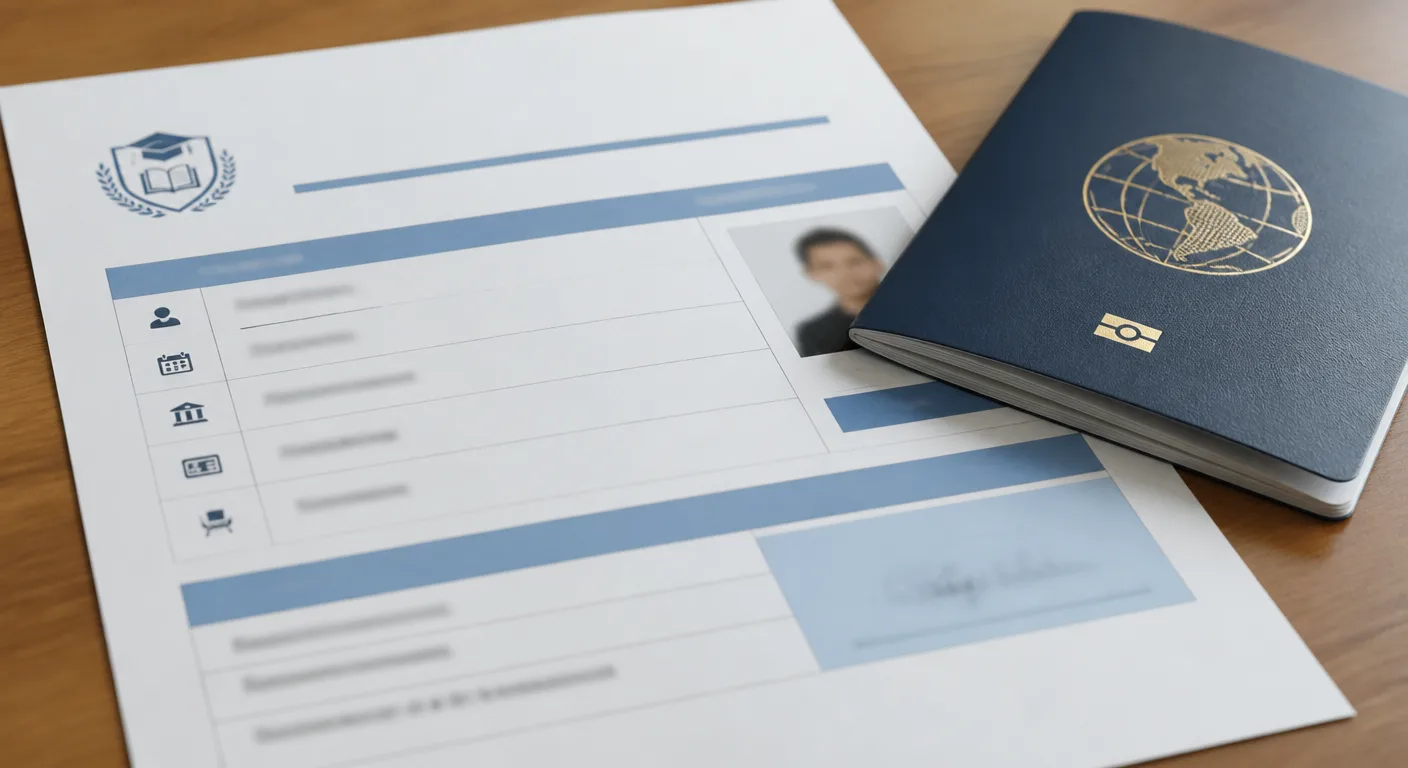
Once we selected a centre, the actual booking process was straightforward but rigid. We completed the centre's specific registration process, which involved submitting an online form through the British Council Thailand IGCSE registration portal, uploading identification documents, and paying the fees before the deadline. A Statement of Entry confirming the exam venue, dates, and times was issued a few weeks before the session, which we then used to finalize our flights and accommodation.
Registration Windows, Deadlines, and What It Actually Costs
Understanding the calendar is critical, as missing a window derails the entire year. British Council Thailand's own Cambridge registration-dates page confirms two annual sessions: May/June and October/November. For the October/November 2026 series, the normal entry window runs from 19 June to 7 August 2026. The late entry window runs from 8 August to 14 September 2026, closing strictly at 16:00 local time, with results released in mid-January 2027.
Regarding costs, British Council Thailand's British Council Thailand registration dates and fees documentation for the May/June 2026 series lists per-subject entry fees in the roughly 8,500 to 9,700 THB range. For example, Accounting and Additional Mathematics were listed at 8,520 THB, while Biology Extended was 9,690 THB. At the time of writing, this equates to an approximate reference of $240 to $275 USD, though foreign exchange rates move and the THB figure is what actually gets charged. They also list a late-entry amendment fee of 3,930 THB.
We do not have verified Pearson Edexcel-specific Thai Baht fee figures to share, as no verified centre-level Edexcel price list for Thailand was sourced for this guide. Edexcel fees must be requested directly from the chosen Pearson-approved centre.
Warning Note:* Missing the standard registration window typically triggers a meaningful per-subject penalty fee if you file during the late window. If you miss the late window entirely, it means waiting for the next session, roughly six months later. Build the deadline into the family calendar early, not around exam-readiness alone.
Fitting Exam Prep Into a Homeschooling Week
Exam-series deadlines fundamentally reshape the weekly study rhythm in the run-up to a session. When we are not in an exam window, our learning is highly flexible and driven by interest. However, as the registration deadline approaches and the exam dates lock in, the schedule shifts. We transition from broad topic exploration to targeted past-paper practice under timed conditions.
This shift requires careful planning, especially when you are trying to how we structure our daily worldschooling schedule while moving between locations. We block out specific morning hours for timed practice to simulate the actual exam environment. This ensures the student is not just learning the material, but also building the stamina required to sit for two or three hours in a formal hall. The administrative deadlines force this academic rigor, turning abstract learning into concrete preparation.
Common Mistakes and What We'd Do Differently
Looking back at our first year of navigating this process, we made several assumptions that cost us time and stress. Here is what we learned the hard way:
- Assuming a school that teaches a syllabus also accepts private candidates. We initially contacted a local international school that offered the Cambridge curriculum, only to be told they do not register external students. Always ask explicitly about private candidate acceptance before discussing syllabus details.
- Picking a subject before checking excluded components. We almost registered for a science subject that required a practical endorsement, which the centre could not facilitate for external candidates. Always verify the available components for your specific syllabus code first.
- Underestimating travel logistics for a non-Bangkok family. We initially thought we could do a day trip for a morning exam. The reality of traffic, check-in procedures, and the need for the student to be well-rested meant we had to book a hotel for at least two nights.
- Registering too close to the standard deadline. We left the paperwork until the final week of the normal window, which caused unnecessary anxiety and left no room for administrative errors. Registering in the first week of the window is always the safest approach.

It is also important to remember that sorting out exam-centre logistics is a separate question from the legal requirements for homeschooling while traveling. Families should have both the legal right to homeschool in their current location and the physical exam centre sorted out, as one does not guarantee the other.
Frequently asked questions
Can any homeschooled student register for IGCSE exams as a private candidate?
In principle, yes, but only through a centre that both offers the syllabus and explicitly accepts private or external candidates. Not every centre does this. You must confirm this directly with the centre before assuming your local British Council office or an international school will automatically register you.
Can I take any IGCSE subject as a private candidate?
Not always. Exam components involving speaking or oral tests, practical laboratory work, or coursework are commonly excluded for private candidates. You need to check the specific syllabus code and your chosen centre's list of available components before finalizing your subject choices to avoid last-minute cancellations.
Does the British Council always offer both Cambridge and Pearson Edexcel?
Not necessarily. In Thailand, for example, the British Council's own IGCSE channel is strictly Cambridge-only. Pearson Edexcel private candidates need a separate Pearson-approved centre. This varies significantly by country, so you must check both boards' own centre listings for your specific location.
How far in advance should I register?
You should register within the standard entry window, which opens several months before the exam date. For instance, the British Council Thailand standard window for the October and November 2026 series closed in early August. Late registration usually adds a substantial per-subject penalty fee.
How much does it cost to sit IGCSE exams as a private candidate?
It varies by board, country, centre, and subject. As one real example, British Council Thailand fee documentation for 2026 showed per-subject fees roughly in the 8,500 to 9,700 THB range, plus a separate late-entry penalty fee. Always request the current fee list directly from your centre.
What happens if I miss the registration deadline?
You may still be able to register during a late window for an extra fee, but if you miss that entirely, you will typically need to wait for the next exam session, which is generally around six months later. Build the deadline into your planning calendar early.
Do I need to travel to a specific city to sit the exam?
Often, yes. Established private-candidate centres tend to cluster in major cities, and in Thailand, this mainly means Bangkok. Families based elsewhere should factor in travel and overnight logistics around the actual exam dates, not just the initial registration paperwork, to ensure the student arrives rested.
Our Family's Exam-Booking Checklist
To keep the process manageable, we rely on a strict sequence of actions. First, confirm your board and subject list against the excluded components for private candidates. Second, shortlist centres that explicitly accept private candidates for that specific board. Third, confirm fees and deadlines in writing directly with the centre. Fourth, register within the standard window to avoid penalty fees. Finally, plan family travel around the confirmed exam dates, not the other way around.
The biggest surprise for us the first time was not the academic difficulty, but the sheer administrative rigidity of the process. Exam boards and centres operate on strict, unyielding global calendars. Once you understand that you are working within their system, rather than expecting the system to adapt to your travel lifestyle, the process becomes much smoother.
Please note that exam boards, centres, fees, and deadlines change every session. The reader's own chosen centre's current published information always takes priority over the specific figures and dates shared in this guide.
Written by Fabrizio Bestoso
Fabrizio Bestoso is a digital entrepreneur and the father of a family that lives and works on the move across Thailand, Asia, Spain and Middle East. He started Nomad Family Hub to turn the logistics his own family works through — the DTV visa, health insurance, multi-currency money, distance schooling, work — into step-by-step guides, each checked against official sources and against what actually happened.