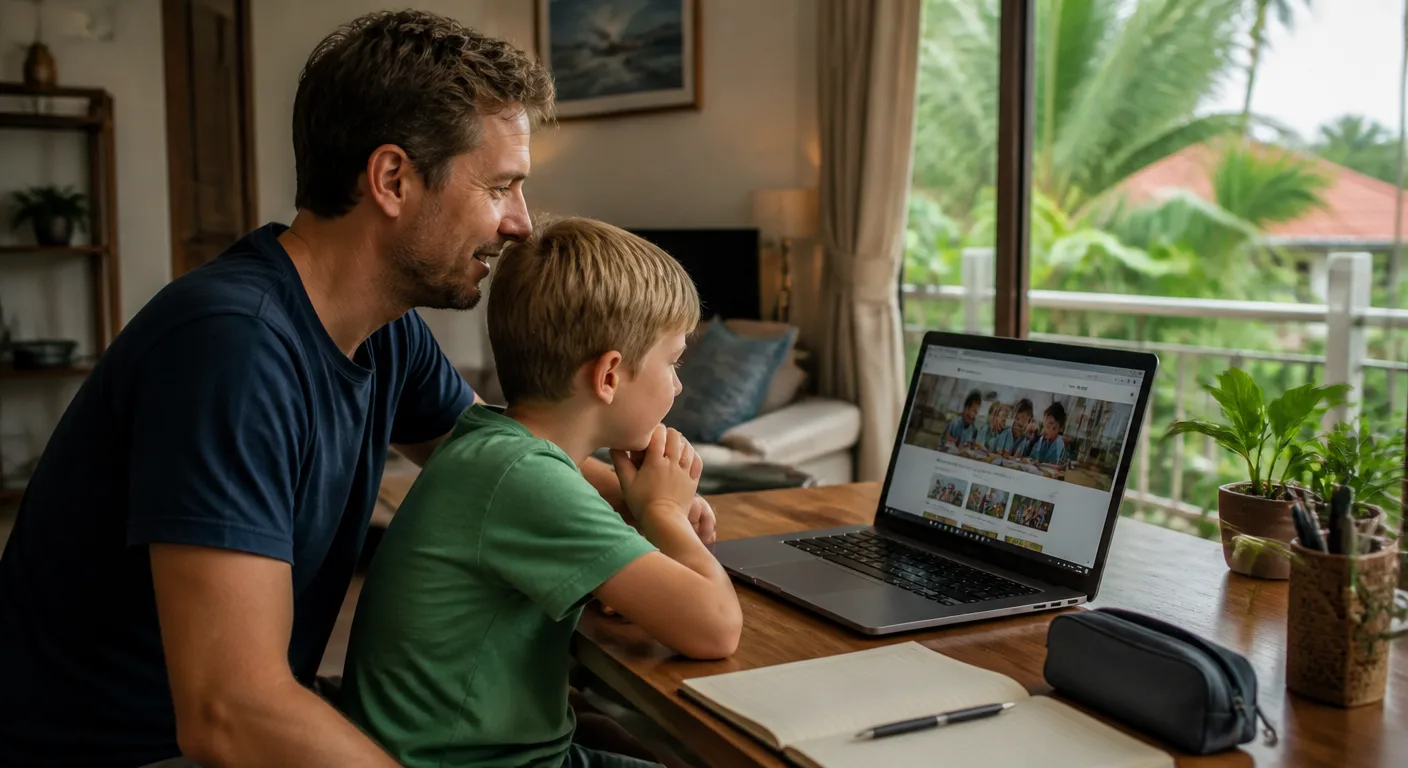
Socialization for Worldschooling Kids: What Actually Works on the Road
A first-hand, research-backed look at how a worldschooled child actually makes and keeps friends on the road — the specific habits, the base-city trade-offs, and the honest part about friendships that fade.
 By Fabrizio Bestoso · · 10 min read
We have lost count of how many times someone has looked at a photo of our daughter on a boat, or in a market, or sitting cross-legged on a classroom-free afternoon, and asked, gently or not so gently, "but what about friends?" It usually comes from someone who loves her. It is also, almost always, the one question that stops a parent who is curious about worldschooling from taking the idea any further.
This is not a defense of worldschooling in the abstract. It is our own mechanics — what has actually worked, what research says separately from our experience, and the part that is genuinely hard rather than just sounding hard. Before we get into it, here is the shape of what follows:
- what the peer-reviewed research on homeschool socialization actually says, and its own limits
- the specific habits and groups that have built real friendships for our daughter, not the theory of it
- why the city you base yourself in changes the odds more than most people expect
- the digital habits that keep a friendship alive between visits, and where that runs into a real limit
- the honest, non-alarmist truth about friendships that fade as a child grows
The objection every worldschooling parent hears
The fear underneath "but what about friends?" is usually a fear of isolation: a child with no fixed classroom and no fixed peer group, drifting without anyone to call a friend. It is a reasonable thing to worry about, and it deserves an answer with a source attached rather than a reassuring shrug.
The most direct answer comes from the NHERI Homeschooling Socialization Fact Sheet, published November 2025 and checked by us in September 2026. Across peer-reviewed studies on social, emotional and psychological development, 64% found homeschooled students performing significantly better than conventionally schooled peers on measures such as peer interaction, self-concept and leadership. NHERI is careful to say what this is not: the research designs cannot prove causation, only correlation. That caveat matters, and we are not going to round it away.
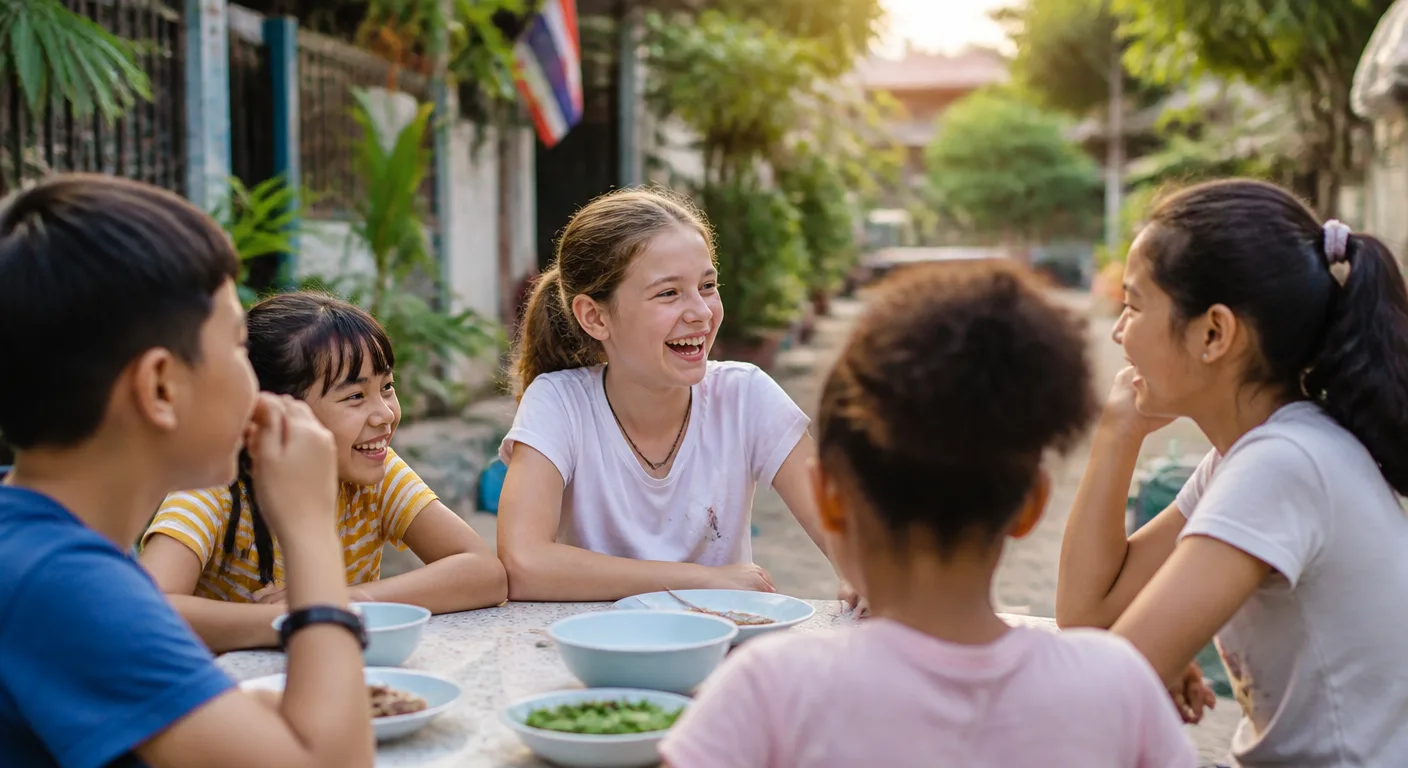
Our own honest take, separate from that research, is that the homeschooling network turned out wider than we expected. Wolsey Hall Oxford, the curriculum our daughter attends, has an active Facebook group for parents, and it is genuinely easy to make connections through it. Socializing was never just a school problem for us to begin with: sports groups, religious groups and other regular groups have always given her chances to meet other children. Technology lets her keep in touch with friends scattered across different countries, and every so often we actually get to meet up again in person.
What actually builds a friendship on the road
If we strip away the theory, the honest answer is close to what we just said: the Wolsey Hall parents' Facebook group and activity-based groups — a sport, a religious group, anything with a regular meeting time — are what actually create friendships. A classroom cohort was never the mechanism for us, because we never had one.
A few things have to line up for that to work, though. The first is time. A curriculum that eats every afternoon leaves no room for a friendship to form, no matter how many groups exist in a given city. This is part of why we picked the asynchronous curriculum we picked because it doesn't eat every afternoon: self-paced work compresses study time compared with a fully synchronous school day, and that compression is what leaves the late afternoon free for a club, a practice, or just unstructured time with other kids. This is a lever every family in this situation actually controls, and it is worth treating as a real decision rather than a footnote, because the amount of study time left over each day is the single biggest thing standing between "no time for a social life" and having one.
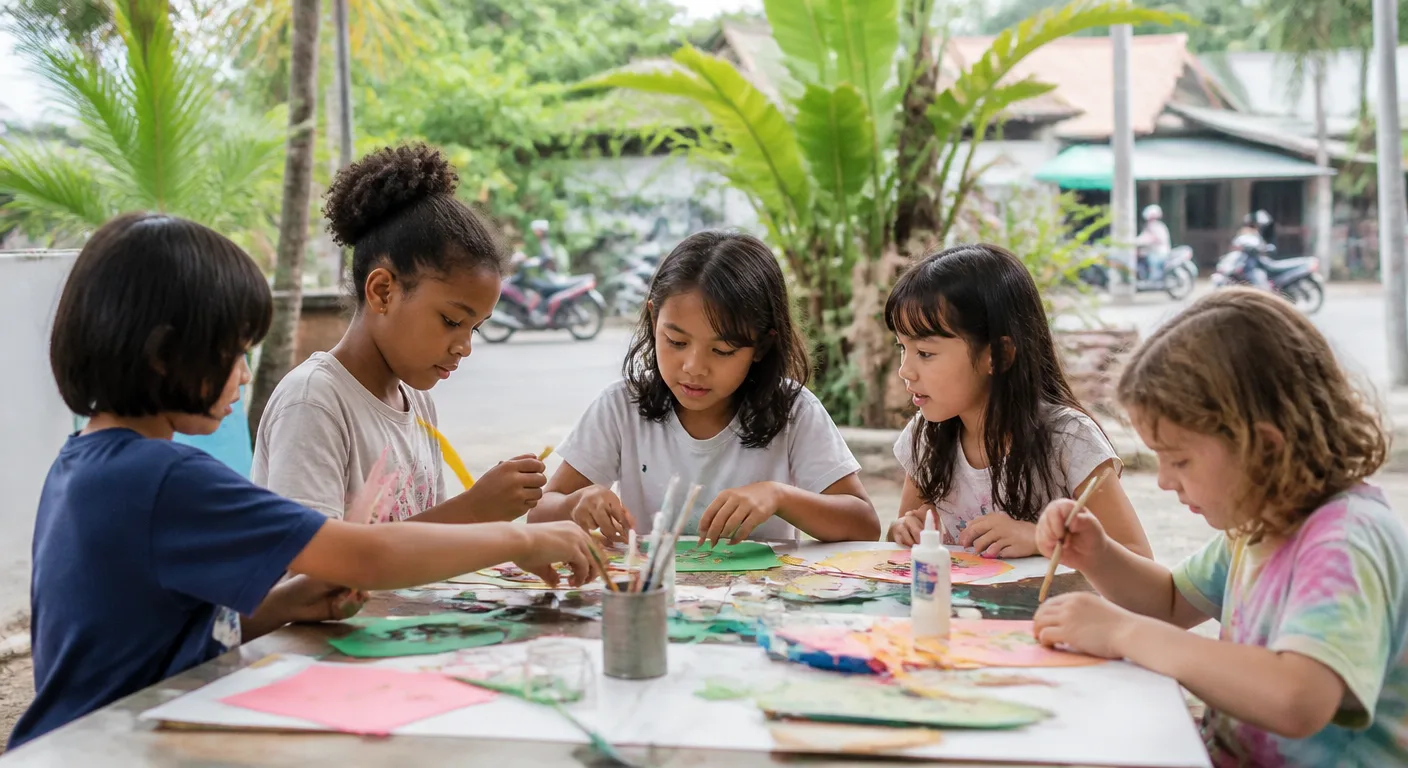
The second thing is structure around that free time. We protect it with the loose weekly rhythm that leaves room for a social life rather than letting it get filled by errands, sightseeing or extra lessons. An activity-based group that meets on a fixed schedule — a sport, an art class, a co-op — does more for a child's social life on the road than the curriculum itself, and it only works if the time for it survives the week intact.
Choosing a base where other worldschooling families already are
None of this happens in a vacuum. The city you base yourself in changes the odds of your child meeting other kids who are also used to leaving and arriving. A quieter, less-connected base can mean a quieter social life for the child specifically, not just for the parents who chose it for the scenery or the rent.
We have written separately about how we weighed community density when choosing between Chiang Mai and Phuket, and the short version is that a base with youth activities already on offer — clubs, classes, a visible cluster of other traveling families — genuinely helps. It is not the only variable, but it is one we now weigh deliberately rather than treating as incidental.
If you are choosing a base and do not yet know anyone there, the We Are Worldschoolers community is a reasonable place to start looking. As of our September 2026 check, its free Facebook group had more than 9,000 member families, plus twice-yearly in-person summits. That number will have moved by the time you read this — treat it as a pointer worth trying, not a guarantee of anything.
Pro-tip: swap contact details and book the first video call before you say goodbye, not after. Waiting even a week is usually enough for the habit to never start.
Staying friends after you leave: the digital habits that actually work
Staying in touch and staying close are not quite the same thing, and it is worth naming that distinction before describing what we actually do. A systematic review of third culture kid adjustment in Frontiers in Psychology, published November 2022 and drawing on 14 studies across 8 databases, found that children of mobile families who used internet communities of other children with similar multiple-migration backgrounds reported fewer sociocultural adjustment difficulties — but the same review also found that some of these children report more casual than close friendships. A monthly message thread is not automatically the same thing as an ongoing close friendship, and it is worth holding those two facts apart rather than letting one comfort us out of the other.
What we actually use is plainer than that research: WhatsApp and Line.
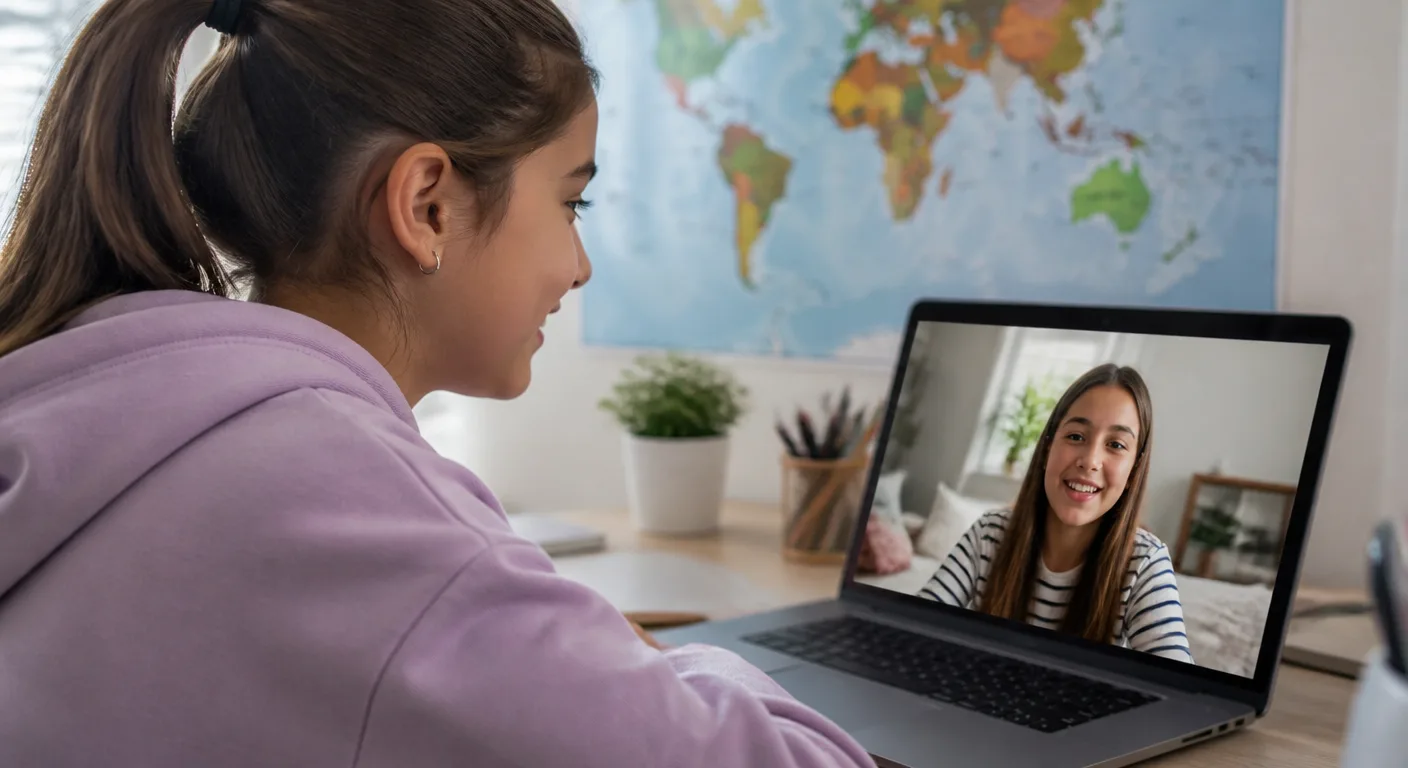
Those two apps are how a specific friendship stays alive between visits, and the digital side is only half of it — the habit works because we also make a point of meeting up again in person every so often. Neither part on its own has been enough for us; it is the combination that has kept particular friendships going rather than letting them dissolve into a name in a contacts list.
Letting friendships fade: why it isn't unique to worldschooling
We want to be plain about something here rather than tidy it up. For us, these have almost never been dramatic goodbyes. A child grows, and friendships change — that is normal, not a symptom of the lifestyle. Ask it of yourself as a parent: how many of your own classmates from school are still actually in your life at 30, 40 or 50? Most regular-schooled adults have lost touch with the majority of the people they sat next to for years. A worldschooled child's shifting friendships are the same phenomenon on a faster clock, not a new kind of loss invented by travel.
That said, we are not going to let our own easier experience paper over what the Frontiers review actually found. Some children in mobile families do report more casual than close friendships, and that is a real trade-off worth knowing about before you assume it away, not a problem we happen to have solved for every family reading this.
Note: before judging this as a worldschooling problem specifically, count how many of your own school-era friendships are still active today. It usually reframes the fear.
Frequently asked questions
Are worldschooled or homeschooled kids properly socialized?
Peer-reviewed research summarized by NHERI (2025) found that in 64% of studies on social, emotional and psychological development, homeschooled students scored significantly better than conventionally schooled peers on measures like peer interaction and self-concept. NHERI notes this shows correlation, not proof that homeschooling causes the difference.
How do worldschooling kids actually make friends while traveling?
In our experience, it rarely happens through the curriculum's coursework itself. It happens through the curriculum's own parent community, plus ordinary activity-based groups — sports, religious groups, anything meeting on a regular schedule — combined with a schedule light enough to leave real free afternoons for those activities.
Do worldschooled children get lonely?
It can happen, and the Frontiers review (2022) notes that some children in mobile families report more casual than close friendships, which is a genuine risk. In our own case, deliberately protecting social time and choosing bases with youth activities has kept that fear from becoming our reality so far.
How do you find other worldschooling families to travel alongside?
Curriculum-specific parent groups are a practical starting point, since they connect you with families already living a similar routine. Broader communities like We Are Worldschoolers, checked at over 9,000 member families as of September 2026, are another option — treat any such number as a snapshot rather than a permanent fact.
Can worldschooled kids keep long-distance friendships going?
Yes, with the right habits. We rely on WhatsApp and Line to stay in touch day to day, paired with occasional in-person reunions. Research on mobile children found that online contact with peers in similar situations can ease adjustment, though it can lean toward casual rather than close contact.
Is worldschooling bad for a child's social development?
There is no research showing that. NHERI's 2025 synthesis of homeschool studies found homeschooled students often doing as well as or better than peers on social measures, while acknowledging the evidence is correlational. Our own experience has been that structured activities matter more than the classroom ever did.
How is worldschooling different from ordinary homeschooling when it comes to making friends?
The mechanics are similar — a curriculum's parent network, local activity groups, a protected schedule — but worldschooling adds the extra step of doing this again in a new place every so often, and of maintaining friendships across distance and time zones rather than just across town.
How we'd build a social life for a worldschooled kid, starting today
If we were starting over, the order would be: pick a base where other families and youth activities already exist, use the curriculum's own parent network as the first foothold, protect the free afternoons an asynchronous curriculum actually allows, and swap contact details with the plan to book that first video call before anyone says goodbye. Then expect some of those friendships to fade as she grows — that is ordinary, not a verdict on any of it.
Our biggest fear, going into this, was ending up with a daughter who was withdrawn and shy. Between studying several languages and seeing so many places and cultures, we can honestly say that fear never materialized at all.
This is our family's experience, alongside the published research we have cited, not psychological or educational advice. A child who is genuinely struggling socially needs a professional's attention, not an article.
Sources
Written by Fabrizio Bestoso
Fabrizio Bestoso is a digital entrepreneur and the father of a family that lives and works on the move across Thailand, Asia, Spain and Middle East. He started Nomad Family Hub to turn the logistics his own family works through — the DTV visa, health insurance, multi-currency money, distance schooling, work — into step-by-step guides, each checked against official sources and against what actually happened.
Related guides
International Schools in Chiang Mai vs Online Homeschooling: Cost and Fit
What Homeschooling Abroad Really Costs: Tuition, Exams, Books and Hidden Fees