Chiang Mai vs Phuket for Nomad Families: Which Should You Choose?
A head-to-head comparison of Chiang Mai and Phuket as a base for nomad families, covering real costs, schooling, air quality versus monsoon risk, and healthcare — with a clear verdict for each family profile rather than a shrug.
 By Fabrizio Bestoso · · 19 min read

The 30-second verdict
Choosing between Chiang Mai and Phuket is not a scenery decision. It is a logistics decision: you are picking a basecamp where a child's schooling, health routine, and daily rhythm will sit for six to twelve months, and getting it wrong is expensive to reverse mid-lease. This guide compares the two on the seven axes that actually change family life — cost, housing, air and sea risk, schooling, healthcare, community, and mobility — and gives a direct recommendation for each type of family, not a hedge.
Here is where we land, stated plainly: Chiang Mai is the better base for most nomad families on a budget, for families prioritizing schooling options and community, and for anyone who can leave during the February–April burning season. Phuket is the better base for families who need year-round outdoor life, strong international flight connections, and water-based activities for their kids, and who can absorb roughly 30–40% higher monthly costs. Neither city is the "right" answer in the abstract — the right answer depends on which of those two paragraphs describes your household, and we'll walk through exactly how to tell.
The short answer: which city fits which family
Before the detail, here is the decision matrix we wish someone had handed us before our first lease. Read the row that matches your family and treat the rest as background.
| Family profile | Recommended city | One-line reason |
|---|---|---|
| Tight budget, first long stay in Thailand | Chiang Mai | Lower rent, lower electricity, and a deeper support network for first-timers |
| Child with asthma or respiratory sensitivity | Phuket | Burning-season air quality in Chiang Mai is a genuine health risk for sensitive lungs |
| Family wanting international school with maximum choice | Chiang Mai | More schools across more price points, with easier admissions timing |
| Family committed to worldschooling / distance education | Chiang Mai | Cheaper cost of living stretches the budget further when tuition isn't the fixed cost |
| Family with toddlers | Chiang Mai | Cheaper household help, calmer traffic pockets, no rip-current risk to manage |
| Family with teenagers wanting sport, sailing, or surf | Phuket | Water-based activity infrastructure is built into the island's daily life |
| Family doing frequent international travel | Phuket | Direct international connectivity beats routing through Bangkok |
| Family staying under three months | Phuket | Short-term rental market is more mature; burning season is easy to simply avoid by timing the trip |
The cost gap: what a family of three actually spends
Cost comparisons of Chiang Mai and Phuket usually get reduced to a single number, which flattens the thing that actually matters: where the money goes. Comparison datasets consistently put a family of three at roughly 25–30% cheaper in Chiang Mai than Phuket excluding rent, and around 40% or more cheaper once rent is folded in. Treat those as directional ranges, not decimals — we're assuming roughly 33–35 THB to 1 USD through 2026 for every conversion below, and that rate moves.
| Monthly line item | Chiang Mai (THB) | Chiang Mai (USD) | Phuket (THB) | Phuket (USD) |
|---|---|---|---|---|
| Rent (1–2 bed, family-appropriate) | 12,000–30,000 | ~$350–870 | 20,000–40,000+ | ~$570–1,150+ |
| Electricity / utilities | 1,500–3,500 | ~$45–100 | 4,000–8,000+ | ~$115–230+ |
| Groceries | 8,000–14,000 | ~$230–400 | 10,000–18,000 | ~$285–515 |
| Eating out | 6,000–12,000 | ~$170–345 | 8,000–16,000 | ~$230–460 |
| Local transport | 1,500–3,000 | ~$45–85 | 4,000–8,000 | ~$115–230 |
| Coworking / workspace | 2,000–5,000 | ~$60–145 | 3,000–7,000 | ~$85–200 |
| Kids' activities | 2,000–5,000 | ~$60–145 | 4,000–9,000 | ~$115–260 |
| Family health insurance (illustrative) | 4,000–9,000 | ~$115–260 | 4,000–9,000 | ~$115–260 |
Two lines drive almost the entire gap: rent and electricity. Rent is self-explanatory — a beach-adjacent island market prices differently than a landlocked valley city. Electricity is the line families underestimate: a Phuket villa running air conditioning around the clock, most of the year, can carry a power bill that rivals or exceeds an entire month's rent for the same family in Chiang Mai, where a genuine cool season from roughly November to February means several months where the AC simply stays off.
Both cities have a seasonal pricing trap, and they run in opposite directions. In Phuket, the same villa can move 30–50% between low and high season, and short-term listings for December through February are priced for tourists on holiday, not residents on a budget — book a "family rate" in peak season and you're paying tourist rates without realizing it. In Chiang Mai, the trap is inverted: the cheapest months to rent are March and April, which are exactly the months air quality gives you the strongest reason to not be there.
For a fuller line-by-line breakdown across both cities and how it compares to other Southeast Asian bases, our guide to the real cost of living in Thailand for a nomad family goes deeper than the table above.
Where nomad families actually live
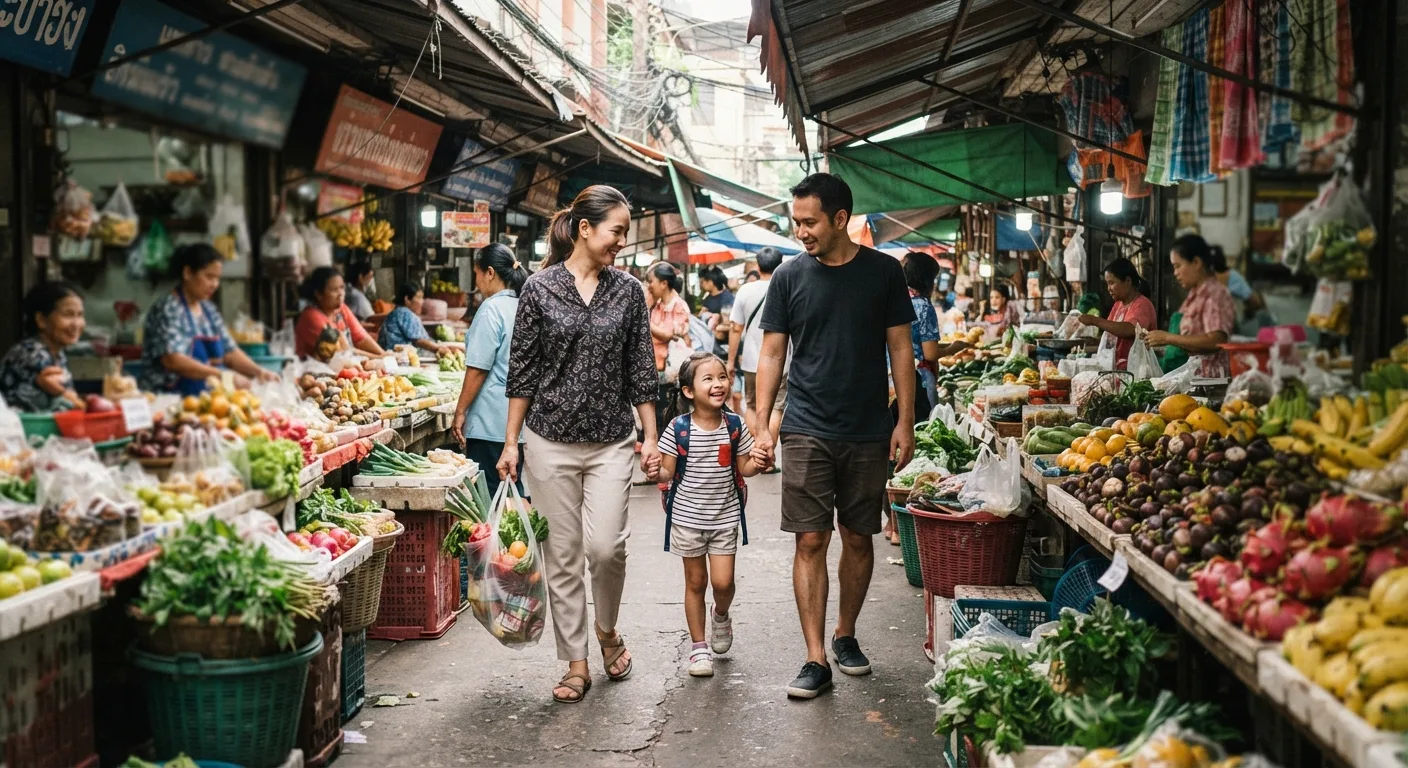
Neighborhood choice in either city is really a school-run and lifestyle decision wearing a real-estate costume. In Chiang Mai, Nimman is the most convenient option — cafés, coworking, walkability — and it's priced accordingly, with traffic and noise to match its popularity. Santitham sits just north of the Old City and offers a genuinely cheaper, more local alternative within a short drive of the same amenities. The Old City itself is walkable and atmospheric but gets loud on market nights, which matters more with a toddler's bedtime than a backpacker's. Families wanting space — a garden, a quieter street, proximity to several of the international schools — tend to end up in Hang Dong, San Sai, or Mae Rim, all of which require a car or reliable scooter setup since they sit outside the walkable core.
In Phuket, Rawai and Nai Harn carry more local pricing than the northern resort belt, have a calmer stretch of sea by regional standards, and have become genuine family enclaves rather than tourist strips. Cherng Talay and Bang Tao cluster the island's international schools and villa developments, and they sit at the top of the price range for exactly that reason. Kathu is a practical middle ground — central, less scenic, meaningfully cheaper than the west-coast resort areas. Patong is worth naming only to rule it out as a family base: it is built for nightlife tourism, and that is not a criticism of the town so much as a statement about who it's designed for.
Pro-tip: the arrival sequence that actually works is to land in a short-term rental in your target neighborhood, do school visits and property viewings in person, walk the actual school run at the actual hour you'd be doing it, and only then sign a longer lease.
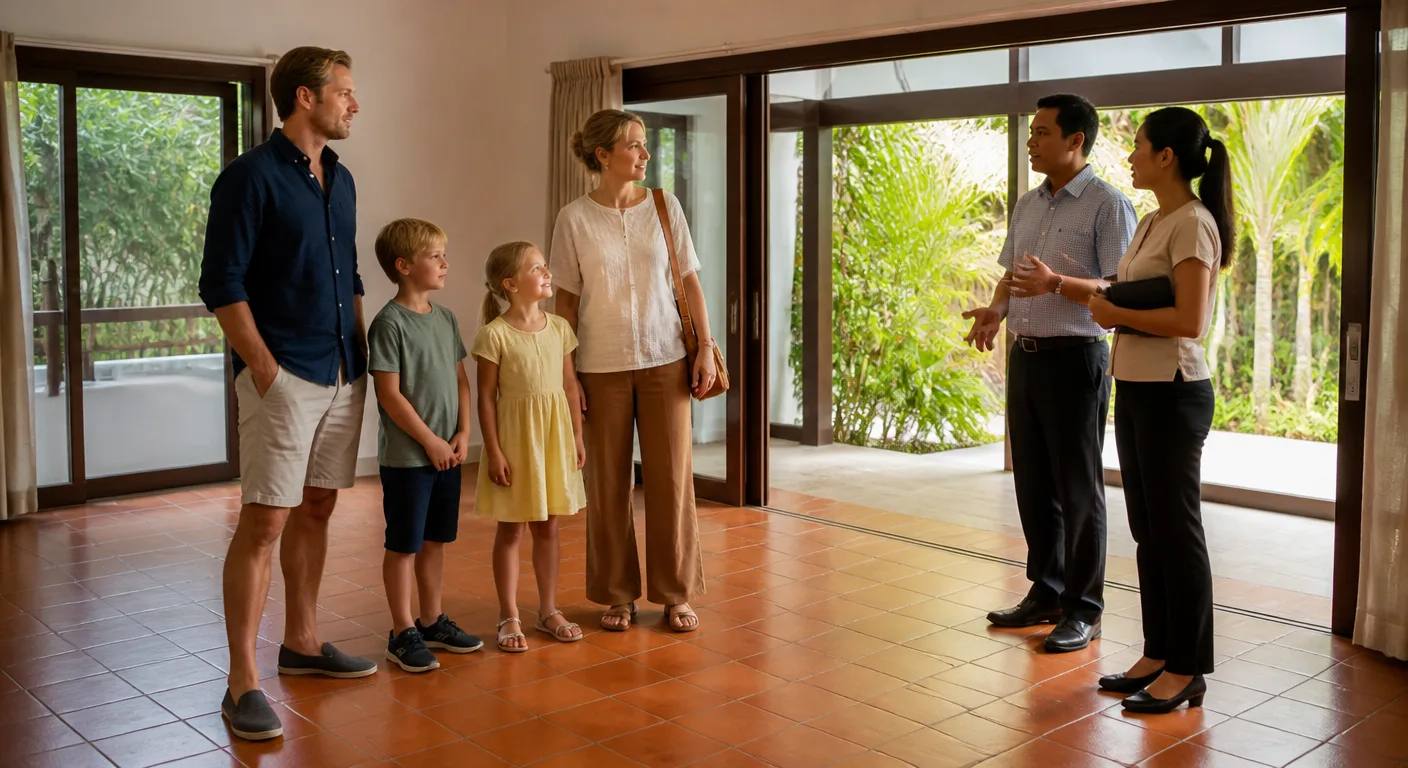
Warning: Thai landlords typically want two months' deposit plus the first month upfront at signing, and "unfurnished" in Thailand can genuinely mean an empty concrete box with no beds, sofa, or kitchen equipment — budget the cash outlay accordingly.
Never sign a 12-month lease from abroad. Book three to four weeks of flexible accommodation in the neighborhood you're targeting, use that window to view long-term places in person and confirm the school run works at the actual hour, then commit.
Air quality vs. monsoon: the seasonal trade-off nobody plans for
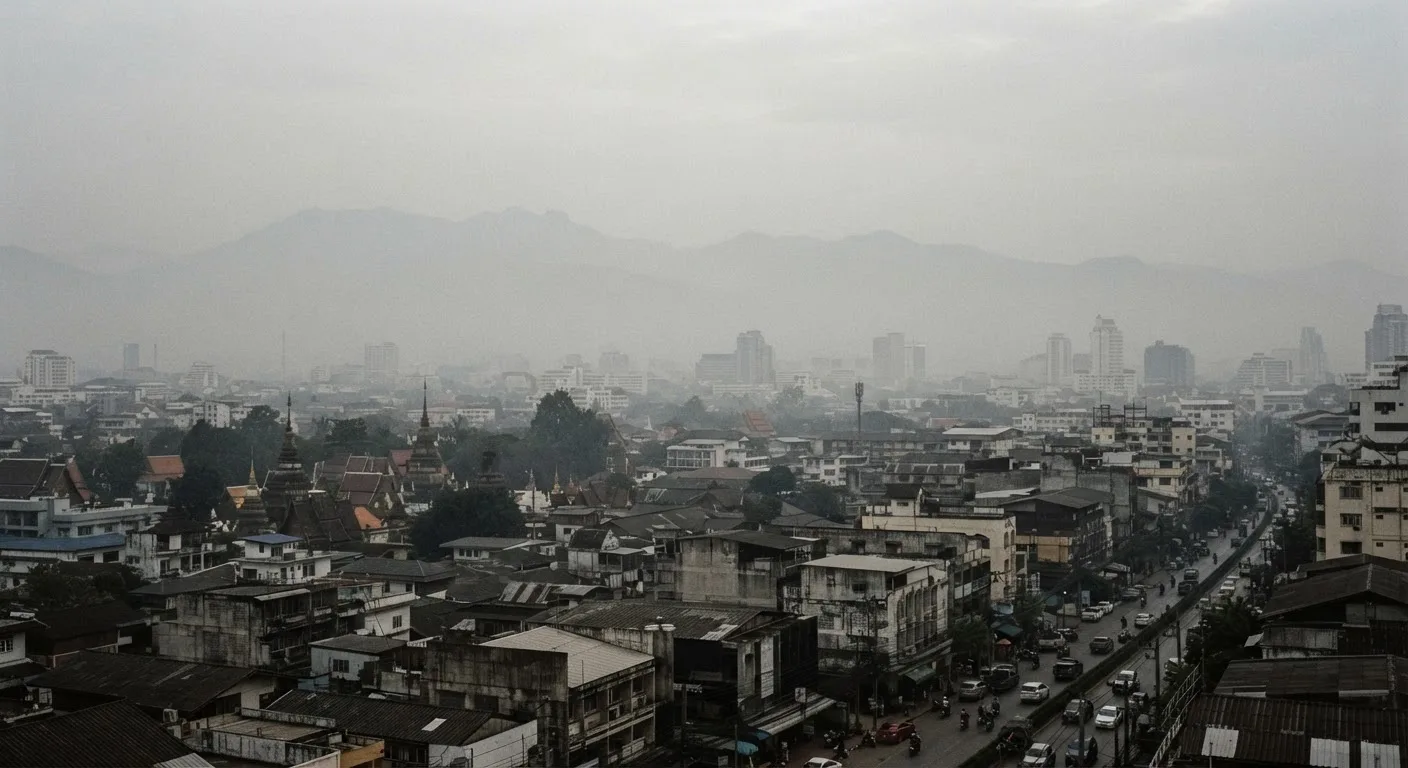
This is the section that matters most, and it deserves to be treated as fact rather than as either a dealbreaker or a footnote. Chiang Mai's burning season runs roughly from mid-February through April, with March typically the worst, driven by agricultural residue burning across the region and forest fires trapped by the mountains that ring the city's basin. During peak weeks, AQI readings regularly sit above 150 and have hit 200–300 or higher on bad days, and Chiang Mai has repeatedly appeared near the top of global city pollution rankings during this window. Children are among the population groups most affected by sustained exposure at those levels. You can check conditions for yourself at any time through IQAir's live Chiang Mai air quality data rather than relying on anecdote.
Families who stay through it generally do a combination of the following: HEPA purifiers running in every bedroom and the main living space (a real budget line, several thousand Baht per unit, not a footnote), bedrooms sealed with windows and door gaps taped or weather-stripped, N95 masks rather than surgical masks for the short outdoor stretches that are unavoidable, and outdoor time for kids shifted to the earliest part of the morning when readings are typically lower. The honest recommendation, if your budget and schooling format allow it, is to simply leave for six to ten weeks and come back once the burning has stopped.
Phuket's counterpart risk isn't air, it's water. The southwest monsoon runs roughly May through October, and the rain itself is usually manageable — short, heavy downpours rather than sustained wet weeks. The real family-safety issue is what the monsoon does to the sea: rip currents on the island's west-coast beaches become genuinely dangerous, the red-flag warning system exists precisely because of this, and it is routinely ignored by tourists who don't understand what the flags mean. Drownings happen on Phuket's beaches every year, and children are disproportionately represented in the toll. The rules we hold to as a family: flags are not advisory, we swim only where there are lifeguards on duty, and the calm-looking channel of water between breaking waves is the dangerous part, not the safe one — that's usually the rip.
| Month | Chiang Mai conditions | Phuket conditions |
|---|---|---|
| January | Cool, clear, comfortable | Dry, calm sea, high season |
| February | Burning season begins, air quality declining | Dry, calm sea, high season |
| March | Peak burning season, worst air quality of the year | Dry, calm sea, hot |
| April | Burning season tapering, hot | Dry, hot, sea still calm |
| May | Air clearing, rains beginning | Monsoon onset, rip current risk rising |
| June | Green season, comfortable | Monsoon, rougher west-coast seas |
| July | Green season, comfortable | Monsoon continues |
| August | Green season, comfortable | Monsoon continues |
| September | Green season, comfortable | Monsoon, often wettest month |
| October | Green season, comfortable | Monsoon tapering |
| November | Cool season begins, clear air | Sea calming, transitional |
| December | Cool season, best air quality of the year | Dry, calm sea, high season |
Schooling: international school, local bilingual, or worldschooling
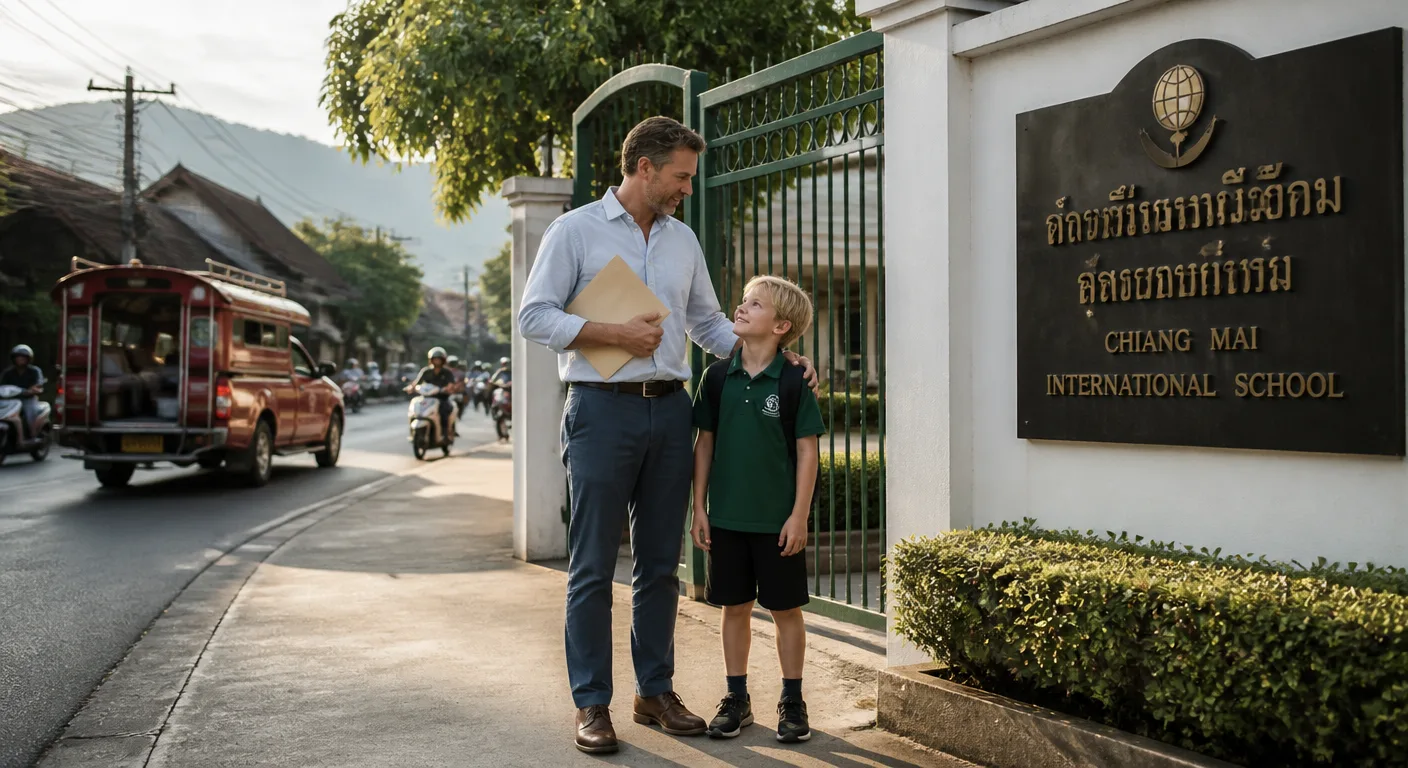
Three realistic paths exist in both cities, and the right one shapes everything else about where you should live more than the city choice itself. A full international school gives structure, local friendships, and continuity, but it's the most expensive and least flexible path and ties your calendar to a term schedule. A Thai bilingual or private school costs less, integrates a family more deeply into local life, and works well for younger children, but the curriculum and pace can be a harder adjustment for a child arriving mid-year. Accredited distance education keeps the family mobile and the budget flexible, but it requires a parent genuinely present as a supervisor during study hours, which is a real cost against work time.
On fees, treat every number as a range and confirm directly with schools before budgeting around it. In Chiang Mai, mainstream international school tuition for 2026 runs roughly THB 180,000–550,000 ($5,100–15,700) per year depending on year group, with top-tier IB programs running higher. In Phuket, expect roughly THB 200,000–700,000 ($5,700–20,000), with the premium schools sitting at the top of that band. In both cities, published tuition is typically only 70–85% of the true annual cost once registration fees, uniforms, transport, lunch, and school trips are added, and most schools apply a standard 3–5% annual increase. Admissions at the popular schools in either city are not guaranteed on arrival — mid-year entry depends heavily on which year group you need and how full that cohort already is.
Chiang Mai wins on choice and price: more schools spread across a wider range of tuition bands gives families more room to find a fit without paying for one they don't need. Phuket wins for families wanting boarding options, dedicated sports academies, or a specific curriculum offered at only one campus on the island.
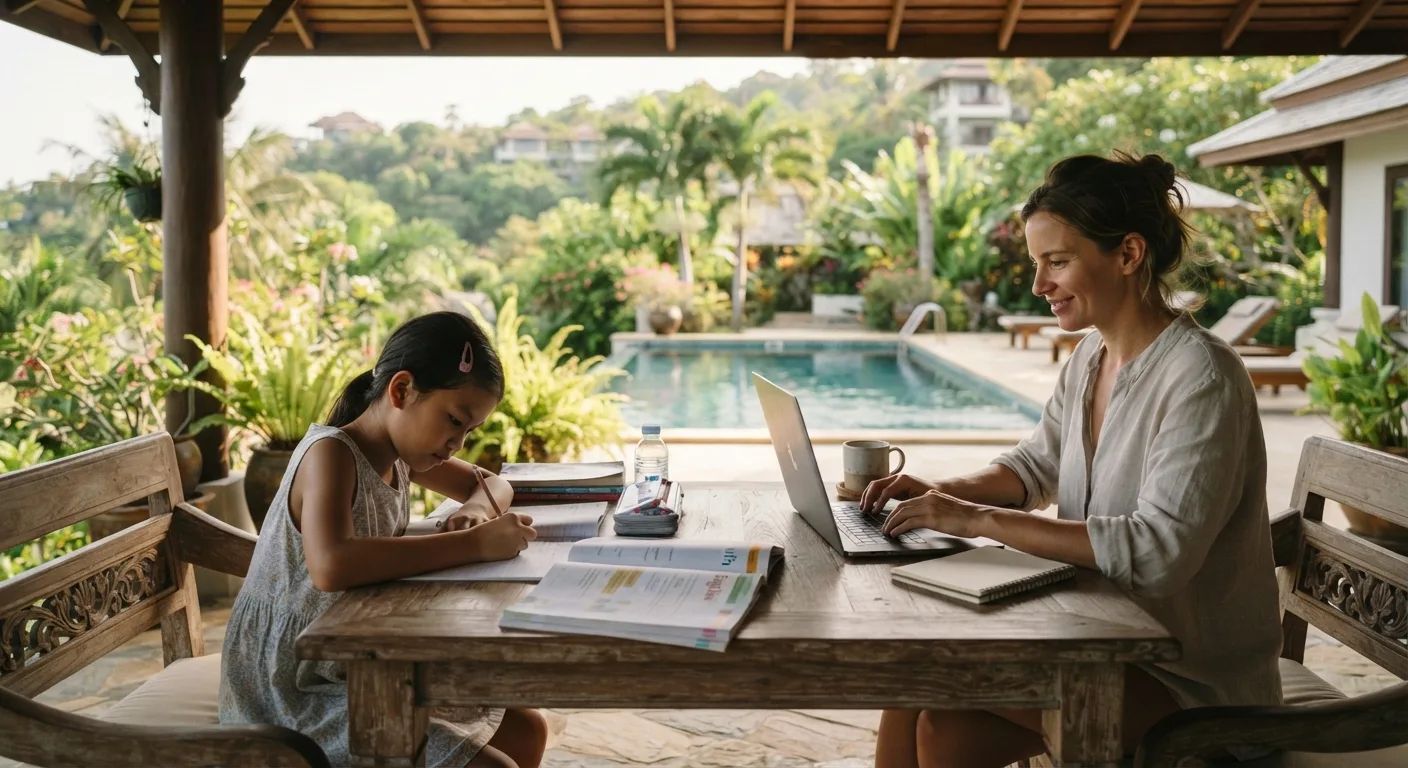
The worldschooling day, in practice, looks less romantic than the word suggests: a structured morning study block, a parent acting as supervisor and motivator rather than as a teacher delivering lessons, and an accredited curriculum doing the actual teaching in the background so re-entry into a home-country school system later remains straightforward. Our own review of using Wolsey Hall Oxford as that curriculum covers what a typical week actually involves.
Pro-tip: decide the schooling path before the city. It is the less reversible of the two decisions — pulling a child out of an international school mid-year is far more disruptive than moving a rental.
Healthcare and safety with kids
Both cities have private hospitals well used by expat and nomad families, with pediatric consultations typically running in the low thousands of Baht. Chiang Mai's private hospital market is generally the cheaper of the two; Phuket's is more expensive but built specifically around international patients and used to treating short-stay visitors. For serious or specialist pediatric cases, both cities can mean a transfer to Bangkok — that's not a mark against either city, it's simply the honest referral pattern for anything beyond routine care.
What actually sends nomad kids to a clinic here is fairly predictable: gastro bugs from food or water transitions, ear infections (common after pool time), dengue fever, scooter-related road injuries, and heat or hydration issues in kids not yet acclimated. Prevention is mostly ordinary: bottled or filtered water, dengue precautions like repellent and covering up at dawn and dusk, ear drying after swimming, and building heat tolerance gradually rather than assuming a child adjusts as fast as an adult.
Road safety is the single largest physical risk to children in both cities, and it's higher in Phuket, where distances are longer and traffic moves faster. Our family rule is simple and non-negotiable: helmets for everyone, no child ever rides a scooter as a matter of convenience, and if the school run is long, that's a car, not a scooter with a child wedged between two adults.
An uninsured pediatric hospital admission at a private facility in either city can run into hundreds of thousands of Baht once imaging, a short stay, and specialist review are involved — a figure that has nothing to do with how affordable a routine GP visit feels day to day. That affordability of small, everyday costs is exactly what misleads families into skipping coverage; the risk was never the GP visit, it was the one bad week. Our guide to family health insurance in Thailand walks through what to actually look for in a policy for this setup.
Daily life, community, and what kids actually do
Chiang Mai's nomad-family scene is the more established of the two: homeschool co-ops, regular meetups, and a genuine pool of families staying multiple years rather than one season. Kids' activities — climbing, swimming, martial arts, music lessons — are cheap and plentiful, café culture generally tolerates children without side-eye, and weekend access to mountains and waterfalls gives structure to time off that doesn't require a car full of gear.
Phuket builds childhood around the sea and sport by default: swimming, seasonal surf lessons, sailing, and football or rugby academies are simply part of the island's infrastructure rather than a special activity to seek out. The trade-off is a foreign community that skews more toward tourism and hospitality business owners on shorter or seasonal stays, which means friendships turn over faster than they do further north.
That friendship-churn problem is real for kids in both cities and worse in Phuket. The practical mitigation is to anchor your child's social life to activity-based groups — a swim squad, a climbing gym, a regular co-op — rather than a school cohort alone, and to prioritize the specific pockets, schools, and clubs where other families are known to stay multiple years rather than one season.
Language and integration also diverge. Everyday Thai goes noticeably further in Chiang Mai, where daily transactions in markets and local shops still favor at least basic Thai. Phuket's tourist zones function comfortably in English, which is convenient day to day and, over a longer stay, quietly insulating — it's easy to live there for a year and pick up very little of the language.
The hybrid strategy: why you might not have to choose
Many long-stay families we know eventually stop choosing and start rotating: north during the cool months from roughly November through February, south or abroad during the burning season, and back north once the green season settles in. It sounds complicated until you look at the visa mechanics underneath it, which make the rhythm easier than a single 12-month lease.
Thailand's tourist and DTV entry structures generally run on a 180-day window per entry with an in-country extension available partway through, which fits a north-south-north rotation more naturally than it fits a fixed annual lease tied to one address. Applications and current entry requirements run through the official Thai e-Visa portal, and any extension or status questions go through the Thai Immigration Bureau rather than a third party. Our DTV visa guide for families covers how this specific visa category applies to a rotating, remote-working household in more detail.
The honest costs of this rhythm are worth naming plainly: two sets of security deposits instead of one, storage fees or the hassle of hauling gear between bases, activity enrollments and friendships that get disrupted by the move, and — the most important limitation — it simply does not work if a child is enrolled in a full international school year with a fixed term calendar.
This lifestyle is not for everyone. Families with a child in physical school, families who need routine and stability more than variety, and anyone in their first three months in Thailand should stay put in one city and get that first year right before considering a rotation.
Rather than one annual lease, this rhythm means booking two rounds of short-term accommodation a year — one per base — with enough flexibility to extend if the season runs long.
Frequently asked questions
Is Chiang Mai or Phuket cheaper for a family?
Chiang Mai is cheaper, by a meaningful margin. Comparison data puts a family of three at roughly 25–30% cheaper excluding rent and 40% or more cheaper once rent is included, driven mainly by lower rent and lower electricity costs from Chiang Mai's cooler climate and less resort-driven housing market.
How bad is Chiang Mai's burning season for children, really?
It's a genuine health event, not a minor inconvenience. AQI regularly exceeds 150 from mid-February through April, with March typically worst, and has hit 200–300+ on bad days. Families with respiratory-sensitive children should plan to leave for that window rather than manage it in place.
Which has better international schools, Chiang Mai or Phuket?
Chiang Mai has more schools across a wider range of price points, giving families more choice and easier admissions timing. Phuket's schools are fewer but include boarding options and sports academies not available in Chiang Mai, so the answer depends on whether breadth or a specific specialty matters more.
Do we need a car in Phuket or can we manage with scooters?
Most families end up needing a car in Phuket, at least for the school run. Distances are longer and traffic faster than in Chiang Mai, and putting a child on a scooter for convenience carries real risk; a car becomes necessary once daily distances exceed a short local trip.
Which city is better for a family staying only two or three months?
Phuket, for most short stays, mainly because its short-term rental market is more mature and its stronger international flight connections make arrival and departure logistics simpler. The exception is a stay planned for December through February, when Chiang Mai's air quality is at its best all year.
Is Phuket safe for kids around the water?
It can be, but only with active supervision and respect for the red-flag warning system, which many tourists ignore. Rip currents on the west-coast beaches are genuinely dangerous and cause fatalities every year; swim only at lifeguarded beaches and never treat flag warnings as optional.
Can we split the year between both cities on the same visa?
Yes, for most family visa structures a north-south rotation fits comfortably within a roughly 180-day entry window with an in-country extension available partway through. It does not work if a child is enrolled in a full international school year tied to a single campus and term calendar.
How we'd choose if we were you
If we were making this decision again, we'd answer three questions before looking at a single listing: what's the real monthly budget ceiling, what schooling format are we committing to, and does anyone in the household have a respiratory sensitivity that makes three months of elevated AQI a real risk rather than an inconvenience. A tight budget and a distance-education plan point toward Chiang Mai. A higher budget, a need for strong flight connections, and a household without respiratory concerns point toward Phuket. A child already enrolled in a specific international school program points toward whichever city that school is actually in, full stop.
What changed for our own family in each place was less about the postcard version of either city and more about the ordinary week: in Chiang Mai, the ordinary week got cheaper and quieter but came with a hard stop every March; in Phuket, the ordinary week got more physically active and more expensive, and came with a permanent low hum of vigilance around water and traffic that never fully switched off.
Seasons, school fees, and rents all move year to year, so treat every figure here as a 2026 planning range and confirm current numbers directly with schools, landlords, and immigration sources before committing to either city.
Sources
Written by Fabrizio Bestoso
Fabrizio Bestoso is a digital entrepreneur and the father of a family that lives and works on the move across Thailand, Asia, Spain and Middle East. He started Nomad Family Hub to turn the logistics his own family works through — the DTV visa, health insurance, multi-currency money, distance schooling, work — into step-by-step guides, each checked against official sources and against what actually happened.