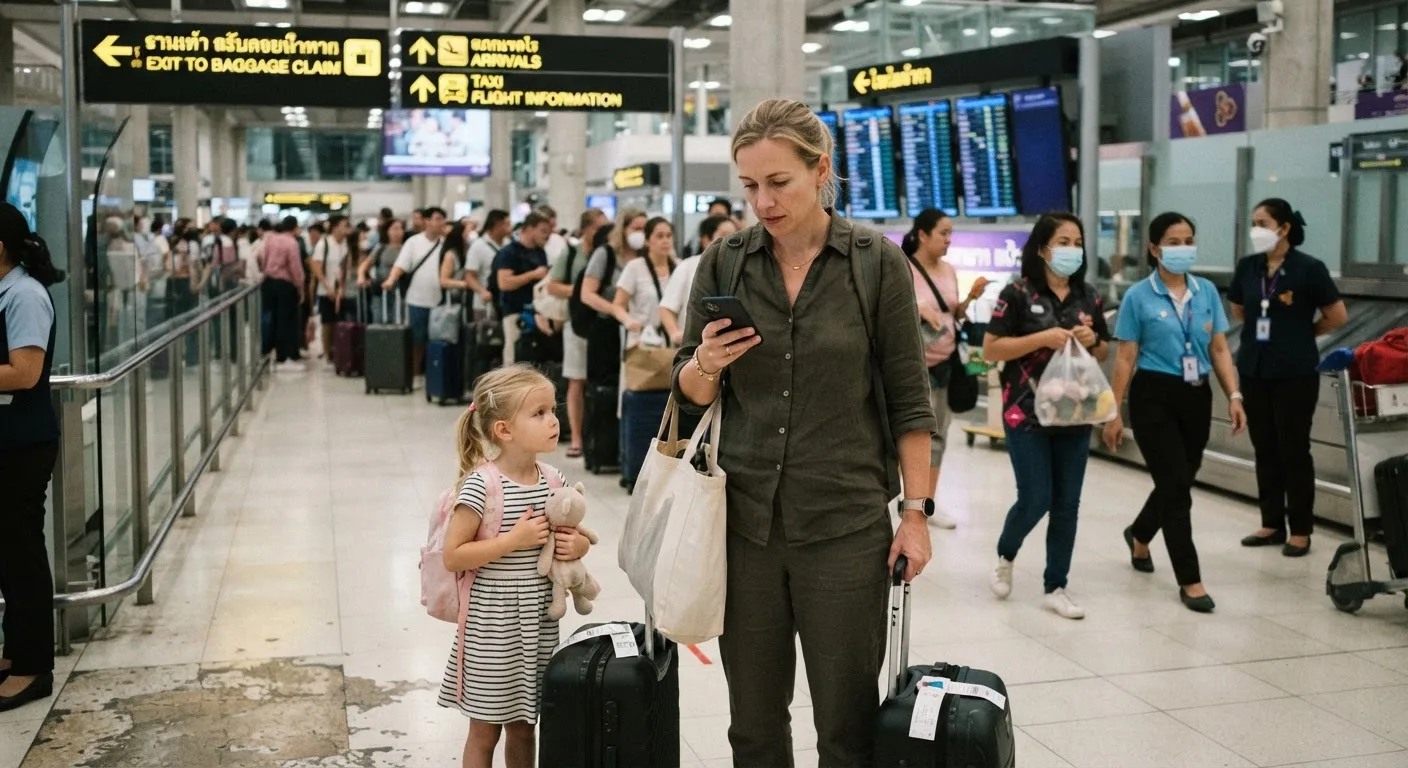
The Document Kit Every Nomad Family Needs: Apostilles, Certificates, Backups
A plain, checklist-led guide to which family documents need an apostille or legalization, which just need copying, how translations fit in, and how to back everything up before a long-stay move — including what changes for Thailand on 28 February 2027.
 By Fabrizio Bestoso · · 14 min read
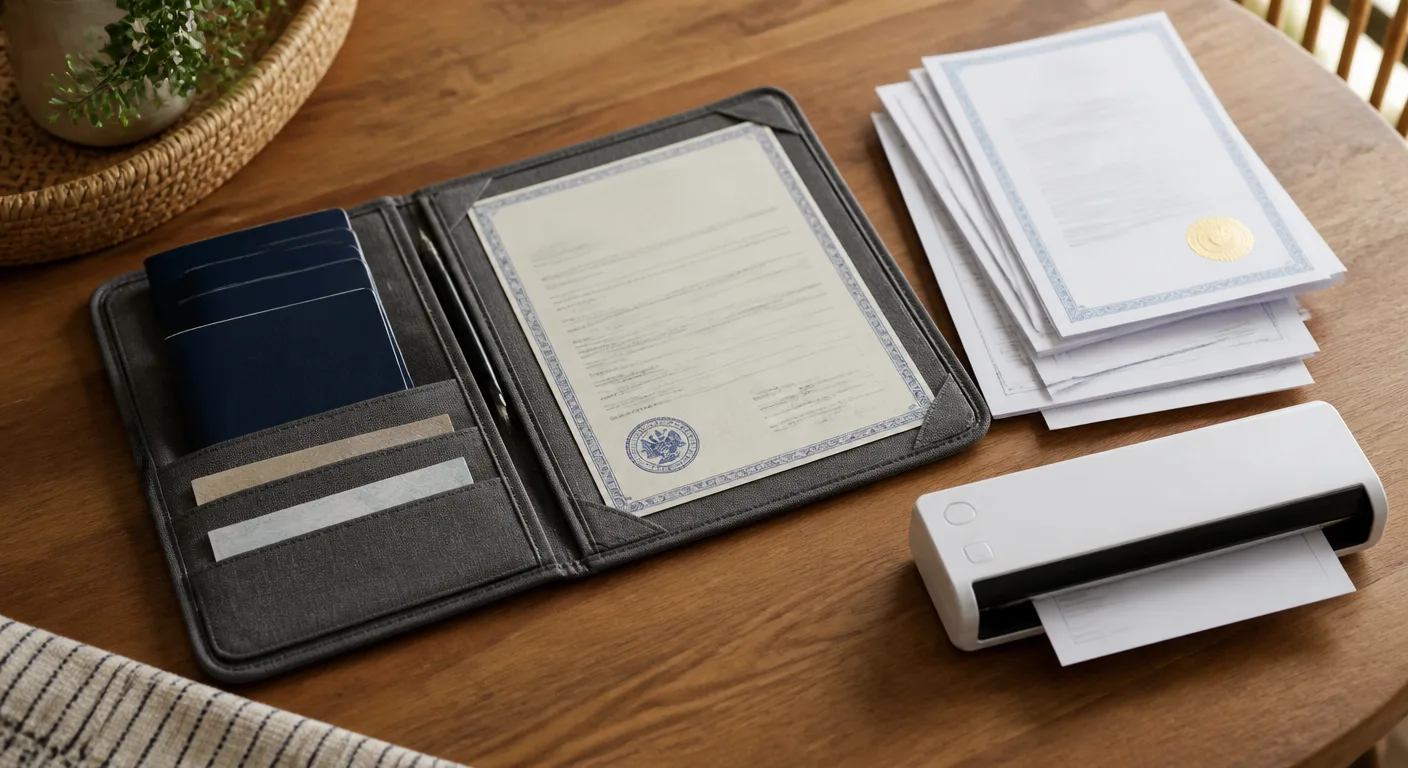
An apostille certifies a signature, not a story
- An apostille certifies a signature and a seal on a public document — it does not certify what the document says.
- Thailand's accession to the Apostille Convention takes effect on 28 February 2027; until then, the inbound route for foreign documents is still consular legalization.
- Not every document in a family's file needs authenticating — passports and employer letters usually do not.
- Translation is a separate step from authentication, and embassies decide on both independently.
- Every certificate that matters should end up in three copies, in three different places, before you leave.
A marriage certificate and two birth certificates, sitting in a drawer, waiting for a stamp neither parent has ever needed before: that is where most families doing this for the first time get stuck. The stamp itself is quick once you know which office issues it. The slow part is realizing, usually late, that the certificate has to be reissued, translated, and checked against a passport spelling before an embassy will even open the file.
We are a mixed Thai–foreign household: our daughter and her mother are Thai citizens, so only the foreign parent in our family needs a Thai visa. That means the dependent-visa steps described in this guide — the ones a fully foreign family filing a DTV with a spouse and children would go through — are not what we filed. What we did do is have our own marriage certificate and birth certificates legalized and translated for our visa paperwork, and we still keep a standing document kit from that process. That is the experience this guide draws on.
This is administrative information, not legal advice: we describe what we did and what we read from official sources, and the Thai embassy or consulate handling your application decides what it will actually accept. Requirements differ between embassies, sometimes on details that matter.
What an apostille is, and what it is not
An apostille is a certificate, issued by a designated authority in the country where a public document was created, confirming that a signature is genuine, that the person who signed had the authority to do so, and that any seal or stamp on the document is the one it claims to be. It is a single sheet attached to your certificate. It replaces a longer chain of legalization steps between countries that both belong to the 1961 Apostille Convention.
Apostille versus legalization comes down to that chain. Legalization is a sequence of certifications — often the issuing country's foreign ministry, then the destination country's embassy — each one vouching for the seal before it. An apostille collapses that into one step, recognized by every other country that has joined the Convention, without an embassy visit.
What an apostille does not do matters just as much. It does not translate anything. It does not confirm that the facts inside the document are true — only that the signature and seal are genuine. It does not override the destination country's own entry rules, and it does not apply to every kind of document: the Convention excludes papers executed by diplomatic or consular agents, along with certain commercial or customs documents.
Thailand's apostille change: before and after 28 February 2027
On 30 June 2026, Thailand deposited its instrument of accession to the Apostille Convention. The Convention enters into force for Thailand on 28 February 2027. Between those two dates, nothing has changed yet for a family filing a visa this year: the route for a foreign document going into Thailand is still consular legalization.
That gap exists because of how the Convention works. Under Article 12, any existing member state can object to a new country's accession within six months of being notified, and an objection would prevent the Convention applying between those two specific countries. Six months from Thailand's 30 June 2026 deposit lands around 30 December 2026, and the further sixty days after that line up with the 28 February 2027 entry-into-force date reported by the HCCH's news item on Thailand's accession. As of September 2026, that objection window is still open, so it isn't possible to say which countries, if any, will have a smooth path with Thailand once the date arrives. We are not stating that any country accepts or refuses the apostille — that depends on the HCCH status table for the Apostille Convention for your specific home country, checked closer to your filing date. Thailand's Cabinet approved the accession on 9 December 2025, according to Thailand's Ministry of Foreign Affairs statement on the accession, and Thailand has reportedly designated its Department of Consular Affairs as the apostille authority.
| Situation | Route | What to do |
|---|---|---|
| Filing before 28 February 2027 | Consular legalization | Follow the current instructions from the Thai embassy or consulate handling your file |
| Filing after, home country a party with no objection | Apostille | Check the HCCH status table for your country, then use its designated authority |
| Filing after, home country not a party or an objection stands (to verify) | Uncertain | Ask the embassy |
Warning: the embassy or consulate handling your application decides what it accepts, and requirements vary between embassies. Ask before you pay for a stamp, especially if your filing date sits close to 28 February 2027.
The family kit: what to authenticate and what to copy
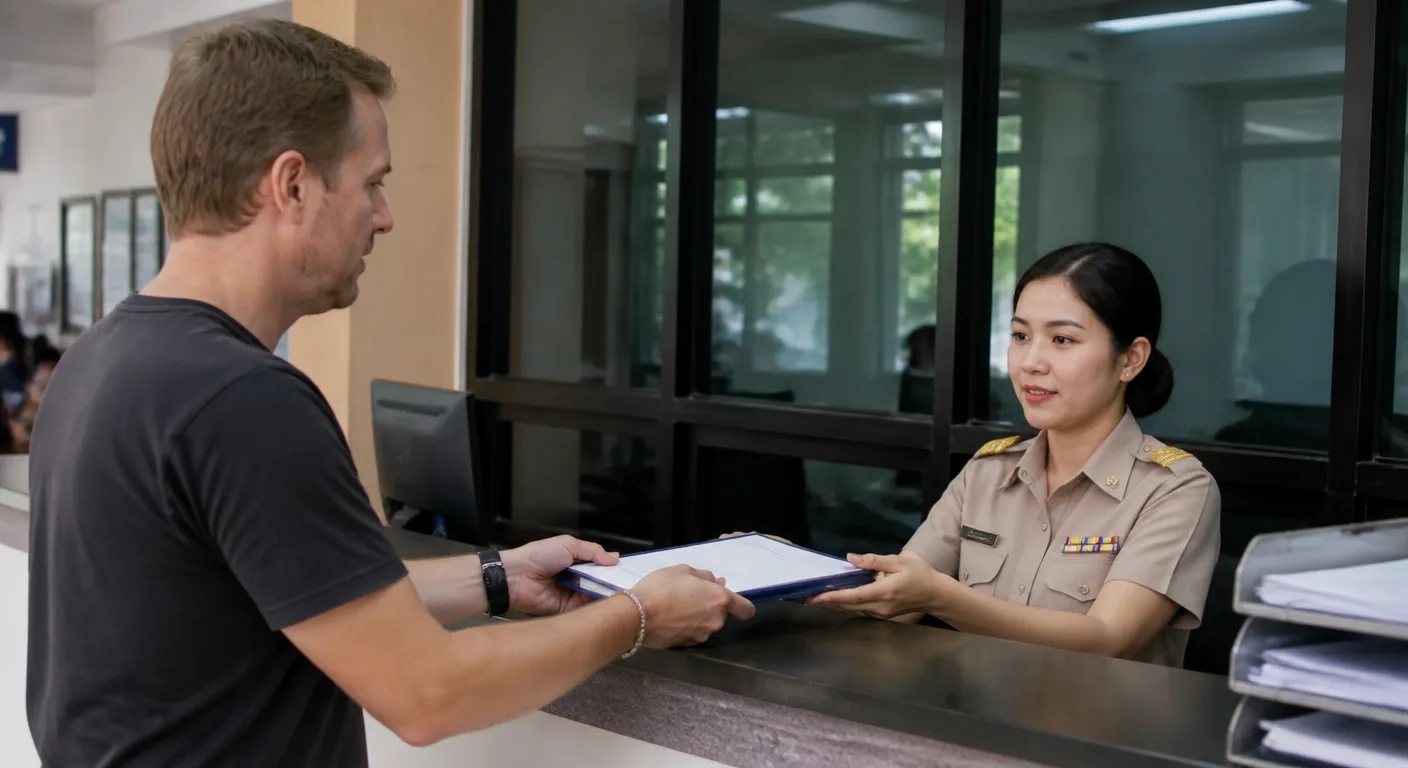
Not every document in a family's file needs a stamp. The documents worth authenticating are the ones that prove a legal relationship or fact — a marriage, a birth, a name change — because those are what an embassy cannot verify on its own. Everything else is usually copied, not certified.
| Document | Who needs it | Authenticate? | Translate? | Note |
|---|---|---|---|---|
| Passport | Every family member | No, copy only | No | Keep at least six months' validity from the intended travel date |
| Marriage certificate | Spouse | Often, if the embassy requires it | Often, if the embassy requires it | Usual slow step; check the name against the passport |
| Birth certificate | Each child | Often, if the embassy requires it | Often, if the embassy requires it | Order a recent copy, not an old one |
| Employer or client letter | Working parent | No, copy only | Check with the embassy | Supporting evidence, not a public document |
| Proof of funds | Filing parent | No, copy only | Check with the embassy | Format requirements vary by embassy |
| Travel or health insurance certificate | Every family member | No, copy only | Check with the embassy | Keep the policy number and contact details with it |
| School records | School-age children | No, copy only | Check with the embassy | Useful for a possible return to school later |
| Spare passport photos | Every family member | No, copy only | No | Format rules vary by embassy |
The visa route itself decides which of these an embassy will actually ask for; a look at how the DTV compares with the LTR and ED visas for families shows how differently each program treats the same certificate. For the full list of what a DTV dependent application usually requests, we keep the full DTV document checklist for families updated separately.
Pro-tip: start with the marriage certificate and the birth certificates. They are the slowest step in the whole file, and a name mismatch discovered late — a maiden name, a transliteration spelled two different ways — costs more time than anything else in this list.
Authenticating documents: our order of operations
For our own visa paperwork, we had our marriage certificate and birth certificates legalized and apostilled. The whole process took about 2–3 weeks and cost roughly 150–200 euros in total across both certificates. We did not name the issuing country here, at the editor's request, because the process and costs vary by country and this guide is meant to describe the steps, not one jurisdiction's exact fees.
Translation was a separate step. Sworn or certified translators handled it for about 100–150 euros in total, and the embassy accepted the translations the first time, without objections.
The order we followed, and would follow again:
- Request a fresh certified copy from the registry that issued the original — not the copy that's been in a drawer for years.
- Have it apostilled or legalized by the competent authority for that country; the HCCH list of apostille authorities by country shows which office to use once a country is a Convention member.
- Get a certified translation into the language the embassy asks for.
- Check every name on every document against the passport spelling, letter by letter.
- Ask the embassy directly what it will accept, rather than assuming last year's requirement still holds.
- Scan everything before the originals leave your hands, so a lost or delayed document doesn't strand the rest of the file.
Costs vary by country: as a rough, generic range, apostille or legalization work often runs $150–$400 per document and certified translation often $30–$80 per document, though both figures move a great deal depending on where the document was issued and how fast you need it back.

What went wrong
Nothing was formally rejected in our case, but one birth extract had to be reissued because it had been issued more than six months earlier and the embassy required a more recent date. That single delay reset our timeline by the length of a new registry request — the lesson we took from it is to order fresh certified copies late in the process, close to when you'll actually submit, rather than early when it feels efficient to get it out of the way.
Name mismatches and inconsistent transliterations are the other documented risk worth checking for deliberately, even if they didn't happen to us: a maiden name that appears on a marriage certificate but not on a passport, or a child's name spelled one way on a birth certificate and another way on an application form, can stall a file at the exact moment an officer is comparing documents side by side.
Warning: check every spelling, hyphenation and transliteration across all your documents before you pay for a stamp or a translation. A five-minute comparison against the passport now is cheaper than a reissue later.
Backups that survive a lost phone
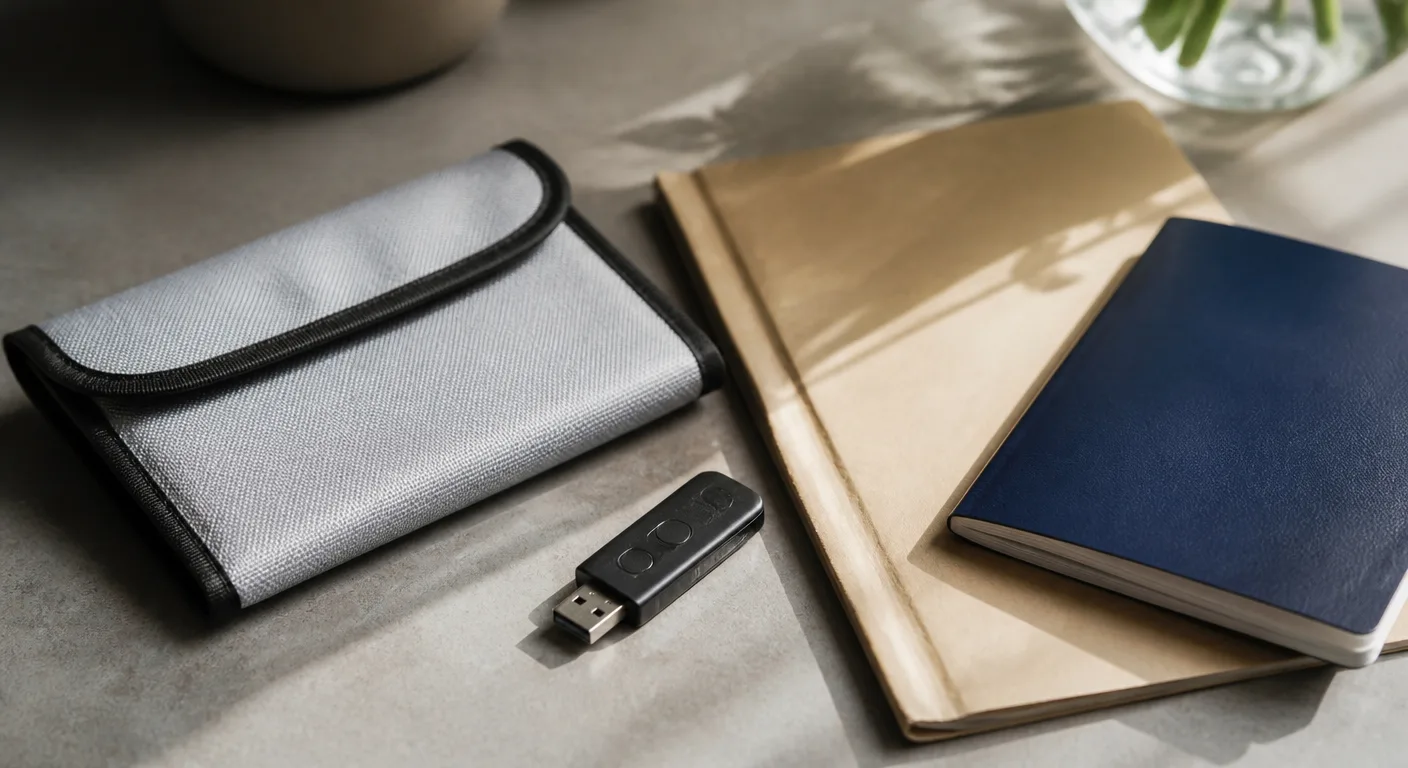
We keep the apostilled and translated originals in a hard folder that travels with us. Plain copies stay at home. Digital backups live in two places: cloud storage — Google Drive and iCloud — and an encrypted pen drive that doesn't depend on any single account working. The gear we carry and how we back it up covers the hardware side of that setup in more detail.
The documents we've actually needed most in the field are the translated birth certificate and the marriage document, especially at hospitals and for bureaucratic and rental procedures. They come up more often than the visa file itself once you're settled somewhere.
| Copy | Where | Protects against |
|---|---|---|
| Paper original | Carried in a hard folder | Needing the physical document on the spot |
| Paper duplicate | Left at home | Total loss of the traveling set |
| Cloud copy | Google Drive or iCloud | A lost or broken device |
| Offline copy | Encrypted pen drive | No internet access when you need the file |
Two more habits are worth setting up before you leave, not after: put authenticator-app two-factor authentication and its backup codes into a password manager, because recovery by a home-country phone number stops working once your SIM changes; and photograph every device's serial number on day one, while it's still easy to find.
School and health records
Our own school kit holds the official reports from our daughter's previous school, an attendance statement, a syllabus of the subjects covered, and our homeschooling register. Those four documents are what we'd hand over first if she went back into a classroom system.
More generally, a records folder built to keep a return to school possible holds dated work samples, a subject-by-subject log, and a folder organized by term, plus any exam certificates that exist along the way. A vaccination record and an insurance certificate belong in the same folder, even though neither one is specific to schooling. The legal side of homeschooling while traveling covers the record-keeping rules behind this in more depth, and what schools ask for when a worldschooled child goes back sets out what a receiving school will actually look for when the folder lands on a desk.
Frequently asked questions
What documents usually require an apostille?
Public documents issued by a registry or an official body — birth certificates, marriage certificates, court orders — are the usual candidates. Whether your specific visa file needs them apostilled depends on the embassy handling your application, so confirm before paying for the stamp.
What is the difference between an apostille and legalization?
An apostille is a single certificate issued by the country where the document was created, recognized directly by any other country that belongs to the Apostille Convention. Legalization is a longer chain of certifications, usually ending with a visit to the destination country's embassy.
Does Thailand accept apostilles?
Thailand's accession to the Apostille Convention takes effect on 28 February 2027. Until that date, consular legalization is the reported route for documents going into Thailand. Always confirm current requirements with the embassy or consulate handling your application.
Can I apostille a document from another country?
No. An apostille is issued by the competent authority in the country where the document was created, so a certificate issued in one country needs that same country's authority to apostille it — not the authority of the country you're moving to.
What documents cannot be apostilled?
The Apostille Convention excludes documents executed by diplomatic or consular agents, along with documents dealing directly with commercial or customs operations. Most personal certificates — birth, marriage, educational — fall outside those exclusions and can typically be apostilled.
Do translations need an apostille?
Not necessarily. A translation is a separate step from authentication, and whether an embassy wants the translator's certification itself authenticated varies by embassy and by country. Ask the specific office handling your file rather than assuming one rule applies everywhere.
How long does an apostille take?
It varies by issuing country, the registry involved, and whether you use a standard or expedited service, so we won't give a single duration here. Build in more time than you think you need, and start the request as early as the document's validity window allows.
Our document checklist
This is the checklist we'd hand a friend starting the same process today.
| Task | Done |
|---|---|
| Fresh certified copies of the marriage and birth certificates ordered | ☐ |
| Apostille or legalization completed, as the embassy requires | ☐ |
| Certified translations completed | ☐ |
| Every name checked against every passport, letter by letter | ☐ |
| All passports valid for at least six months | ☐ |
| Scans of every document saved in three separate places | ☐ |
| Two-factor backup codes stored in a password manager | ☐ |
| School records folder assembled (reports, attendance, syllabus, log) | ☐ |
| Insurance and vaccination certificates included | ☐ |
What surprised us most was not the stamp itself — it was how a document's age, not its content, was what nearly slowed us down: a birth extract older than six months had to be reissued before the embassy would take it.
Rules and dates change, and requirements vary between embassies; treat this article as a starting checklist, not a substitute for the current instruction from the embassy or consulate handling your file.
Sources
- https://www.hcch.net/en/news-archive/details/?varevent=1158
- https://www.hcch.net/en/instruments/conventions/status-table/?cid=41
- https://www.hcch.net/en/instruments/conventions/authorities1/?cid=41
- https://www.hcch.net/en/instruments/conventions/full-text/?cid=41
- https://www.mfa.go.th/en/content/thailand-accession-to-the-apostille-convention-2?cate=5d5bcb4e15e39c306000683e
Written by Fabrizio Bestoso
Fabrizio Bestoso is a digital entrepreneur and the father of a family that lives and works on the move across Thailand, Asia, Spain and Middle East. He started Nomad Family Hub to turn the logistics his own family works through — the DTV visa, health insurance, multi-currency money, distance schooling, work — into step-by-step guides, each checked against official sources and against what actually happened.