Tax Residency for Nomad Families in Thailand: the 180-Day Rule Explained
We explain what Thailand's 180-day tax residency rule actually says, how it applies separately to each parent and child in a family, and what the 2024 foreign income rule changes — plus what to bring to a tax adviser if you are close to the line.
 By Fabrizio Bestoso · · 20 min read

We heard it in every Destination Thailand Visa group before we ever looked at the actual rule: "just leave before you hit 180 days and you're fine." We believed a version of that ourselves. The foreign parent in our family assumed the rule was about a single continuous stay — leave the country every three or four months, come back, and the clock resets. As long as no one trip reached 180 consecutive days, we thought Thai tax residency simply could not apply. It turned out to be the wrong model entirely: the Revenue Department adds up every day spent in Thailand across the whole calendar year, from 1 January to 31 December, whatever the pattern of the stays. Breaking a long stay with short trips to Singapore or Hong Kong resets nothing.
The second thing that surprised us is that a visa and a tax residency status are two separate questions. Holding a DTV, or any other long-stay visa, does not make anyone a Thai tax resident, and it does not protect anyone from becoming one. And since 2024, a third layer matters: even once someone is resident, whether their foreign income is taxed depends both on whether they were resident in the year it was earned and on when it is brought into Thailand.
We are not tax advisers, and nothing here is tax advice. We are a family that took the published rules seriously enough to read them properly and to sit down with professionals; anyone whose situation may put them close to Thai tax residency should confirm their own position with a qualified cross-border tax professional before acting on any of it.
- The 180 days are not one continuous stay — they add up across the whole calendar year.
- Each family member has their own day count; a parent can be resident while a spouse or child is not.
- A visa, including the DTV, never decides tax residency by itself.
- Foreign income earned while resident is taxed when it reaches Thailand — but only if it was earned from 1 January 2024 onward; earlier income is not caught.
- A proposed exemption for income brought in the same or following year is still only a draft, not law, as of September 2026.
What is the 180-day rule for Thai tax residency?
Anyone who spends 180 days or more in Thailand during a calendar year, in one stay or in many, is a Thai tax resident for that year, whatever visa they hold. That is the entire test in law: no minimum income, no property owned, no family ties — just days present in the country.
The year that counts is the calendar year, 1 January to 31 December, not a rolling twelve months from any date you pick. The count restarts at zero every 1 January. And the days do not need to be consecutive: 100 days spent in the country between January and April, followed by 85 more days between October and December, add up to 185 days and make that person resident for the year, even though neither stay on its own came close to six months.
There is a small wording inconsistency worth knowing about. The Revenue Department's English Thai personal income tax page describes the threshold as "more than 180 days," while its own 2024 guide for foreigners and outside reviews describe it as "180 days or more." As of September 2026 we could not find a definitive statement of which wording controls exactly on day 180 itself, so the sensible approach is to treat reaching 180 days as the line, not to plan around the gap between the two phrasings.
How a day is counted also matters. Several advisory firms state that any part of a day physically spent in Thailand — including the day you arrive and the day you leave — counts as a full day. We did not find a Revenue Department page that states this explicitly, so we treat it as the cautious, safer way to count rather than as settled law.
Warning: leaving Thailand every few months does not reset anything. The count is not about how long any single stay lasts; it is the total of every day in the country during the calendar year. Two stays of 92 days each, months apart, add up to 184 days.
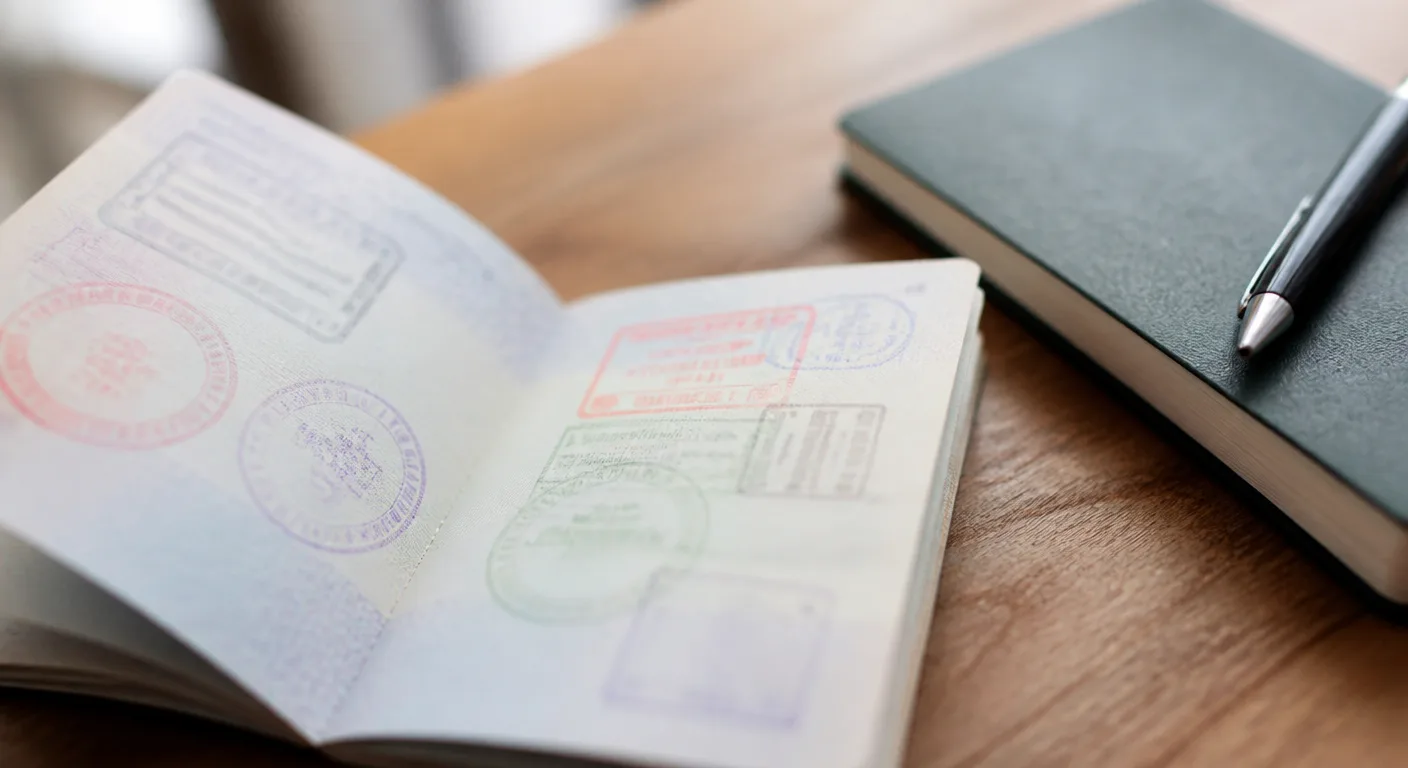
Thai tax residency depends on days, not visas: every day spent in Thailand within one calendar year is added up across all stays, and 180 days is the threshold.
Does a DTV make you a Thai tax resident?
No visa makes a person a Thai tax resident, and no visa prevents someone from becoming one. A holder of the Destination Thailand Visa application we walked through as a family who reaches 180 days in a calendar year is resident that year, exactly like a tourist-visa holder, a work-permit holder, or a retiree would be at the same day count. The DTV carries no published tax exemption of its own.
That is a real contrast with Thailand's Long-Term Resident visa, whose own portal advertises a tax exemption on overseas income for holders in eligible categories — a benefit that depends on which LTR category a person holds, not something automatic. We compare the two routes, along with education-visa options, in how the DTV compares with the LTR and education visas for a family; for tax purposes, the point to take from it is simply that the DTV does not come with anything similar.
Residency status is also a separate question from where income is sourced. Income from work physically performed, a business carried on, or property located in Thailand is taxable in Thailand whether it is paid inside or outside the country, and this applies whether or not the person is a tax resident. Where that leaves someone who is a DTV holder doing remote work in Thailand for a client or employer abroad, is genuinely unresolved: we found no Revenue Department guidance addressing remote work of this kind specifically, and it is exactly the kind of question a cross-border tax professional needs to look at case by case, not something this guide can answer.
How Thailand taxes foreign income since 2024
Since 1 January 2024, foreign income that was earned in a year when a person was a Thai tax resident is taxable in Thailand in whichever year it is actually brought into the country — even if that is several years later. Income earned before 2024 is not caught by this rule at all, regardless of when it is remitted.
Before 2024, the common understanding was narrower: income earned abroad in one year and brought into Thailand only in a later year escaped Thai tax altogether. That changed with Departmental Instruction Por. 161/2566, dated 15 September 2023, which states that a resident with foreign income from employment, business, or property abroad must include that income in Thai tax in whichever year it is remitted, however much later that is. Departmental Instruction Por. 162/2566, issued two months later, then carved out an important exception: it does not apply to income that arose before 1 January 2024. Put together, the two instructions apply the new rule only going forward.
The Revenue Department's guide for foreigners living in Thailand sets out the practical test as two conditions that both have to be met: the income must have been earned from 1 January 2024 onward, by someone who spent 180 days or more in Thailand in the year it was earned, and it must then be brought into Thailand, in that year or later. If either condition fails — the income predates 2024, or the person was not resident in the year it was earned — bringing it in later does not trigger Thai tax. Where only part of a lump sum is remitted, the department apportions the taxable and non-taxable parts rather than treating the whole transfer as one or the other.
| When the income was earned | Days in Thailand that year | Taxed when brought into Thailand? |
|---|---|---|
| Before 1 January 2024 | Under 180 days | No |
| Before 1 January 2024 | 180 days or more | No |
| From 1 January 2024 | Under 180 days | No |
| From 1 January 2024 | 180 days or more | Yes |
What counts as "bringing income in" is reasonably clear at one end and unresolved at the other. The Revenue Department's own FAQ lists wiring money from a foreign bank account, transferring through e-banking, and physically carrying cash into the country. It does not say whether spending in Thailand on a foreign credit or debit card, or withdrawing cash at a Thai ATM from a foreign account, counts as a remittance. Several advisory firms treat both as if they do; as of September 2026 we treat this as genuinely open rather than settled, and it is a direct question for an adviser rather than something to plan around.
Since 2024 we keep our resources clearly separated and, above all, keep records that distinguish older capital from current-year income. For the transfers we do make, we follow the approach described in how we move money into Thailand with Wise. That is housekeeping, not a claim that any method avoids tax.
There is also a proposed change worth flagging precisely because people already talk about it as settled: the Revenue Department has floated exempting foreign income that is brought into Thailand in the same year it is earned or the year after. As of September 2026 this has not been published in the Royal Gazette and is not in force. Until it is, the 2024 rule described above applies in full.
Pro-tip: keep statements or records that show which savings existed before 1 January 2024, and keep that money separate from anything you have earned since. The pre-2024 exclusion only helps if you can actually show where the money came from.
How the 180-day rule applies to each member of a family
Residency is decided person by person, not household by household. In one family, a parent can be a Thai tax resident for a given year while the other parent and the children are not, and a resident with no taxable income of their own may still owe nothing.
In our family, only the foreign parent's day count matters for this question. The Thai parent is a Thai citizen with an established Thai tax position regardless of days spent in the country. Our daughter is a dependent minor with no income of her own, so her day count creates nothing to plan around. All of our own counting is about the foreign parent, who holds the DTV and whose remote work is already taxed in Italy.
More generally, a non-earning spouse of any nationality has the same practical outcome as our daughter: residency status is real for them too, but with no income there is nothing to tax. A working spouse, by contrast, has their own separate day count and their own separate question about foreign or Thai-sourced income.
Where a resident does have taxable income, family allowances reduce what is owed. As of September 2026, the personal allowance is 60,000 THB (about USD 1,750) for the taxpayer, with a further 60,000 THB spouse allowance where the couple is legally married and the spouse has no assessable income of their own; each child brings a 30,000 THB (about USD 880) allowance, with an additional 30,000 THB for a second or later child born in or after 2018; and a further 30,000 THB is available per supported parent. Employment income also carries a 50% expense deduction capped at 100,000 THB. The exact conditions for claiming a child allowance where the child is not a Thai citizen are something we would confirm with an adviser rather than assume.
| Family member | Counts own days? | Typical position | What to check |
|---|---|---|---|
| Foreign parent earning remotely | Yes | Resident only if 180+ days that year; foreign income taxed on remittance if earned since 2024 | Own day log; source and date of any income earned since 2024 |
| Non-earning foreign spouse | Yes | Residency status applies, but usually nothing to tax with no income | Whether any income exists in their own name |
| Thai citizen spouse | Yes | Same 180-day rule; Thai-sourced income is taxable regardless of days | Their own filing obligations under Thai rules |
| School-age child | Yes | Dependent with no income; nothing to tax | Whether a parent can claim the child allowance |
Thai tax residency is individual: each parent and each child has a separate 180-day count for the calendar year.

If you are resident: TIN, filing and treaty relief
A resident with taxable income generally needs to do three things: get a Thai tax identification number, file a return — P.N.D. 90 for someone with income beyond employment, or P.N.D. 91 for employment income only — by 31 March on paper or 8 April online for the previous calendar year, and, where applicable, claim credit for foreign tax already paid on the same income.
A foreigner without a Thai personal ID number applies for a tax identification number for foreigners on form L.P. 10.1, at any area revenue office, within 60 days of first deriving assessable income. Someone whose longest single stay is 14 days or less, and whose total stay in the tax year does not exceed 90 days, does not need one at all. Filing itself is not required where employment income is at most 120,000 THB for a single filer or 220,000 THB for a married one, and other income is at most 60,000 or 120,000 THB respectively; spouses can choose to file jointly or separately. Most people file annually, though a half-year return by 30 September applies to certain business income.
| Net taxable income (THB) | Approx. USD | Rate |
|---|---|---|
| 0 – 150,000 | 0 – 4,400 | Exempt |
| 150,001 – 300,000 | 4,400 – 8,800 | 5% |
| 300,001 – 500,000 | 8,800 – 14,700 | 10% |
| 500,001 – 750,000 | 14,700 – 22,000 | 15% |
| 750,001 – 1,000,000 | 22,000 – 29,400 | 20% |
| 1,000,001 – 2,000,000 | 29,400 – 58,800 | 25% |
| 2,000,001 – 5,000,000 | 58,800 – 147,000 | 30% |
| Over 5,000,000 | Over 147,000 | 35% |
Rates as of September 2026; THB-to-USD figures are approximate, at roughly 34 THB per USD.
Where foreign tax has already been paid on the same income, Thailand allows a credit against Thai tax only where a double tax agreement between Thailand and that country permits it, and the credit can never exceed the Thai tax due on that income. The Revenue Department asks for a tax payment certificate from the foreign authority, in English or Thai, to support the claim. Thailand has treaties with more than 60 countries, including the United States, the United Kingdom, Italy, Germany, France, Australia, and Canada, but how any particular treaty's articles apply — especially to remote employment income — is exactly the kind of question that needs a professional who can read both sides of the treaty, not a general guide.
A resident who has filed can also request a certificate of residence for individual taxpayers from the Revenue Department, using the filed P.N.D. 90/91, the tax receipt, the TIN card, and a passport showing the days spent in Thailand. This is usually the document a home tax authority asks for to apply treaty relief on its own side.
Nobody in our family has a Thai TIN for foreign income, has filed a P.N.D. 90/91 as a resident, or has requested a certificate of residence, because we deliberately keep the foreign parent's day count below 180 in every calendar year. That is a description of our situation, not a suggestion that staying under the threshold is the right answer for every family — for some, becoming resident and filing properly is exactly the right outcome.

Counting our days: what we track and why we saw a tax adviser
The foreign parent in our family rarely spends 180 continuous days in Thailand in any single stretch, which is precisely why the aggregate nature of the rule matters so much to us. In calendar year 2024, the foreign parent spent roughly 140–150 days in Thailand in total; in 2025, roughly 155–165 days. The total has never reached or passed 180 in either year, but it has come close, around 165 days, and we now plan our trips to keep a safety margin of at least 15–20 days by 31 December.
We track this with a plain Google Sheets spreadsheet, checked strictly against the entry and exit stamps in the passport and the boarding passes we save as PDFs. In practice:
- Every time the foreign parent enters or leaves Thailand, we log the date against the passport stamp.
- Both the arrival day and the departure day are counted as days in Thailand, following the cautious counting method described earlier.
- A running total for the current calendar year sits in its own column.
- We check that total before booking any new flight to Singapore, Hong Kong, or Europe, so we know exactly how many days are left before 31 December.
We also keep the statements from our Thai bank accounts alongside the day log, in case we ever need to reconstruct a year; what opening a Thai bank account takes for a foreign family is covered in its own guide.
We also consulted tax advisers, both in Italy and in Bangkok, because we wanted to avoid unexpected double taxation and to understand properly how the DTV, remote work invoiced and taxed in Italy, and long family stays in Thailand actually interact. The main lesson from those conversations was simple but important: do not rely on forums or word of mouth among digital nomads, which routinely confuse the right to stay granted by a visa with tax residency. A visa such as the DTV gives you the legal right to be in the country; it is the count of days in the calendar year that decides whether Thailand can tax your foreign income. By managing our calendar carefully, our position stays clean and transparent for both the Italian and the Thai tax authorities.
| Calendar year | Foreign parent's days in Thailand (approx.) | Tax resident? |
|---|---|---|
| 2024 | About 140–150 | No |
| 2025 | About 155–165 | No |
Pro-tip: update the running total for the calendar year before booking every flight, not after the trip. Count both the arrival day and the departure day, and keep a small safety margin rather than aiming for exactly 179 days.
Frequently asked questions
What is the 180-day tax rule in Thailand?
Anyone who spends 180 days or more in Thailand during a calendar year becomes a Thai tax resident for that year. The days are added up across all stays, from 1 January to 31 December, so they do not need to be consecutive. Being resident does not automatically mean tax is due; that depends on your income and where it was earned.
Does leaving Thailand every six months stop me becoming a tax resident?
No. The count is not about one continuous stay. Every day in Thailand during the calendar year is added together, so two long stays separated by a trip abroad can pass 180 days. Only the total number of days in the year decides residency, and the count starts again each 1 January.
Do DTV holders pay tax in Thailand?
A Destination Thailand Visa does not decide tax. A DTV holder who reaches 180 days in a calendar year is a tax resident like anyone else, and foreign income earned that year becomes taxable when brought into Thailand. Income from work performed in Thailand raises separate questions that a tax professional should review.
Is foreign income brought into Thailand always taxed?
No. According to the Revenue Department, foreign income is taxed only if it was earned from 1 January 2024 onward in a year when you were resident, and then brought into Thailand. Income earned before 2024, or earned in a year you spent under 180 days in Thailand, is not taxed when brought in.
Is the new remittance tax exemption in force?
Not as of September 2026. The Revenue Department has proposed exempting foreign income brought into Thailand in the year it is earned or the following year, but the measure has not been published in the Royal Gazette. Until it is, the 2024 rule applies in full.
Do my children need to file a Thai tax return?
Residency is individual, so each child has their own day count, but a child with no income usually has nothing to declare. Thai filing depends on income above the published thresholds, not on residency alone. Parents who are resident may be able to claim child allowances on their own return, subject to conditions.
How do I get a Thai tax ID number as a foreigner?
A foreigner without a Thai personal ID number applies for a tax identification number on form L.P. 10.1 at any area revenue office, within 60 days of first deriving taxable income. Someone who stays no more than 14 days at a time and 90 days in total in a tax year does not need one.
Our checklist for the 180-day question
Whatever a family's actual position, the same basic housekeeping makes any later conversation with an adviser far shorter:
- Log each family member's days in Thailand, separately, for every calendar year.
- Know which income is foreign-sourced and when it was earned, not just when it arrives.
- Keep clear records of any savings or balances that existed before 1 January 2024.
- Record every transfer into Thailand, with its date and its source account.
- Keep any foreign tax payment certificates that could support a treaty credit later.
- If anyone crosses 180 days with foreign income brought in, get a TIN and file on time.
- Take remote-work and treaty questions to a qualified professional before the calendar year closes, not after.
The visa gives you the right to stay in Thailand; the calendar count is what decides whether Thailand can tax your foreign income. Keeping those two things separate, in our own minds and in our records, is the single habit that has made this whole question manageable for us.
Tax rules and their interpretation continue to move, a draft exemption is still pending as of September 2026, and the Revenue Department's own guidance and a qualified cross-border tax adviser always override anything written here. This article explains the published rules as we understand them; it is not tax advice.
Sources
- https://www.rd.go.th/fileadmin/user_upload/lorkhor/newspr/2024/FOREIGNERS_PAY_TAX2024.pdf
- https://www.rd.go.th/fileadmin/user_upload/kormor/newlaw/dn161A.pdf
- https://www.rd.go.th/fileadmin/user_upload/kormor/newlaw/dn162A.pdf
- https://www.rd.go.th/english/6045.html
- https://www.rd.go.th/english/21987.html
- https://www.rd.go.th/english/21978.html
Written by Fabrizio Bestoso
Fabrizio Bestoso is a digital entrepreneur and the father of a family that lives and works on the move across Thailand, Asia, Spain and Middle East. He started Nomad Family Hub to turn the logistics his own family works through — the DTV visa, health insurance, multi-currency money, distance schooling, work — into step-by-step guides, each checked against official sources and against what actually happened.