How to Transfer Money to Thailand with the Lowest Fees (Wise Step-by-Step)
A worked-arithmetic guide to sending money to Thailand at the lowest real cost, including a step-by-step Wise transfer walkthrough and the 2026 Bank of Thailand licensing change affecting Wise accounts registered to a Thai address.
 By Fabrizio Bestoso · · 21 min read
Transparency note: this guide contains affiliate links. If you sign up or buy through one, we may earn a commission at no extra cost to you — we only recommend services we use with our own family. Full details in our affiliate disclosure.
The money you lose without noticing
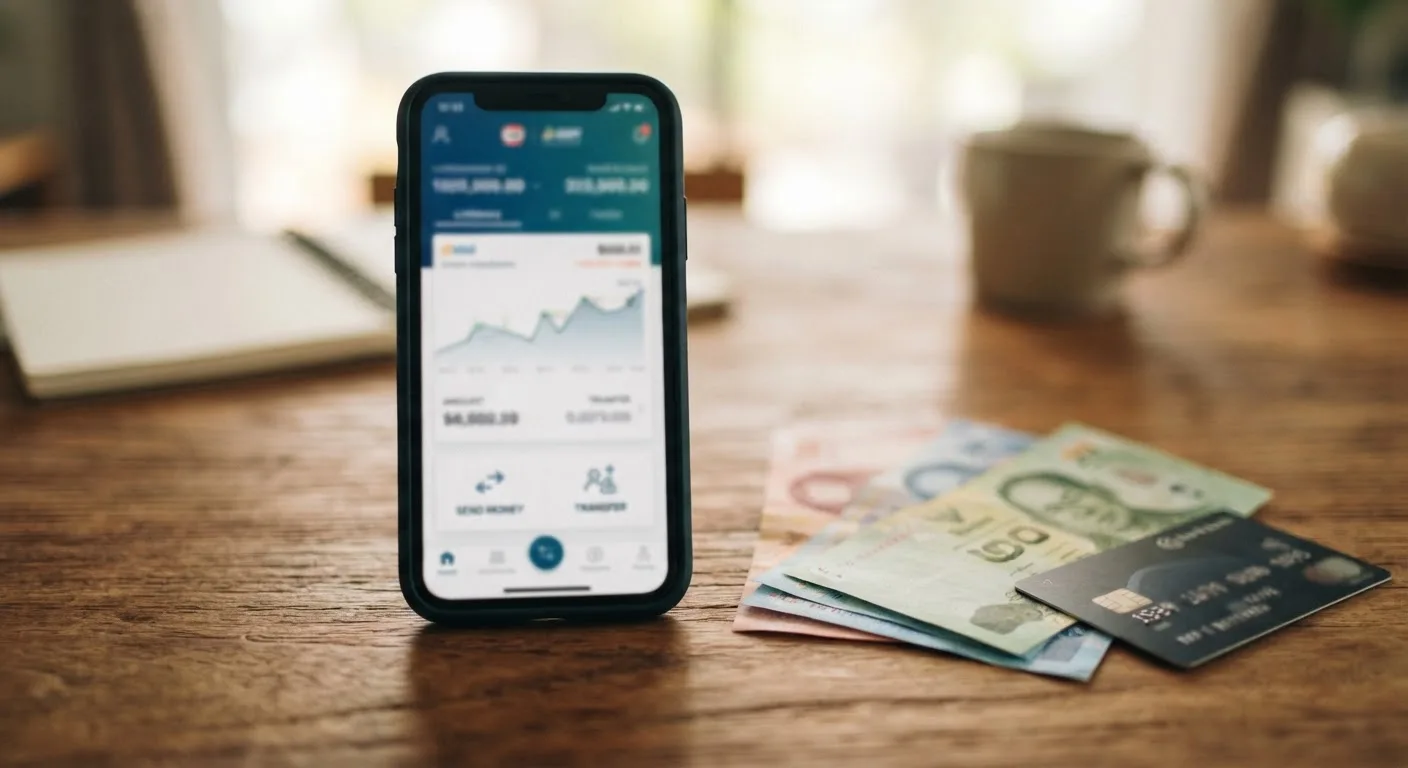
A family sending a typical monthly household budget into Thailand at a poor exchange rate can lose more in a year than they spend agonizing over rent negotiations, school fee comparisons, or which SIM card is cheapest. The loss does not show up as a line item. It is baked into the rate before the money ever reaches a Thai bank account, and most senders never see it because there is nothing on the screen that says "you just lost 3%."
We are a family that has moved household money into Thailand repeatedly over several years, from European accounts, with one of us Thai by birth and used to reading the local banking side of every transfer. We have personally paid what we now think of as the bad-transfer tax — a couple of percent, silently, month after month — before we sat down and did the arithmetic properly. This guide is that arithmetic, plus the practical steps, written from experience rather than theory. It is not financial advice, and nothing here is a recommendation to hold money in any particular currency; it is a description of how transfer costs actually work and how to measure them for your own numbers. Some of the links below are affiliate links, which may earn us a small commission at no cost to you — the cost comparison itself is unaffected by that and is built entirely from the arithmetic, not from which provider we happen to link.
What follows is the real cost structure behind sending money to Thailand, a worked comparison between three transfer routes using the same starting amount, a step-by-step walkthrough of doing it with Wise, and — because pricing and rules move — a close look at the 2026 change to how Wise operates in Thailand, which most other guides published before this year do not cover accurately.
The two costs: fee and spread
Every international transfer has two cost components, and only one of them is usually visible. The first is the fee: a flat charge, or a percentage, stated up front. The second is the spread, also called the exchange rate markup: the difference between the rate you are actually given and the mid-market rate, which is the real, midpoint exchange rate you'd see quoted on financial data pages, with no markup added in either direction. You can check the current mid-market rate yourself at any time using a tool like the Wise currency converter, and comparing that number against whatever rate a bank or provider quotes you is the single most useful five-minute habit in this entire guide.
The spread is usually the larger cost, and it is invisible by design: a provider that advertises "no fee" has to make money somewhere, and if there's no fee, it is almost always sitting inside the rate. A transfer that charges you a visible $0 fee but converts your money two or three percent below the mid-market rate is more expensive than one that charges a stated 0.5% fee on a rate close to mid-market. The visible number and the real cost are not the same thing, and providers that lead with "zero fees" are, more often than not, relying on you not checking the second number.
For illustration, we're using an assumed mid-market rate of €1 = ฿39 through this guide — check the live rate before you send anything, since it moves daily and this figure will be out of date quickly.
Take a monthly transfer of €3,000, a realistic sum for a family covering rent and living costs in Thailand. At the mid-market rate, that's ฿117,000. Here is what three different routes might actually deliver:
| Route | Amount sent | Rate applied | Fees | Baht received |
|---|---|---|---|---|
| Traditional bank wire | €3,000 | mid-market minus ~3% spread | €25 flat fee, plus a correspondent bank deduction in transit (commonly ~฿500–฿1,500) | roughly ฿112,000 |
| "No-fee" transfer app, wide spread | €3,000 | mid-market minus ~3.5% spread | €0 stated fee | roughly ฿112,900 |
| Transparent provider, stated fee on mid-market | €3,000 | mid-market minus a small published spread | ~0.5% fee (€15) | roughly ฿116,000 |
The numbers above are illustrative, built from typical fee and spread mechanisms rather than any single provider's current pricing, which changes by corridor, amount, and funding method — price your own transfer before sending. But the pattern holds every time we've checked it against our own transfers: the route with the visible fee and a rate close to mid-market beats both the traditional wire and the "free" option, because the spread is doing more damage than the stated charge on either of those two.
Annualized over twelve monthly transfers of this size, the gap between the cheapest and most expensive route in the table above comes to somewhere around ฿36,000–฿48,000 a year — close to a thousand euros, lost to nothing more than which box you ticked when sending money that was always going to arrive in Thailand one way or another.
| Monthly Baht received (approx.) | Annual Baht received (×12) | Annual gap vs. transparent route | |
|---|---|---|---|
| Traditional bank wire | ฿112,000 | ฿1,344,000 | ~฿48,000 |
| "No-fee" app, wide spread | ฿112,900 | ฿1,354,800 | ~฿37,200 |
| Transparent provider | ฿116,000 | ฿1,392,000 | — |
There is a third hidden cost specific to traditional wires: correspondent bank charges. When a bank wire passes through one or more intermediary banks on its way to Thailand, each can deduct a handling charge from the amount in transit, meaning the sender's bank quotes one figure and the recipient's bank receives less than that, with no single institution taking responsibility for the gap. This is one of the more common surprises Thai bank staff describe to us when a client's transfer arrives short of the amount stated on the sender's receipt.
Pro-tip: compare providers on "Baht arrived," never on "fee charged." The fee is marketing. The Baht that lands in the recipient's account is the only number that isn't.
How much a family actually moves each month
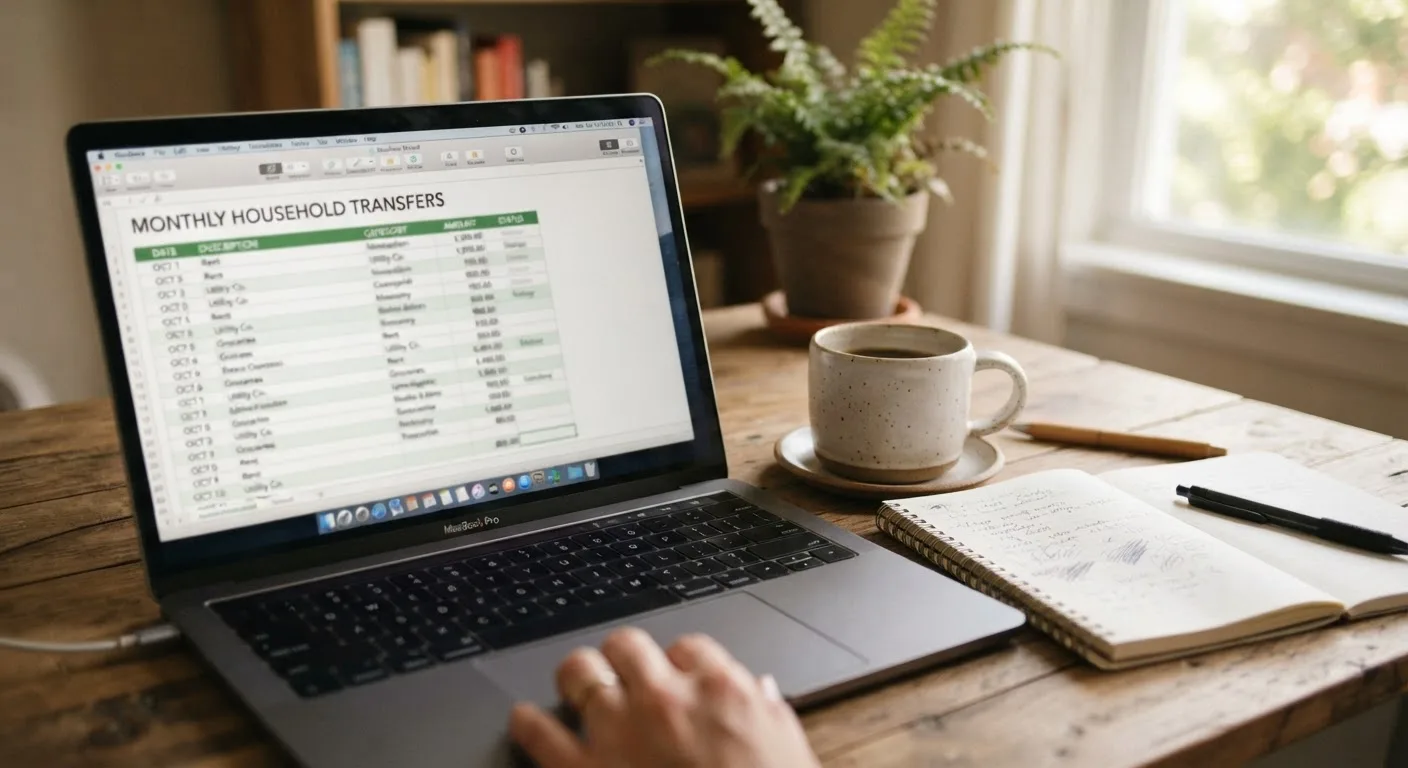
A nomad family's outgoing transfers into Thailand tend to fall into a fairly predictable pattern once you've done it for a year or two: a recurring transfer for rent and living costs, a separate transfer for school or curriculum fees if those are billed abroad, insurance premiums on their own schedule, and then the occasional larger one-off for a security deposit, a flight booking, or a visa-related fund. We've written a full breakdown of what these add up to in the real cost of living in Thailand for a nomad family, which is worth reading alongside this one if you're still building your monthly budget picture.
Frequency changes the arithmetic here in a way that's easy to miss. If you send four smaller transfers a month instead of one larger one, you typically pay any flat fee four times instead of once, even though the percentage-based spread cost stays roughly proportional either way. On the other hand, one large monthly transfer concentrates all of your exchange-rate exposure into a single day: if the rate happens to be unfavorable that day, the whole month's transfer suffers, whereas spreading transfers across the month averages out both good and bad days.
The middle path we've settled on, as one approach among several reasonable ones, is a single monthly transfer for the recurring core — rent, living costs, insurance — timed to a day we choose rather than a deadline that chooses us, with separate one-off transfers only for irregular large items like a security deposit or a flight. It isn't the only sensible way to do it, but it keeps the flat-fee hit to a minimum while not putting the entire month's budget at the mercy of a single day's rate.
Step-by-step: sending money to Thailand with Wise
This walkthrough assumes you're setting up a transfer for the first time and want to understand each step before opening the app, using Wise as the example provider throughout, since it's the one we use for our own transfers into Thailand.
1. Account setup and identity verification. You'll need to create an account and verify your identity, typically with a passport or national ID and sometimes a proof of address. Verification can take anywhere from a few minutes to a couple of days depending on your documents and country. Do this well before you need the money — not on the morning your rent is due — because a verification hold at the wrong moment turns a same-day transfer into a multi-day one.
2. Choosing the send and receive currencies. For most families sending from a home-country account into Thailand, the correct structure is sending in your home currency and receiving in Thai Baht, letting the provider handle the single conversion. Sending in a third currency, or converting before you initiate the transfer, usually just adds an extra conversion step and an extra spread.
3. Entering the recipient. You'll need the recipient's Thai bank name, account number, and the account holder's full name exactly as it appears on the bank's own records. This is where most delays happen: if the name on the receiving bank account doesn't match, character for character, what you type — including how a non-Thai name has been transliterated into Thai on a Thai bank's system, which doesn't always match the passport spelling — the transfer can be held or rejected.
4. Funding the transfer. How you fund the transfer changes the fee: paying by bank transfer from your own account is typically cheaper than paying by debit or credit card, where card-network fees are often added on top.
5. Reviewing the rate lock and arrival estimate. Before confirming, you'll see the exact rate being applied and an estimated arrival time. Check this rate against the mid-market rate for that day rather than trusting that it's automatically competitive.
6. Tracking and holds. Most transfers into Thailand move quickly, but a transfer can be held for additional review, particularly for larger amounts or first-time recipients. If this happens, the provider will usually ask for supporting information about the source or purpose of the funds — respond promptly rather than resending, which can create a duplicate and further delay.
Warning: a name mismatch is the single most common cause of a rejected or delayed Thai Baht transfer. Check the recipient name against what the Thai bank has on file, not against the passport, if the two differ — and if you're not sure, ask the recipient to confirm the exact registered name before you send anything.
The 2026 change every Wise user in Thailand needs to know
As announced in February 2026, Wise is moving customers whose accounts are registered to a Thai address onto its locally licensed Thai entity, which is regulated by the Bank of Thailand. This is the single most important update for anyone using Wise from inside Thailand, and it's worth stating the key distinction before anything else: it applies to accounts registered with a Thai address. If your Wise account is still registered to your home country and you're sending money into Thailand from outside, you are not affected by these Thai-entity rules — you're simply an ordinary international sender, and everything in the earlier sections of this guide applies to you unchanged.
For accounts that are registered in Thailand, the move brings genuinely new capabilities: sending Thai Baht overseas at mid-market rates, topping up directly from a Thai bank account, sending and receiving via PromptPay using a mobile number or Citizen ID, scan-and-pay at Thai merchants through ThaiQR, and a card — physical, deliverable to a Thai address, plus digital cards for online use.
It also brings new restrictions. Transfers between two non-Thai currency balances now have to route through Thai Baht, meaning two conversions instead of one and a higher total cost than a direct conversion would carry. Funds received in a foreign currency are automatically converted into Thai Baht rather than held as-is. And non-Baht balances can no longer be withdrawn to a bank account in a country other than Thailand.
Reported limits, per Wise's own published guidance, include a starting limit of around ฿30,000 per day for account payments and transfers — which rises with account usage — ฿10,000 per transaction for individual Baht payments, incoming PromptPay capped at ฿10,000 per transaction, ฿750,000 per day for converting Baht into another currency, and ฿800,000 per day for outward remittances.
| Before (non-Thai-registered account) | After (Thai-registered account, 2026) | |
|---|---|---|
| Send THB overseas | Not the primary use case | Yes, at mid-market rates |
| PromptPay / ThaiQR | Not available | Available by mobile number or Citizen ID |
| Physical card to Thai address | Not applicable | Available, plus digital cards |
| Non-THB to non-THB transfer | Single conversion | Routed through THB — two conversions |
| Foreign currency received | Held in that currency | Auto-converted to THB |
| Withdraw non-THB balance abroad | Allowed | No longer allowed |
| Daily transfer/payment limit | Provider's standard limits | ~฿30,000/day starting limit, rising with use |
| Outward remittance limit | Provider's standard limits | ฿800,000/day |
The timing has already moved once. The change was originally set for August 2026, then split into two cohorts: customers who registered their Thai address before 21 January 2026 were given until roughly October 2026 to transition, while those registering after that date are being moved on the earlier August 2026 schedule. Given that the dates have already shifted, we'd treat any date here as provisional and check Wise's notice on changes to Thailand accounts directly before making any plans around a cutoff.
The honest trade-off for a family settling in Thailand long-term is this: registering a Thai address unlocks PromptPay, QR payments, and a locally usable card — genuinely useful for daily life — in exchange for the two-step conversion routing on non-Baht transfers, automatic conversion of anything received in a foreign currency, and daily limits that will constrain a larger movement of money, such as a deposit or a school fee lump sum. Neither choice is universally right; it depends on how much of your financial life is already happening in Thai Baht versus how much still needs to move between foreign accounts.
If you have a Thai-registered account and a cutoff date approaching, it's worth doing three things beforehand: confirm your current cutoff cohort directly with Wise rather than assuming, move any large non-Baht-to-non-Baht transfer you're planning before the two-conversion rule applies to you, and check whether your typical monthly or one-off transfer size will fit under the new daily limits before you need to rely on it.
Do you need a Thai bank account?
You generally need a Thai bank account, in the recipient's own name, if you want to receive Baht transfers directly, pay rent by bank transfer the way most Thai landlords expect, use PromptPay for everyday payments, or pay school and utility bills the way locals do. If you're on a short stay, or your family is comfortable paying rent in cash or by card, you may be able to avoid opening one at all.
Opening a Thai bank account as a foreigner is genuinely inconsistent, and we're not going to pretend otherwise: it varies by visa type, by branch, and by province, and we've seen branches in the same city give opposite answers to the same visa on the same week. Typically, families bring a passport, a visa or extension stamp, and some form of address confirmation — sometimes a rental contract, sometimes a letter from an employer or the immigration office — but requirements shift, and no branch's requirements today are a promise of what another branch will ask for tomorrow.
Where a Thai account isn't available, families typically fall back on a multi-currency account with an attached card for spending, paying landlords by direct international transfer instead of a local bank transfer, or — the arrangement we and many mixed-nationality families actually use — routing Baht-denominated payments through the Thai national partner's own account, since a Thai citizen opening a Thai bank account faces none of the foreigner-specific friction.
Pro-tip: whatever account ends up receiving your transfers, get the account holder's name written down exactly as it will appear to a sender, and photograph the account details page the bank gives you. You'll be sending that exact spelling to people — schools, landlords, insurers — more times than you'd expect.
Cards, ATMs and the cost of cash
Thai ATMs commonly charge foreign cards a fixed fee per withdrawal, on top of whatever your home bank charges for a foreign ATM transaction — so a withdrawal can carry two separate fees before the exchange rate is even applied. On top of that, many machines will offer "dynamic currency conversion," asking if you'd like to be charged in your home currency instead of Thai Baht. This sounds convenient and is almost always a worse rate than letting your own card issuer do the conversion.
The practical rules are simple: always choose to be charged in Thai Baht, never accept the machine's own conversion offer, withdraw larger amounts less often rather than making frequent small withdrawals, and check whether your card provider reimburses foreign ATM fees — some do, and it changes the calculation considerably.
Cash still matters in Thailand for markets, small vendors, and rural areas, but card and QR payment have changed daily life substantially for residents: PromptPay and QR scan-and-pay now cover a large share of everyday transactions in cities and larger towns, which is part of why the PromptPay capability in the Wise Thailand changes above matters to families who've settled locally.
Large transfers, visa funds and documentation
A large one-off transfer behaves differently from a routine monthly transfer, and it's worth knowing this before you send one. Receiving banks in Thailand may ask questions about the source and purpose of a large incoming sum, and for property-related transfers in particular, the receiving bank may issue a foreign exchange transaction record that documents the inbound funds — a document that can matter later for repatriating the money or completing the property transaction. We're not going to describe the current procedural detail here, because it varies by bank and changes over time; if you're planning a large transfer, ask your receiving bank directly what documentation they'll need before you send, not after.
There's a visa dimension to this too. Families demonstrating liquid funds for a long-stay visa need to think about where those funds sit and how their movement will look on a bank statement, since a large transfer arriving suddenly and shortly before an application can raise questions a steadily-held balance wouldn't. We cover the funds requirements in detail in our DTV visa guide for families, which is worth reading before you decide when to move a visa-related sum.
Warning: moving a large sum into an account shortly before a visa application can create exactly the kind of seasoning problem that leads to extra scrutiny or rejection. Plan the transfer timeline around the application's requirements, not the other way round.
The other recurring foreign payments you are overpaying on
Rent is usually the biggest recurring transfer a family makes, but it's rarely the only one. Insurance premiums, school or curriculum fees billed in GBP or EUR, subscriptions, and flights booked in a foreign currency all carry the same fee-plus-spread structure as a bank transfer, just less visibly, because they're usually paid by card rather than wired.
This is the card-currency trap: paying a foreign-currency invoice with a home-currency card applies a conversion spread automatically, every single time, with no separate line item calling it out. It's the same invisible cost from the earlier section, just moved from a bank transfer onto a card statement, where it's even easier to miss because it's buried inside dozens of other transactions.
Insurance premiums are a particularly good example, since they're large, recurring, and often billed annually in a foreign currency — worth comparing directly using our family health insurance comparison, where we look at premium structures across providers rather than just the headline price.
Frequently asked questions
What is the cheapest way to send money to Thailand?
There is no single cheapest provider for every transfer — cost depends on amount, corridor, and funding method — but the cheapest route is consistently the one with a stated fee close to the mid-market rate rather than a "no fee" option with a wide hidden spread. Always compare the actual Baht received, not the advertised fee.
How long does a Wise transfer to Thailand take?
Most Wise transfers into Thailand arrive within minutes to a couple of business days, depending on the funding method and whether the transfer is flagged for additional review. Bank-funded transfers are typically faster and cheaper than card-funded ones. Check the estimated arrival time shown before confirming, since it can vary transfer to transfer.
Do I need a Thai bank account to receive money?
Generally yes, if you want to receive Baht directly in your own name for rent, PromptPay, or bill payments. Opening one as a foreigner varies significantly by visa type, branch, and province, so no outcome can be guaranteed. Many mixed-nationality families route Baht payments through the Thai national partner's account instead.
Is there a limit on how much I can send to Thailand?
It depends on your provider and, from 2026, on whether your Wise account is registered to a Thai address. Thai-registered Wise accounts carry reported limits including ฿800,000 per day for outward remittances and ฿750,000 per day for THB-to-foreign-currency conversion; non-Thai-registered accounts follow the provider's standard international limits instead.
What is changing for Wise accounts in Thailand in 2026?
Wise accounts registered to a Thai address are moving to Wise's Bank of Thailand-licensed local entity, gaining PromptPay, ThaiQR, and mid-market Baht transfers, but losing single-step conversion between two non-Thai currencies and facing new daily limits. The migration, announced in February 2026, has already had its timeline adjusted once.
Should I register my Wise account to a Thai address?
It depends on how much of your financial life happens in Thai Baht versus abroad. A Thai address unlocks PromptPay and local card use but adds two-step conversion routing, automatic conversion of received foreign currency, and daily limits. A traveling family sending money in from outside is unaffected either way.
Are Thai ATM fees avoidable?
Not entirely, since most Thai ATMs charge foreign cards a fixed per-transaction fee regardless of provider. You can reduce the cost by withdrawing larger amounts less frequently, always declining the machine's currency conversion offer, and checking whether your card issuer reimburses foreign ATM fees.
What happens if the recipient name does not match?
A mismatch between the name entered and the name on the Thai bank's own records is the most common cause of a held or rejected transfer. Confirm the exact registered name — including transliteration of non-Thai names into Thai script — with the recipient's bank before sending, rather than relying on the passport spelling.
The setup we use
Our own arrangement is unremarkable, which is more or less the point: a single monthly transfer covers rent, living costs, and insurance, sent on a day we choose rather than a deadline that chooses us, funded by bank transfer rather than card, with occasional separate one-off transfers for anything large and irregular. We deliberately don't hold funds in Baht as a strategy or try to time the market — we've simply stopped paying for a spread we don't need to pay for.
The mistake that cost us the most, before we understood any of this, was assuming that a "no-fee" transfer app was automatically the cheapest option, month after month, without ever checking the rate it quoted against the mid-market rate on the same day. That gap alone, over a year, was larger than several of the individual expenses we'd spent far more time comparing.
Fees, limits, and the Thailand regulatory timeline described here are all in motion as of this writing in 2026 — confirm current terms directly with your provider and with Wise's own published guidance before sending anything significant.
Sources
Written by Fabrizio Bestoso
Fabrizio Bestoso is a digital entrepreneur and the father of a family that lives and works on the move across Thailand, Asia, Spain and Middle East. He started Nomad Family Hub to turn the logistics his own family works through — the DTV visa, health insurance, multi-currency money, distance schooling, work — into step-by-step guides, each checked against official sources and against what actually happened.